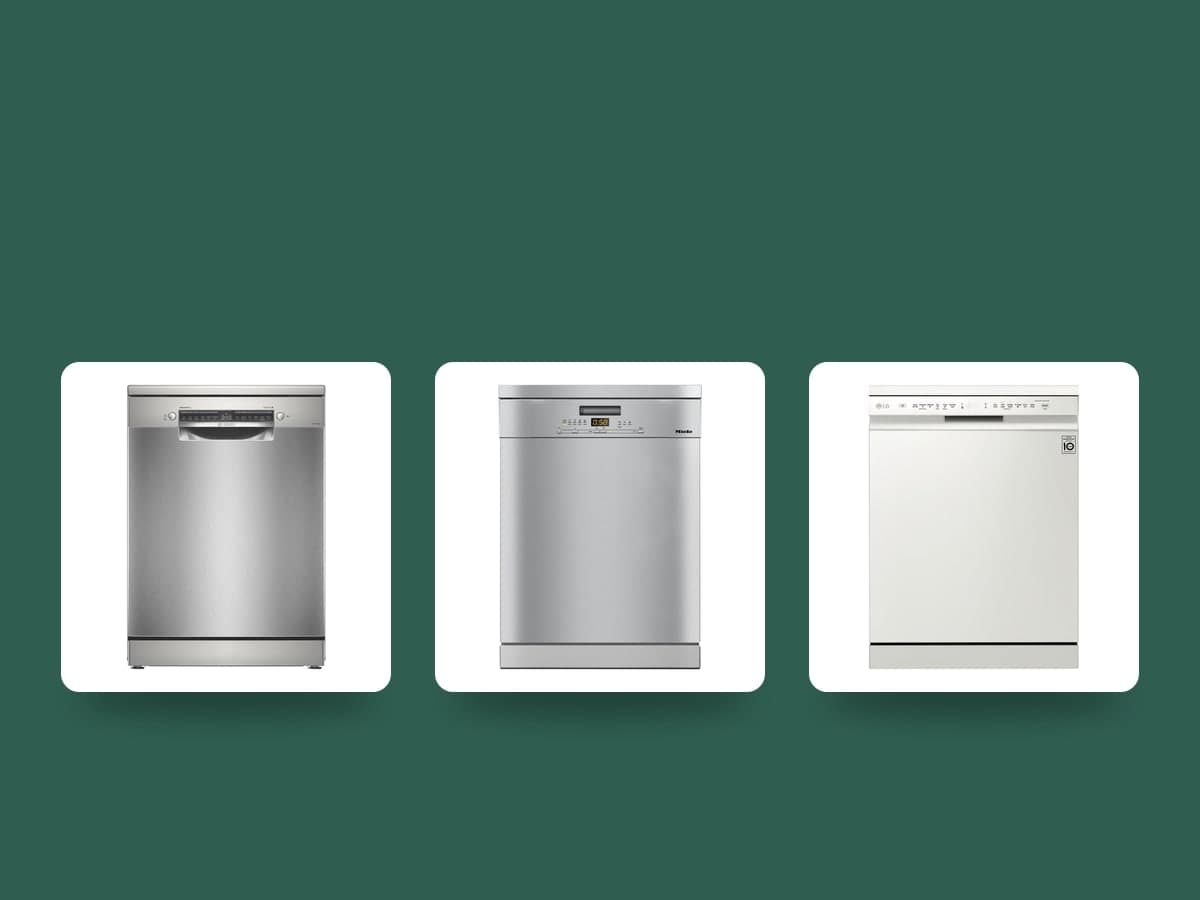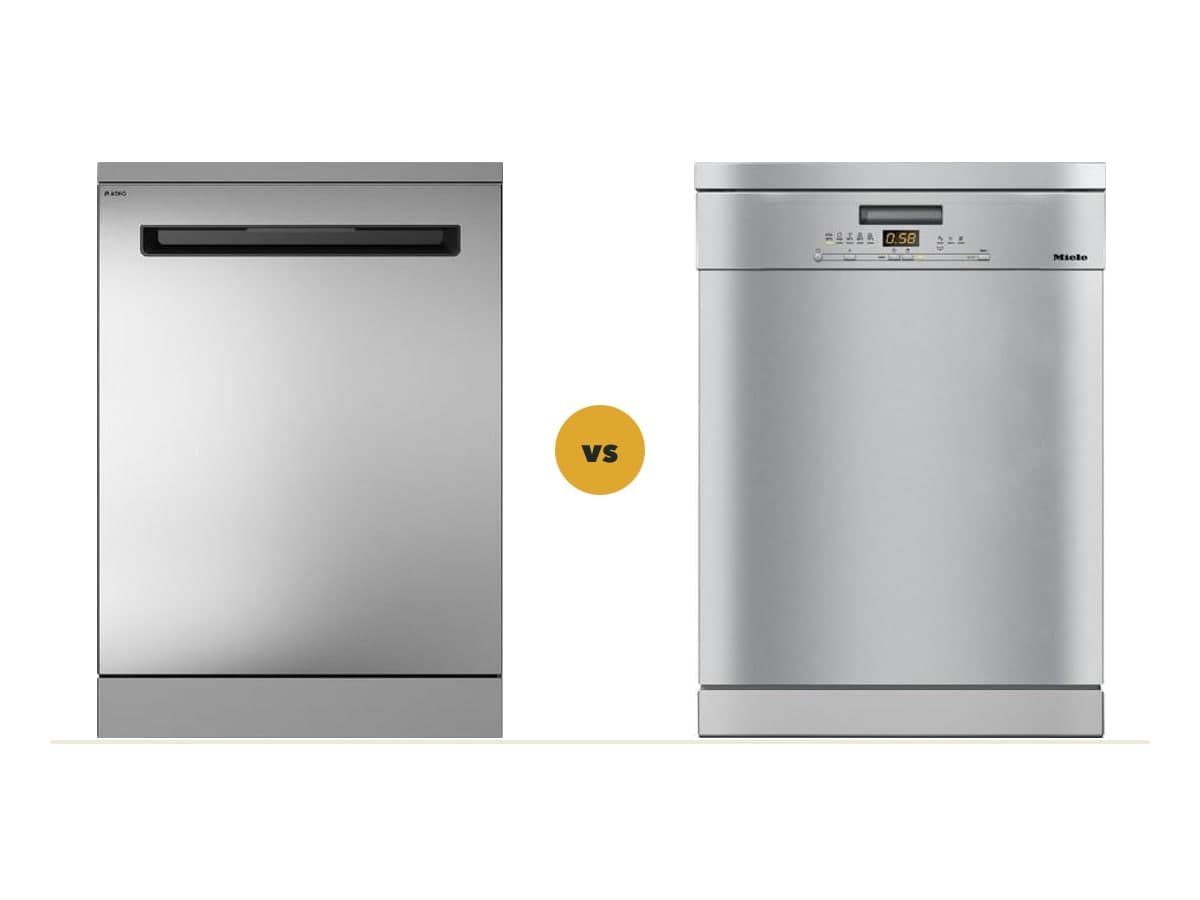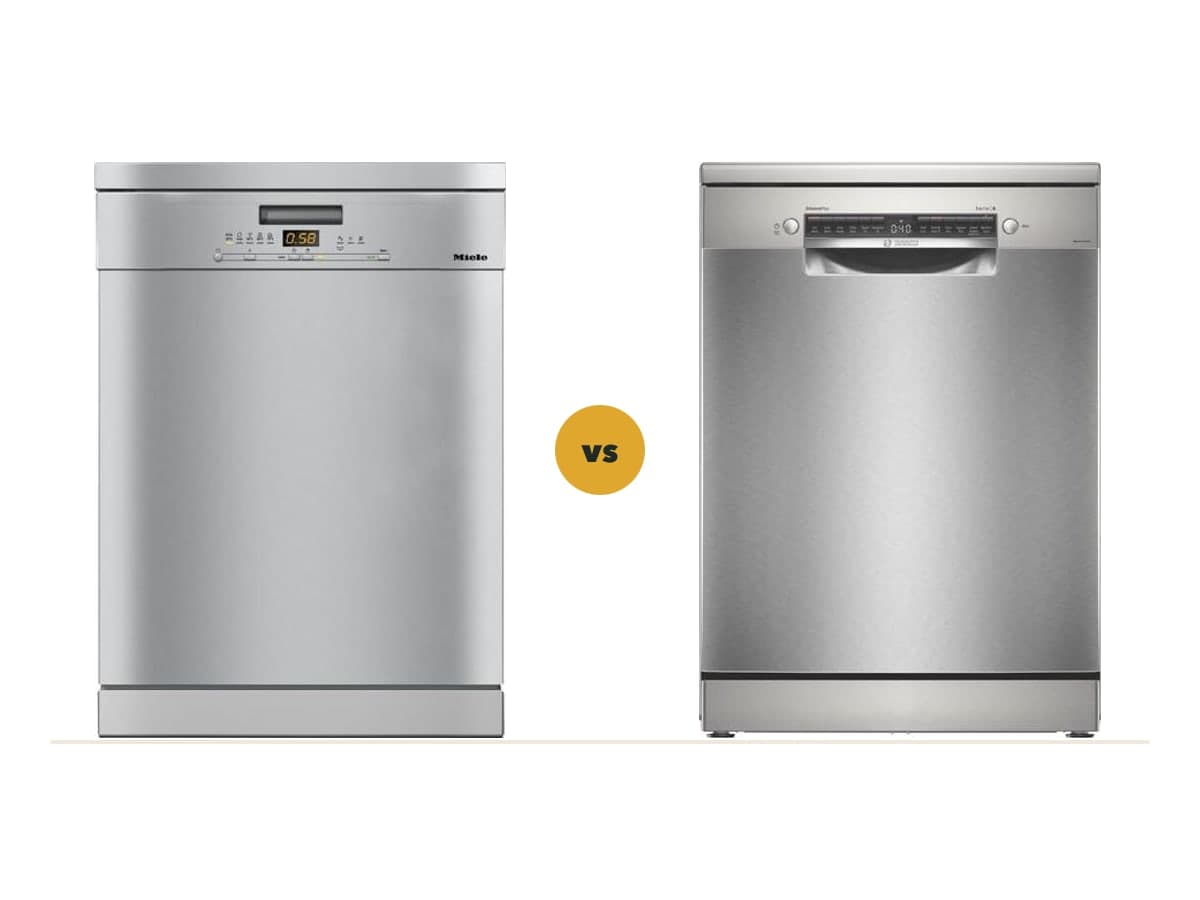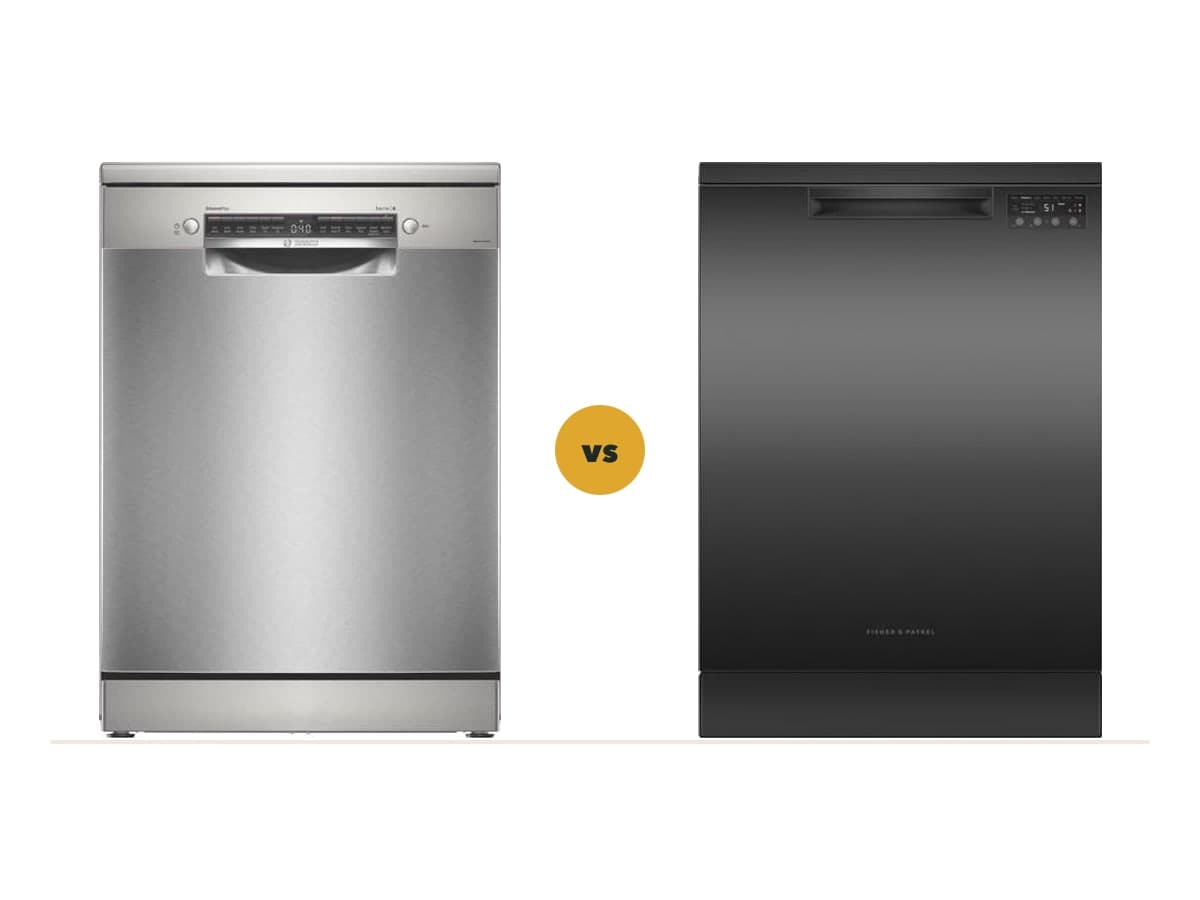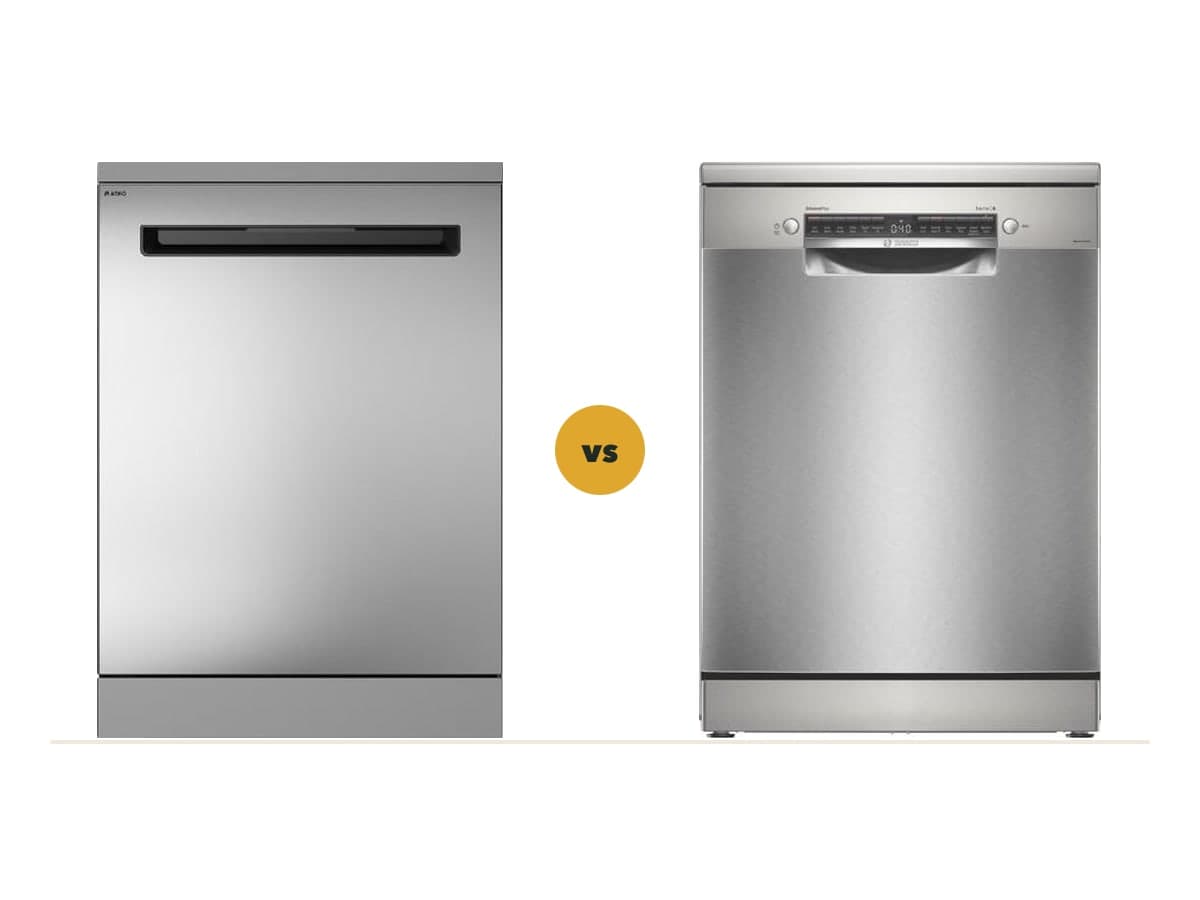
Bosch Series 6 is the safer buy: quieter at 44 decibels, fifteen place settings, around $1,500 and 380 Australian owner reviews at 4.7 stars. Asko is the more interesting machine, with three spray arms across seven zones, the lowest energy use here at 190kWh a year, and a door that opens itself at the end of the cycle to dry the load, for around $1,440.
Both take fourteen to fifteen settings, both are European-built with stainless tubs, and both carry a two-year Australian warranty.
Asko
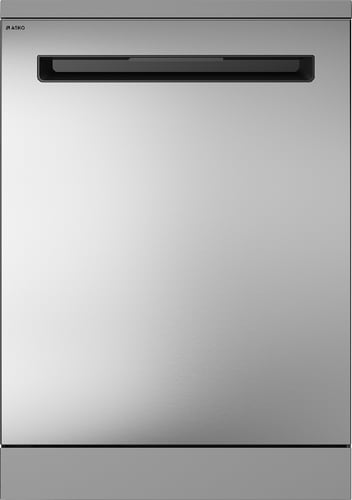
Three spray arms covering seven wash zones rather than the two arms and five zones almost everyone else uses, 4.5 energy stars, 190kWh a year, five water stars and 11.3 litres a cycle. Eight programs including night wash, crystal glass and a self-cleaning cycle. Turbo Drying runs a fan, and the door opens automatically at the end to vent steam.
Three baskets, with a removable top tray on telescopic rails. No owner reviews at The Good Guys yet, which is the main thing counting against it.
What We Like:
- Three arms, seven zones
- 190kWh a year
- Auto door opening dries plastics
What We Don't Like:
- No owner reviews at Australian retailers yet
Bosch Series 6
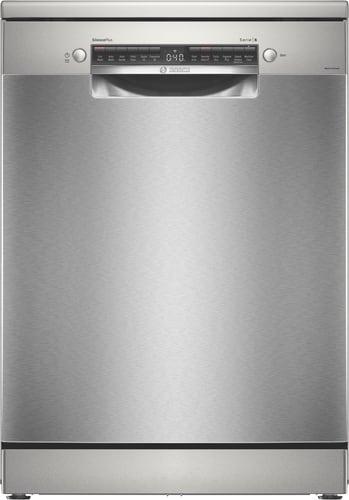
Fifteen place settings, 44 decibels, 11 litres a cycle at 5.5 water stars, six programs and a heat-exchanger drying stage. Adjustable top basket on three levels. Owners rate it 4.7 from 380 reviews at The Good Guys.
It uses 245kWh a year against Asko's 190, and its drying leaves plastics damper than Asko's fan-and-door approach.
What We Like:
- 44 decibels
- Hundreds of owner reviews
- Regularly discounted
What We Don't Like:
- 245kWh a year
The two ranges at a glance
| Places | Noise | Energy | kWh/yr | Water | L/cycle | Height | Price | |
|---|---|---|---|---|---|---|---|---|
| Asko | ||||||||
| HDFS143B freestanding | 14 | 44dB | 4.5 stars | 190 | 5 stars | 11.3 | 846mm | $1,400–1,500 |
| Logic DFI564D integrated | 16 | 42dB | 4.5 stars | 216 | 6 stars | 10.6 | 819mm | $1,800–2,000 |
| Bosch | ||||||||
| Series 2 SMS2ITI02A | 13 | 48dB | 3.5 stars | 255 | 4 stars | 12.7 | 845mm | $800–900 |
| Series 4 SMS4HVI01A | 14 | 46dB | 4 stars | 230 | 4 stars | 13.5 | 845mm | $900–1,000 |
| Series 6 SMS6HAI02A | 14 | 44dB | 4 stars | 230 | 5 stars | 11.4 | 845mm | $1,300–1,400 |
| Series 6 SMS6HCI02A | 15 | 44dB | 4 stars | 245 | 5.5 stars | 11 | 845mm | $1,400–1,500 |
| Series 8 SBT8ZC801A | 15 | 42dB | 4.5 stars | 206 | 5 stars | 12.2 | 865mm | $2,600–2,800 |
Figures are from the energy and water rating labels, which are government schemes.
What actually differs
Energy. 190kWh against 245kWh is about 55kWh a year, roughly $18 at 32 cents a kilowatt hour. Modest in dollars, but it also means Asko carries the higher star rating on the label if that matters for a rating-driven renovation.
Drying. Asko's automatic door opening is the single most practical difference. Plastic containers come out of it dry; out of most condensation-drying machines they do not. Bosch only matches this with the Zeolith system on the Series 8, at nearly twice the price.
Wash coverage. Three arms and seven zones against two and five. In practice both clean well; the extra coverage helps most with a heavily packed bottom basket.
Evidence. Bosch has 380 Australian reviews. Asko has none at the large retailers. That gap is the strongest single argument for the Bosch, and it is worth weighing honestly against Asko's better spec sheet.
Water. Effectively identical, 11.3 against 11 litres.
FAQs
Is Asko still a Swedish brand?
Asko was founded in Sweden and the brand is Scandinavian in design and engineering, but it has been owned since 2010 by Gorenje of Slovenia, which is itself part of Hisense. The dishwashers are built in Europe.
Why does auto door opening matter?
At the end of a cycle the air inside is hot and saturated. Opening the door lets it escape rather than condense back onto the load, which is why plastics come out dry. It is the cheapest effective drying technology in dishwashers.
Which is easier to get serviced?
Bosch has the larger service network in Australia by a wide margin. Asko is serviced through its Australian distributor and specialist agents, which in regional areas can mean a longer wait.