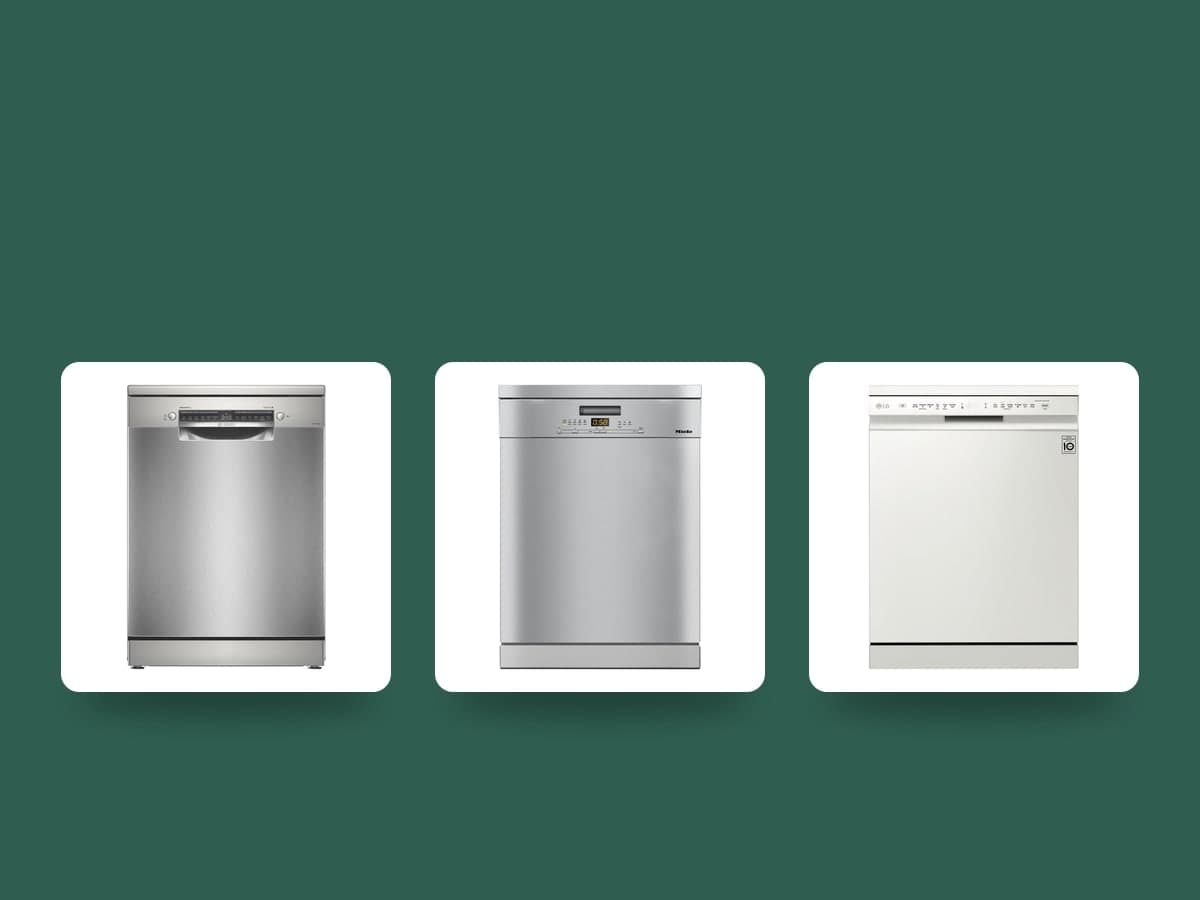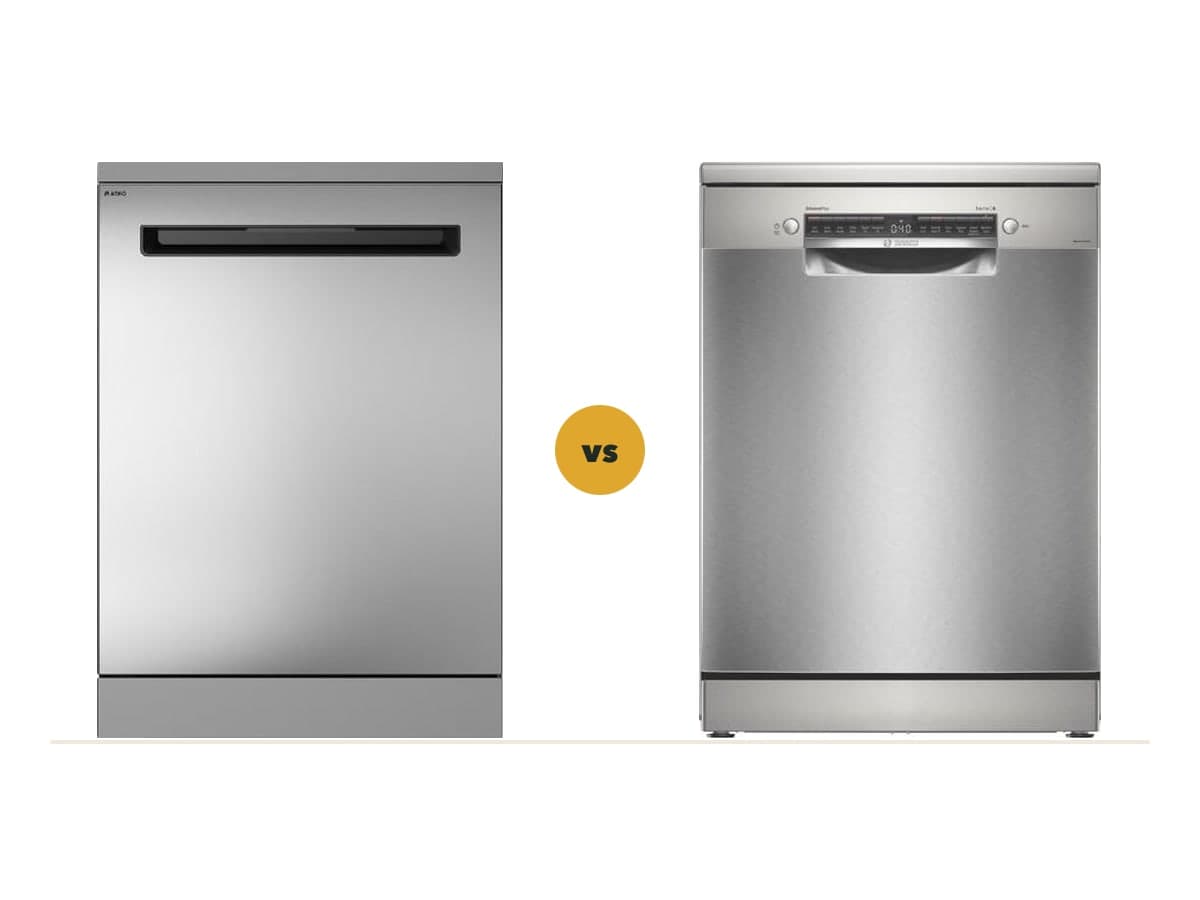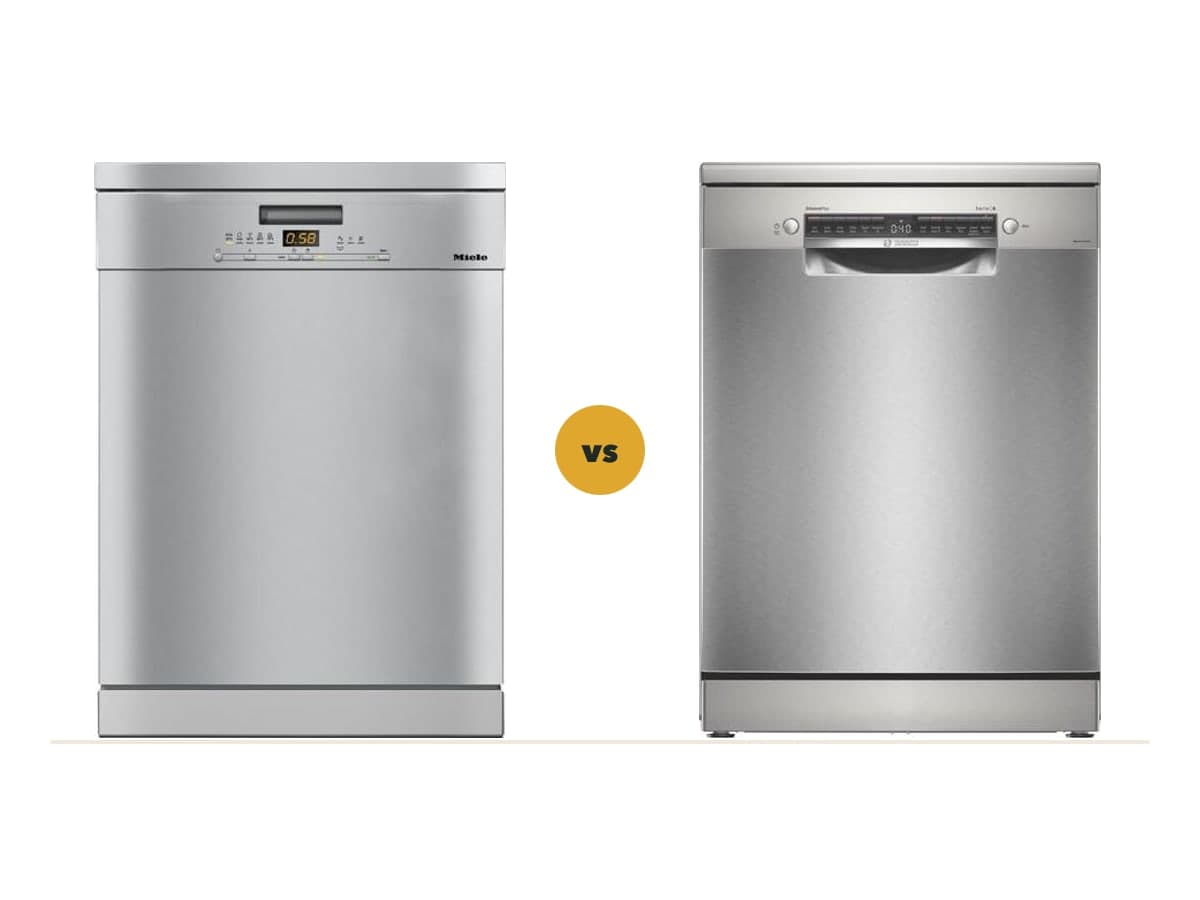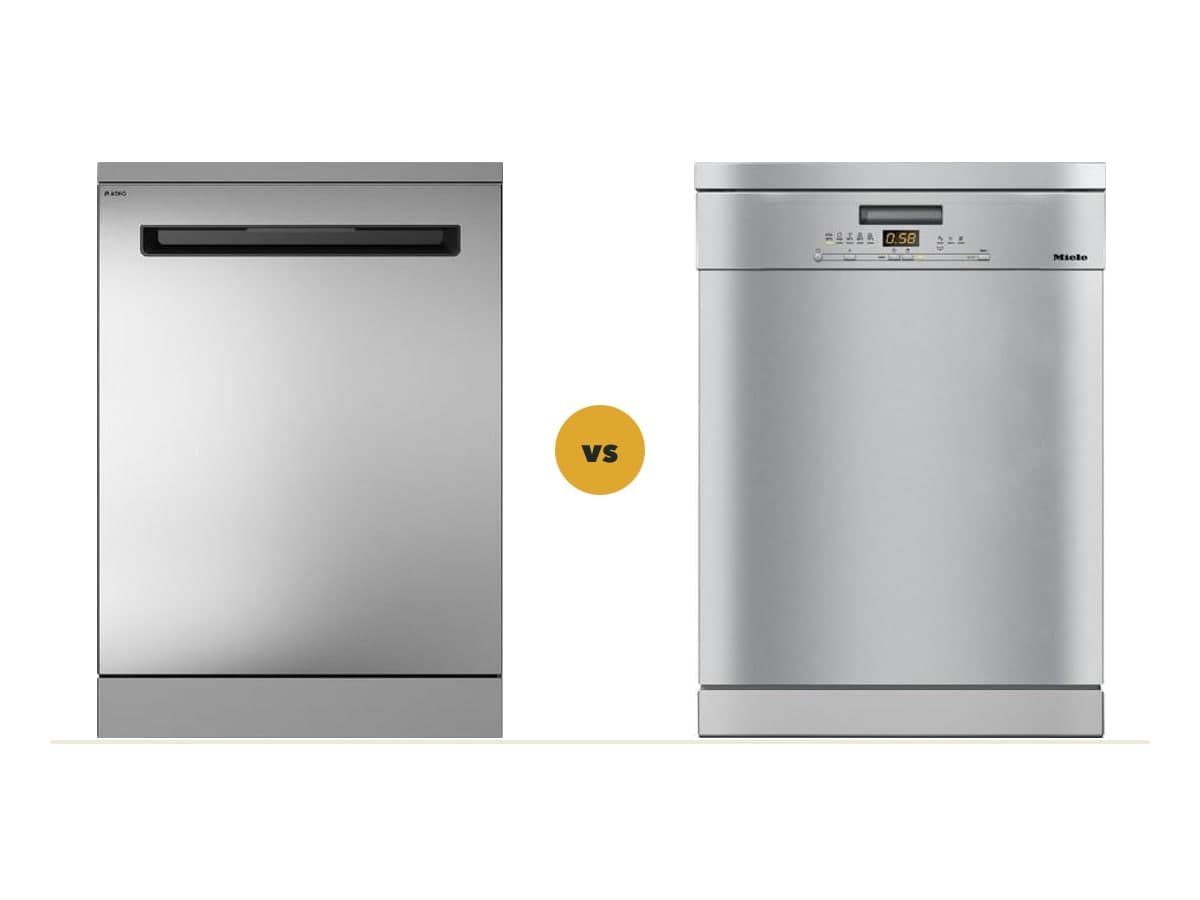
Asko is the easier machine to buy and the cheaper one to run: 190kWh a year, three spray arms across seven zones, and a fan-assisted drying system, for around $1,440 at The Good Guys. Miele uses less water than anything else on the market at 9.2 litres a cycle with a six-star WELS rating, and costs around $1,620, but the big retailers do not sell it directly.
Both are Scandinavian-engineered premium machines with stainless tubs, both carry a two-year Australian warranty, and neither has enough owner reviews at Australian retailers to draw conclusions from. This is a comparison of specifications and buying experience, not of review scores.
Asko
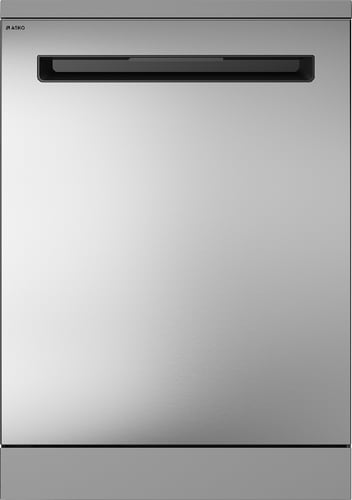
Fourteen place settings, 4.5 energy stars, 190kWh a year, five water stars and 11.3 litres a cycle. Three spray arms across seven zones rather than the usual two arms and five. Eight programs including a night wash, a crystal glass program and a self-cleaning cycle. Turbo Drying runs a fan to evacuate moist air, and the door opens automatically at the end of the cycle to let steam out.
Three baskets including a removable top tray on telescopic rails. The one to check is the water inlet: cold only.
What We Like:
- 190kWh a year, the lowest here
- Three spray arms, seven zones
- Auto door opening for drying
What We Don't Like:
- No owner reviews at Australian retailers yet
Miele
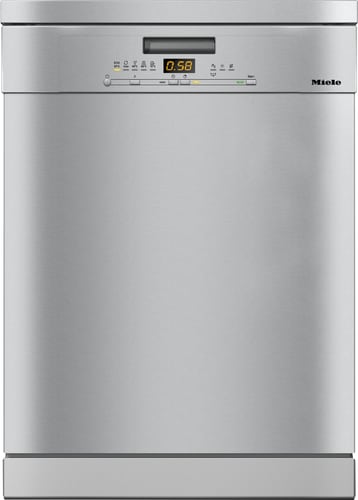
Fourteen place settings, four energy stars, and the headline number: 9.2 litres a cycle with a six-star WELS rating, the best water rating of any dishwasher in this comparison. Five programs including QuickPowerWash, which Miele rates as a full wash in under an hour. 46 decibels.
The catch is where you buy it. The Good Guys lists Miele but hands the sale to Miele rather than selling it: the button on their product page reads "Buy at Miele". In practice Miele in Australia is bought from Miele's own stores and online shop, or from specialist kitchen retailers, and the price is the price.
What We Like:
- 9.2 litres a cycle, six water stars
- QuickPowerWash under an hour
- 20-year design life claimed by Miele
What We Don't Like:
- Not sold through the big chains
The two ranges at a glance
| Places | Noise | Energy | kWh/yr | Water | L/cycle | Height | Price | |
|---|---|---|---|---|---|---|---|---|
| Asko | ||||||||
| HDFS143B freestanding | 14 | 44dB | 4.5 stars | 190 | 5 stars | 11.3 | 846mm | $1,400–1,500 |
| Logic DFI564D integrated | 16 | 42dB | 4.5 stars | 216 | 6 stars | 10.6 | 819mm | $1,800–2,000 |
| Miele | ||||||||
| G 5000 SC freestanding | 14 | 46dB | 4 stars | — | 6 stars | 9.2 | 845mm | $1,600–1,800 |
| G 5000 SCI semi-integrated | 14 | 46dB | 4 stars | — | 6 stars | 9.2 | 805mm | $1,800–2,000 |
Figures are from the energy and water rating labels, which are government schemes. Miele's dishwashers are not sold by the electrical chains, so those links go to Miele's own store.
What actually differs
Water against energy. Miele wins on water by a clear 2.1 litres a cycle, which over about 270 cycles is around 570 litres a year. Asko wins on energy, with a published 190kWh figure and a higher star rating. If you are on tank water, that points to Miele. If you are watching the power bill, Asko.
Drying. Asko runs a fan and pops the door open at the end. Miele uses condensation drying on this model. Auto door opening is the more effective of the two for plastics, and it is the feature Asko owners mention most.
Programs. Eight against five. Asko's night wash and crystal glass programs are genuinely useful; Miele's QuickPowerWash is the single most useful program either brand offers, washing and drying a full load in under an hour.
Buying and service. Asko is on the floor at The Good Guys and delivered like any other appliance. Miele is a direct purchase with Miele's own delivery and service network, which owners rate highly but which means no price shopping between retailers.
Noise. 44dB against 46dB. Both are quiet; two decibels is at the edge of noticeable.
FAQs
Are Asko and Miele made in the same place?
No. Asko is a Swedish brand now owned by the Slovenian manufacturer Gorenje, itself part of China's Hisense group, and its dishwashers are built in Europe. Miele is German, family-owned, and builds its dishwashers in Germany.
Why does Miele not publish a kWh figure at The Good Guys?
The listing carries the WELS water registration but not the annual energy figure. Miele's own site and the energy label on the machine carry it; ask for the label figure before buying if running cost is the deciding factor.
Is a 20-year life claim realistic?
Miele tests to a 20-year design life rather than warranting 20 years; the Australian warranty is two years like everyone else's. Owner reports of very long Miele service lives are common but they are reports, not a guarantee.