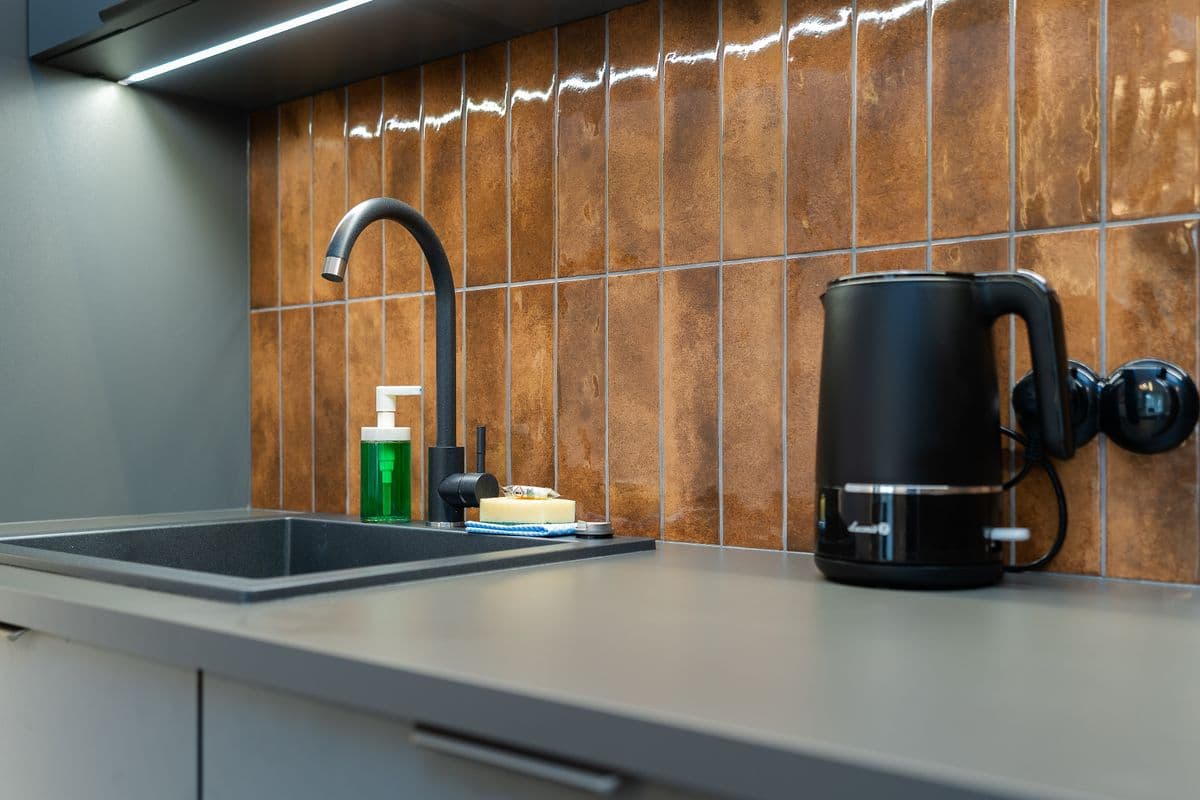
The two kettles we recommend for quiet boiling are both Russell Hobbs, and they share the same quiet boil design. The Quiet Kettle is the cheaper of the pair at around $60. The Brooklyn wraps the same technology in a nicer finish for about $40 more. Owner reviews back both, with more than 750 reviews between them.
1. Russell Hobbs Quiet Kettle (Top Pick)
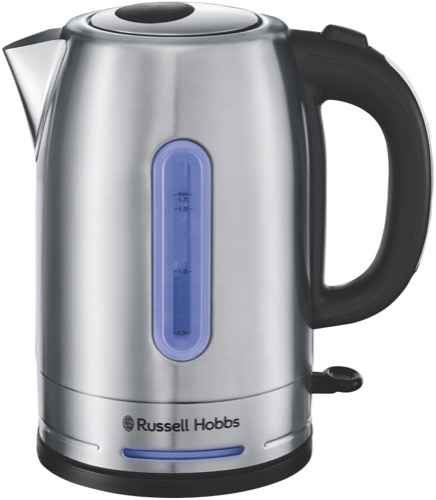
The Quiet Kettle is the only kettle on the Australian market built specifically to boil quietly. Its base plate breaks up steam bubbles before they rattle the body, which is where most kettle noise comes from, and owner reviews consistently describe it as much quieter than the kettle it replaced. It averages 4.3 stars across more than 400 reviews at The Good Guys.
Beyond the quiet boil it's a simple 1.7-litre stainless steel kettle with a washable anti-scale filter, a water window, auto shut-off and boil-dry protection. There are no temperature settings, which rules it out for anyone who wants exact water temperatures for green tea or pour-over coffee.
Some long-term owners report it gradually getting louder, which usually points to scale building up on the element rather than a fault.
What We Like:
- Purpose-built quiet boil
- Around $60
- Washable anti-scale filter
What We Don't Like:
- Can get louder as scale builds
2. Russell Hobbs Brooklyn Kettle (Style Pick)
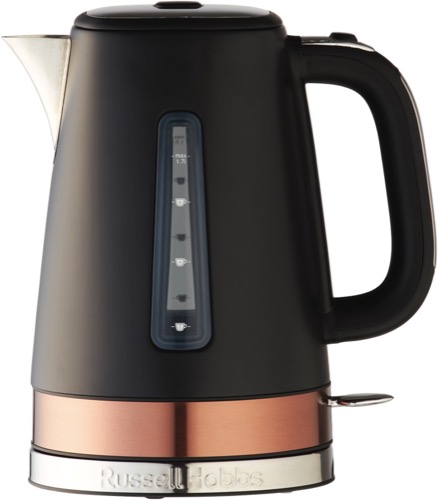
The Brooklyn uses the same quiet boil design in a copper or matte black finish. It averages 4.8 stars from more than 350 reviews, and quiet operation comes up in the praise almost as often as the looks.
Capacity is the same 1.7 litres, with a push-open lid, a blue interior light and a spout that pours without dripping. At around $100, the extra money over the Quiet Kettle is going on the finish rather than the boil, which makes it the natural choice for a kettle that sits out on the bench.
The base cord is on the short side, which limits where it can sit on the bench.
What We Like:
- Same quiet boil, nicer finish
- Blue interior light
- Drip-free spout
What We Don't Like:
- Short base cord
How to pick a quiet kettle
Stainless steel over glass. Stainless bodies absorb more of the boiling noise, while glass reflects it, so quiet models are almost always steel.
Secondhand quiet models are worth a look. Sunbeam's Cafe Series Quiet Shield and Alur Peace & Quiet both had dedicated noise-reduction designs and happy owners. They're discontinued, so leftover or secondhand stock at a good price is a genuine find.
Where the noise comes from. Most of the racket is steam bubbles forming and collapsing against the base as the element heats. Quiet designs shrink the bubbles with a diffuser plate, or absorb the sound with insulation between the water chamber and the housing.
Descaling keeps it quiet. Limescale on the element makes any kettle louder over time, and it's the usual reason a quiet kettle seems to wear out. In hard-water areas, a vinegar boil every month or two keeps the noise down and the boil fast.
Ready-alerts can be loud. Some kettles boil quietly and then finish with a piercing beep. Owner reviews usually mention it, along with whether it can be turned off.
A low minimum fill helps. Boiling one cup instead of a full jug is quicker, cheaper and quieter, and a clear water window makes it easy to fill just what you need.
RELATED: The Best Electric Kettles in Australia and The Best Toasters
FAQs
How does a quiet boil kettle work?
The base plate breaks up steam bubbles as they form, so they collapse gently instead of rattling the kettle. Some designs add insulation between the water chamber and the housing to absorb what's left.
Can I make my current kettle quieter?
Descale it first, since scale build-up is the most common cause of a kettle getting louder. A rubber mat or trivet under the base also stops the bench amplifying the vibration.