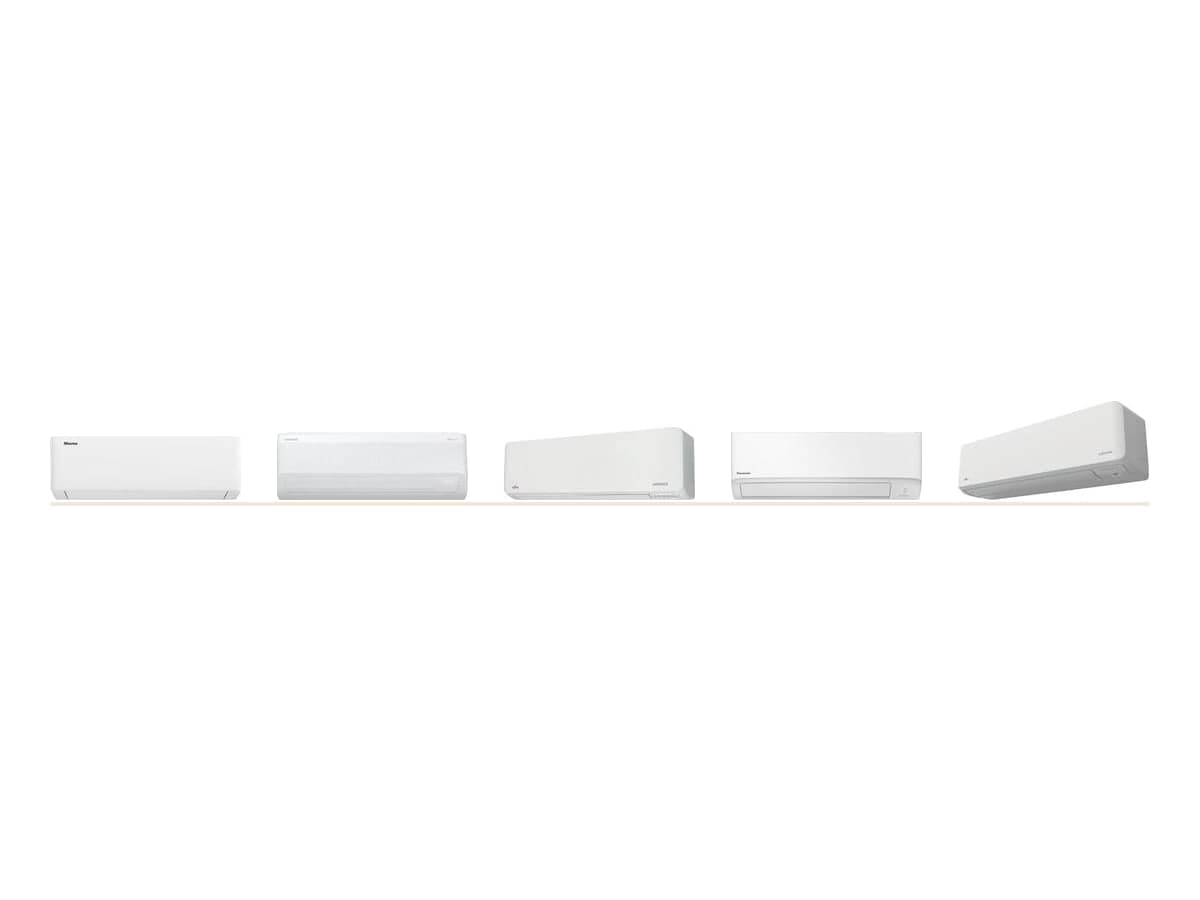
A split system is the only heating and cooling in an Australian house that costs a fraction of what it delivers. It moves heat rather than making it, so a kilowatt of electricity buys three or four kilowatts of warmth, and the same box runs backwards in summer.
The energy label is the one honest comparison between brands, and since 2020 it has carried separate star ratings for hot, average and cold climate zones. Read the zone you live in rather than the number on the front.
Sizing matters more than brand. About 150 watts of cooling per square metre of floor is the working rule, which puts a bedroom at 2.5kW and an open-plan living area at 5kW. That is worked through in what size split system do I need.
1. Most efficient: Hisense 2.5kW Air Q Series
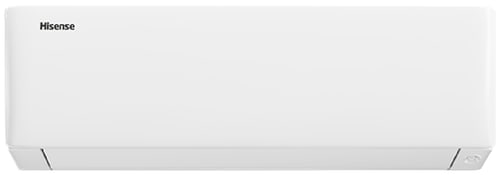
6.5 cooling stars in an average climate and 8.5 in a hot one, which is the highest rating of any unit here by a wide margin. 2.5kW cooling and 3.2kW heating, five fan speeds, Wi-Fi, a 24-hour timer and a quoted indoor noise range starting at 19 decibels. Five-year warranty. Owners rate it 4.6 at The Good Guys.
Heating is rated 3 stars against 6.5 for cooling, which is the usual gap and worth knowing if winter is the main job.
What We Like:
- 6.5 cooling stars, 8.5 in a hot climate
- 19dBA at its lowest fan speed
- Five-year warranty
What We Don't Like:
- 3 heating stars, against 6.5 for cooling
2. Quietest: Samsung 2.5kW GEO WindFree
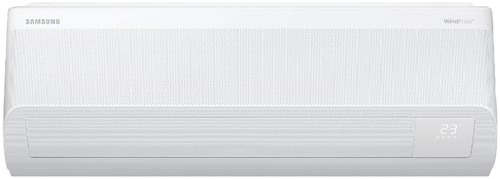
38 decibels indoors and 45 outside, the lowest pair here. WindFree mode pushes air through thousands of micro-holes instead of blowing it at you, which is the feature people either love or find too gentle. 4.5 cooling stars, SmartThings, Google and Alexa, five programs, and a ten-year warranty on the compressor on top of the standard five years.
At 899mm the indoor unit is wider than the Fujitsu, which matters above a door.
What We Like:
- 38dBA indoors
- Ten-year compressor warranty
- WindFree avoids a draught
What We Don't Like:
- 899mm wide indoor unit
3. Best all-rounder: Fujitsu 2.5kW Reverse Cycle
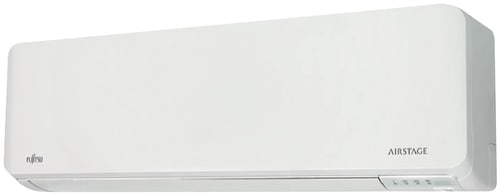
5 cooling stars in an average climate and 5.5 in a hot one, 709 cubic metres an hour of airflow, an inverter compressor and a human sensor that steers airflow away from where people are sitting. Wi-Fi, 24-hour timer, Apple-Catechin and ion deodorising filters. 40 decibels indoors. Five-year warranty. Owners rate it 4.7 at The Good Guys.
Fujitsu is also the brand most widely carried by installers, which usually shows up as a cheaper quote.
What We Like:
- 5 cooling stars
- Human sensor redirects airflow
- Widely installed, so quotes are competitive
What We Don't Like:
- 3 heating stars in an average climate
4. Best for heating: Panasonic 3.5kW Reverse Cycle and Air Purifier
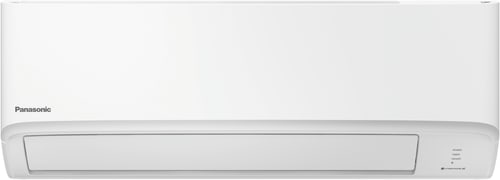
4.3kW of heat from 3.5kW of cooling capacity, which is 16% more warmth than the Fujitsu of the same size for the same money. nanoe X filtration and an asthma and allergy friendly certification. 4.5 cooling stars, Wi-Fi, 24-hour timer. The indoor unit is the smallest here at 779mm and 8kg.
Its published indoor noise figure is 60 decibels at full fan, well above the Fujitsu's 42.
What We Like:
- 4.3kW of heating
- nanoe X air treatment
- 779mm indoor unit
What We Don't Like:
- 60dBA indoors at full fan
5. Best value: Hisense 3.7kW Air Q Series
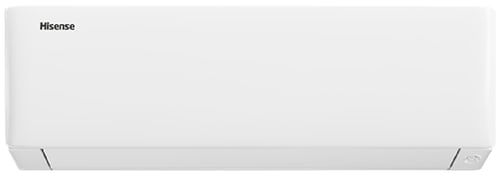
3.7kW of cooling for less than the 2.5kW models from every other brand here. Reverse cycle, Wi-Fi, five-year warranty. Owners rate it 4.5 at The Good Guys.
The catch is that Hisense's dealer network is smaller than Fujitsu's or Panasonic's, so an installer may quote more to fit a brand they do not normally handle.
What We Like:
- 3.7kW for under $800
- Reverse cycle and Wi-Fi included
- Five-year warranty
What We Don't Like:
- Smaller installer network
6. Best for open plan: Fujitsu 7.1kW Reverse Cycle
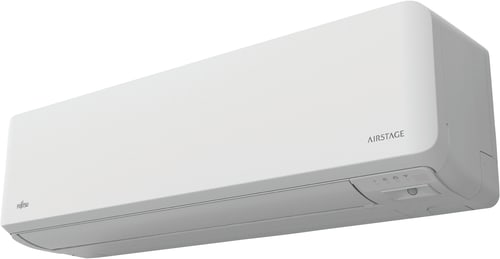
7.1kW cooling and 8kW heating, the largest single-head size commonly sold, for a living area of 45 square metres and up. 1192 cubic metres an hour of airflow, and published consumption of 569kWh a year for cooling and 1002kWh for heating in an average climate. Owners rate it 4.9 at The Good Guys.
Star ratings fall at this output, to 3.5 for cooling, and the outdoor unit runs at 66 decibels, which is loud enough to matter next to a neighbour's bedroom window.
What We Like:
- 8kW of heating
- 1192m³/hr of airflow
What We Don't Like:
- 66dBA outdoors, 3.5 cooling stars
How to choose a split system
| Cooling | Heating | Cooling stars | Indoor noise | Price | |
|---|---|---|---|---|---|
| Hisense 2.5kW Air Q | 2.5kW | 3.2kW | 6.5 | 19–39dBA | $900–1,000 |
| Samsung 2.5kW WindFree | 2.5kW | 3.2kW | 4.5 | 38dBA | $1,000–1,100 |
| Fujitsu 2.5kW | 2.5kW | 3.2kW | 5 | 40dBA | $1,000–1,100 |
| Hisense 3.7kW Air Q | 3.7kW | — | 4.5 | — | $700–800 |
| Panasonic 3.5kW | 3.5kW | 4.3kW | 4.5 | 60dBA | $1,300–1,400 |
| Fujitsu 7.1kW | 7.1kW | 8.0kW | 3.5 | 49dBA | $2,000–2,200 |
Star ratings are for an average climate under the government zoned energy label. Prices are from The Good Guys and exclude installation.
Size it to the room, not the house. Roughly 150 watts of cooling per square metre, adjusted up for west-facing glass, a raked ceiling or an uninsulated roof. Oversizing is its own problem: the unit hits temperature, switches off before it has removed any humidity, and short-cycles the compressor.
Read the climate zone, not the headline stars. The same Fujitsu 2.5kW rates 5.5 stars for cooling in a hot zone and 5 in an average one. Heating ratings run consistently lower than cooling ratings across every brand on the shelf.
Installation is a separate cost and a separate decision. Prices here are for the unit. A licensed installer adds several hundred dollars, more for a long pipe run or a bracket, and a new dedicated circuit is common on larger units.
Daikin and Mitsubishi are not on this list because the chains do not sell them. Both go through installers, which means a supply-and-install quote rather than a shelf price. They are compared in Daikin vs Mitsubishi vs Fujitsu.
FAQs
What size do I need for a bedroom?
2.5kW covers a bedroom up to about 20 square metres with a normal ceiling. Add capacity for west-facing windows or an uninsulated roof space above.
Is reverse cycle cheaper to run than a heater?
Considerably. A heat pump returns roughly three to four kilowatts of heat per kilowatt of electricity, where any plug-in heater returns one. In a room used daily through winter that difference pays back the installation over a few seasons.
Does a higher star rating mean a quieter unit?
No, they are unrelated. The Hisense here has the best stars and the Samsung the lowest noise, and neither leads on both.
Can I install one myself?
No. Refrigerant work requires a licensed technician in Australia, and doing it yourself voids the warranty and breaches the regulations.