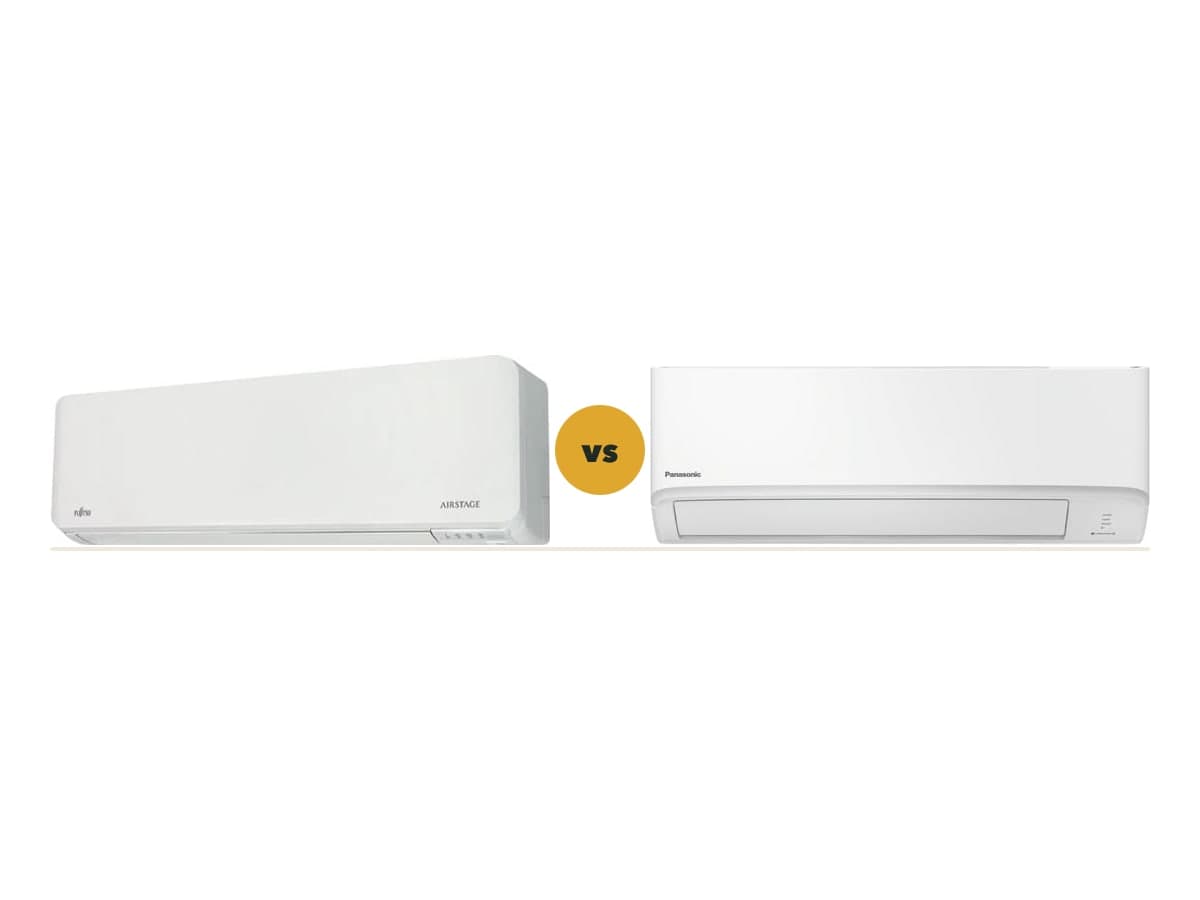
At 3.5kW these two land at the same price with the same 4.5 cooling stars, so the decision comes down to two things pulling in opposite directions.
Panasonic gives you more heat, 4.3kW against Fujitsu's 3.7kW, plus nanoe X air purification and an asthma and allergy friendly certification. Fujitsu is dramatically quieter indoors at 42dBA against Panasonic's 60dBA, which in a bedroom is the difference between background noise and something you notice.
Fujitsu 3.5kW Reverse Cycle
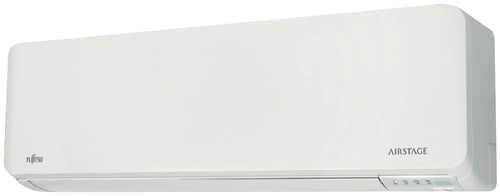
3.5kW cooling, 3.7kW heating, 4.5 cooling stars and 3 heating stars in an average climate, 770 cubic metres an hour and an inverter compressor. Wi-Fi, a human sensor that steers airflow away from people, a 24-hour timer and Apple-Catechin filtration. 42dBA indoors, 59dBA outside. Five-year warranty. Owners rate it 4.9 at The Good Guys.
Heating output is the lowest of the two, and only 0.2kW above Fujitsu's own 2.5kW model.
What We Like:
- 42dBA indoors
- Human sensor
- 5 cooling stars in a cold climate
What We Don't Like:
- 3.7kW of heating, the lower of the two
Panasonic 3.5kW Reverse Cycle and Air Purifier
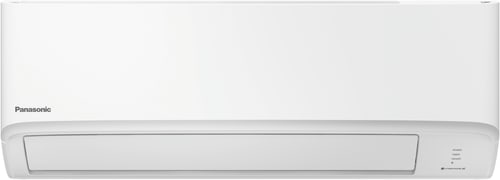
3.5kW cooling and 4.3kW heating, 4.5 cooling stars and 3 heating stars in an average climate, with nanoe X filtration and an asthma and allergy friendly certification. Wi-Fi, 24-hour timer, inverter compressor. The indoor unit is the smallest here at 779mm and 8kg. Five-year warranty. Owners rate it 5 at The Good Guys.
The published indoor noise figure is 60dBA at maximum, well above the Fujitsu's 42.
What We Like:
- 4.3kW of heating
- nanoe X air purification
- 779mm indoor unit, the smallest here
What We Don't Like:
- 60dBA indoors at full fan
The two ranges at a glance
| Cooling | Heating | Cooling stars | Indoor noise | Warranty | Price | |
|---|---|---|---|---|---|---|
| Fujitsu | ||||||
| SET-ASTG09KMTC-NXT | 2.5kW | 3.2kW | 5 | 40dBA | 5 years | $1,000–1,100 |
| SET-ASTG12KMTC-NXT | 3.5kW | 3.7kW | 4.5 | 42dBA | 5 years | $1,300–1,400 |
| SET-ASTH18KMTD-NXT | 5.0kW | 6.0kW | 4.5 | 46dBA | 5 years | $1,800–2,000 |
| SET-ASTH24KMTE-NXT | 7.1kW | 8.0kW | 3.5 | 49dBA | 5 years | $2,000–2,200 |
| Panasonic | ||||||
| CS/CU-Z35AKR | 3.5kW | 4.3kW | 4.5 | 60dBA | 5 years | $1,300–1,400 |
| CS/CU-Z71AKR | 7.1kW | 8.0kW | 3.5 | 65dBA | 5 years | $2,200–2,400 |
Star ratings are for an average climate under the government zoned energy label. Panasonic's cooling-only U series is cheaper again but does not heat.
What actually differs
Noise. 42dBA against 60dBA is the largest gap in the table and the one most likely to be regretted. Both figures are maximum fan speed, and both units are quieter on lower settings, but the relationship holds all the way down. In a bedroom, Fujitsu wins this outright.
Heating. Panasonic delivers 4.3kW of heat to Fujitsu's 3.7kW from the same 3.5kW of cooling capacity. If the unit is going into a room that needs heating more often than cooling, that is 16% more output for the same money.
Air treatment. Panasonic's nanoe X and its asthma and allergy friendly certification are a real difference for a household with hay fever or asthma. Fujitsu's Apple-Catechin filter is a conventional filter with an antibacterial coating and does not claim the same.
Cold-climate cooling. Fujitsu rates 5 stars for cooling in a cold zone against Panasonic's 4.5. The zoned star ratings are a government scheme and the only like-for-like comparison available, so it is worth reading the zone that matches where you live rather than the headline.
Size on the wall. Panasonic's indoor unit is 55mm narrower and 2kg lighter. Above a door or in a narrow alcove that can decide the install.
Who each one suits
Fujitsu suits bedrooms and any room where the unit runs while people are sleeping or working.
Panasonic suits a living room where winter heating matters more than summer cooling, and households where the air purification is worth having.
FAQs
Is 60dBA loud?
It is about the level of normal conversation, and it applies at full fan speed rather than the low setting a unit holds once the room is at temperature. It is still noticeably louder than the Fujitsu at the same point.
Does nanoe X replace an air purifier?
Not for particles. It targets odours, bacteria and some allergens in the airflow passing through the unit, while a standalone purifier with a HEPA filter is what removes fine particles from the room. The two do different jobs.
Which is cheaper to run?
Effectively the same for cooling: both carry 4.5 stars in an average climate. For heating, Panasonic produces more heat per hour, which means shorter run times in a cold room for the same star rating.