Brother machines dominate Australian owner reviews, and this guide reflects that. There's a basic Brother with close to 7,000 reviews behind it, a computerised step up, the Singer heavy duty for denim and canvas, and a small Brother that suits repairs and sewing classes. All four were in stock at the time of writing.
1. Best for Beginners: Brother LS14S
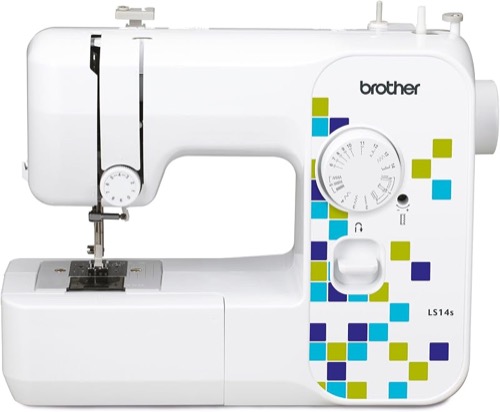
The LS14S is a simple mechanical machine on a metal chassis, and it averages 4.6 stars across nearly 7,000 reviews. It has 14 stitches, a four-step buttonhole, a top-loading bobbin that's easy to thread, and nothing complicated to go wrong.
At around $180 it's the machine for learning, mending and everyday sewing. The metal chassis keeps it steady at speed, which cheaper plastic machines struggle with. Anyone planning embroidery or a long list of decorative stitches will outgrow it; that's what the computerised pick below is for.
What We Like:
- Top-loading bobbin
- Metal chassis
- Simple to thread and use
What We Don't Like:
- Only 14 stitches
- Four-step buttonhole, not one-step
2. Best Computerised: Brother A16
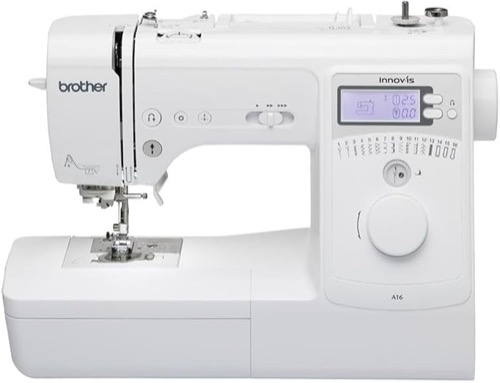
The A16 is Brother's computerised step up, with 16 stitches selected at a button, a one-step buttonhole, speed control, and a start-stop button that lets you sew without the foot pedal. Owner reviews average 4.8 stars, with ease of use the recurring theme.
It costs around $600, and the price buys precision rather than bulk features: consistent stitch length, gentle speed for tricky seams, and an automatic needle threader. It suits anyone sewing regularly who wants the machine to handle the fiddly parts. Occasional menders will be happy with the cheaper pick above.
What We Like:
- One-step buttonhole
- Speed control and start-stop button
- Automatic needle threader
What We Don't Like:
- 16 stitches is modest at this price
3. Best Heavy Duty: Singer 4411
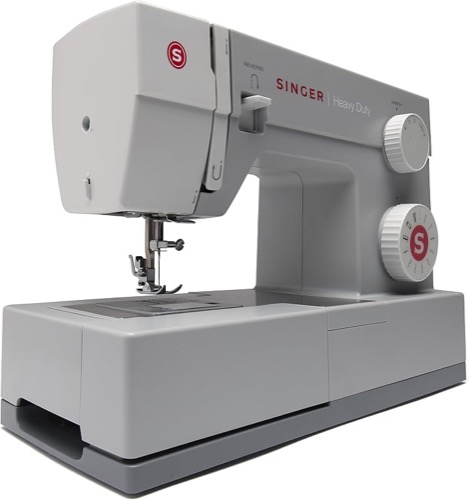
The 4411 is the machine for denim hems, canvas, dog beds and anything else that stalls an ordinary machine. Singer's Heavy Duty line runs a stronger motor and a stainless bedplate, and this one sews at up to 1,100 stitches a minute. It sells in huge numbers worldwide, and Australian reviews average just over 4 stars.
Heavy duty means strength rather than features. There are 11 stitches, no computerised anything, and around $500 buys pure punching power. Owners note it's louder than a standard machine, which comes with the stronger motor.
What We Like:
- Powers through denim and canvas
- 1,100 stitches per minute
- Simple and repairable
What We Don't Like:
- Louder than standard machines
- Few stitches for the price
4. Best Compact: Brother JA1400
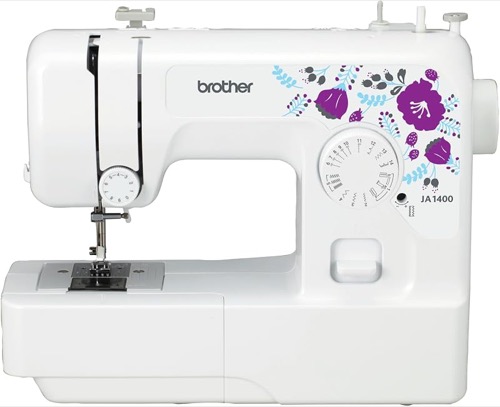
The JA1400 has been the reliable small machine in Brother's range for years, and it stays in this guide because owners keep rating it well, averaging 4.4 stars across a couple of hundred reviews. It's light enough to carry to a class, stores in a cupboard, and handles hems, repairs and simple projects at around $200.
The trade-off for the size is a smaller working area and a machine that's happier at moderate speeds. It suits occasional sewers and anyone short on space; the LS14S is the steadier machine if it will see weekly use.
What We Like:
- Light and easy to store
- Light enough to carry
- Around $200
What We Don't Like:
- Small working area
- Not built for heavy fabrics
Other machines worth a look
- Janome's mechanical range — Janome machines are workshop favourites in Australia, sold and serviced through a local dealer network, which is worth a lot when a machine needs a tune-up. If there's a dealer near you, they're well worth comparing in person.
- Overlockers — for finishing seams like shop-bought clothing, an overlocker is a separate machine rather than an upgrade. Brother and Elna both sell well-regarded entry models.
How to pick a sewing machine
Buy for the sewing you'll actually do. Mending and hems need a simple mechanical machine. Regular dressmaking earns a computerised machine's conveniences. Thick fabrics need a heavy-duty motor, not more stitches.
A one-step buttonhole is the convenience people miss most. Cheaper machines do buttonholes in four manual steps, and it's the feature owners most often wish they'd paid for.
Metal beats plastic where it counts. A metal chassis or frame keeps the machine stable at speed. Weight in a sewing machine is usually a good sign.
Local service matters for expensive machines. Machines above the entry level are worth buying where they can be serviced, and dealer brands hold value better.
RELATED: The Best Irons in Australia and The Best Steam Mops
FAQs
Which sewing machine brand is most reliable?
Brother and Janome dominate Australian owner reviews for reliability at normal price points, and Singer's Heavy Duty line has a strong record at its specific job. Within any brand, simpler machines have less to go wrong.
Do I need lots of stitches?
Most sewing uses straight stitch and zigzag, plus a buttonhole. Extra stitches are nice for decorative work, but owners rarely list stitch count among what they use or miss.