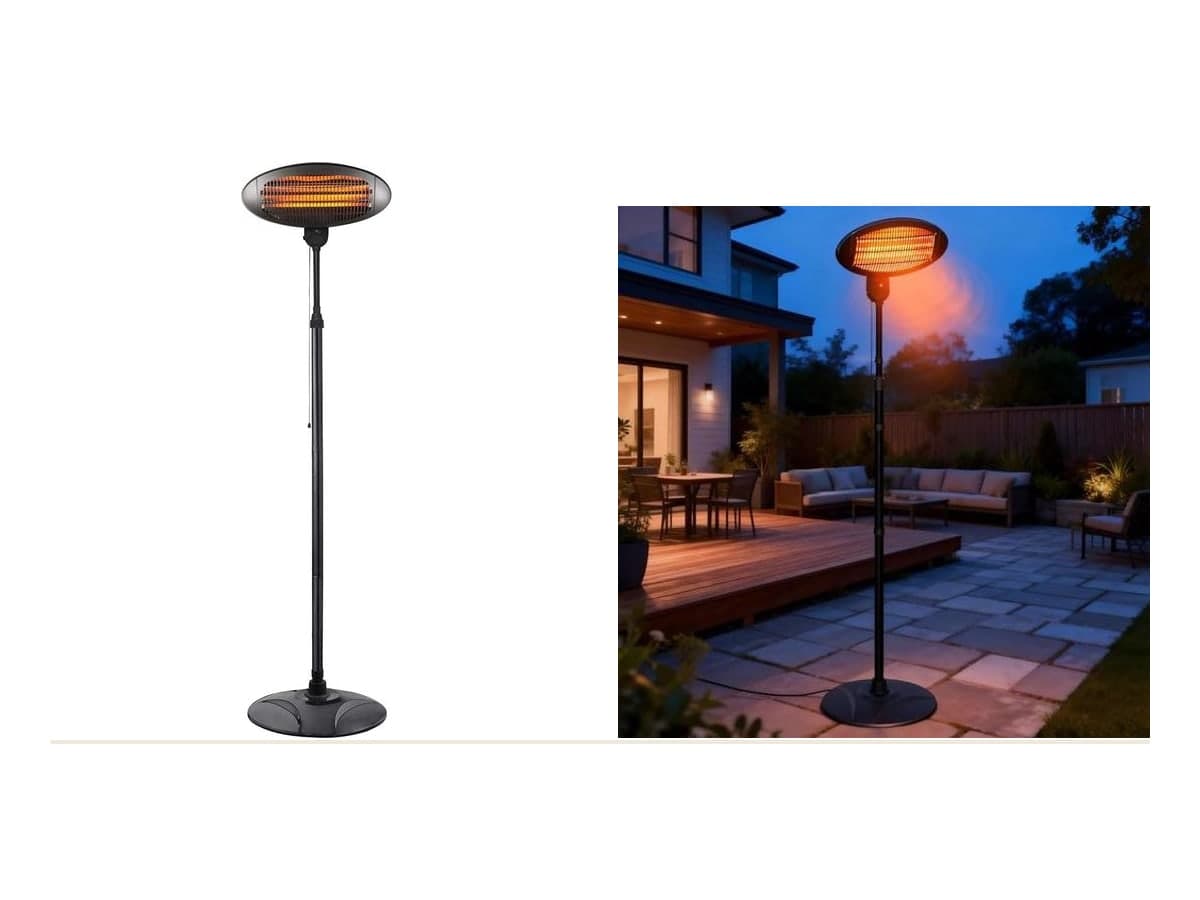
Outdoor heating works differently to indoor heating, and the difference decides everything. Outside there is no room to warm, so a heater that heats air is wasted. What works is radiant heat: infrared that travels straight to skin and surfaces, the same way sunlight does.
That rules the choice down to three approaches. Electric infrared plugs into a normal power point and heats a narrow cone in front of it. Gas heats a wider circle from a bottle and works where there is no power. A fire pit heats a circle, burns wood or pellets, and is the only one that also smells like a fire.
One thing worth knowing before you shop: the electrical chains do not stock outdoor heaters. The Good Guys' heating range is entirely indoor. Outdoor heating is sold through outdoor and barbecue specialists, hardware chains and Amazon, so the picks here reflect that.
1. Best value electric: YOPOWER 2000W Outdoor Patio Heater
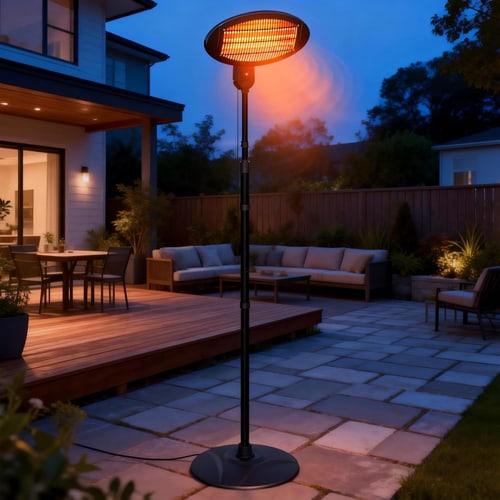
2000 watts of freestanding infrared with three heat settings, an adjustable stand from 1.3 to 2 metres and tip-over protection. Around $90, rated 4.2 by owners on Amazon, shipped from Amazon.
Three heat settings is the useful part: most heaters at this price have one, so the only way to turn them down is to move the chair.
What We Like:
- Three heat settings, not one
- 1.3 to 2m adjustable height
- Tip-over protection
What We Don't Like:
- No published weather rating
2. Best weather-rated electric: Lenoxx 2000W Free-Standing Infrared
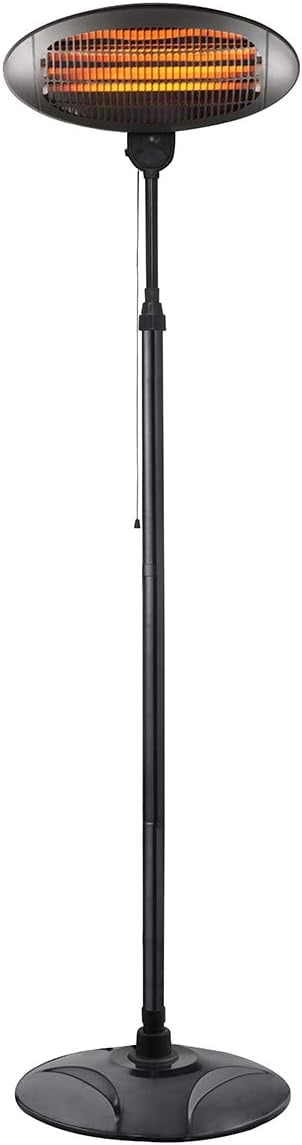
2000 watts with an IPX4 water resistance rating, which means it tolerates splashing from any direction, and an adjustable stand. Around $85, rated 4.0 by owners on Amazon, shipped from Amazon.
IPX4 is the specification that matters on a balcony or an uncovered deck, and most cheap patio heaters do not publish one at all.
What We Like:
- IPX4 water resistance
- Adjustable stand height
- Around $85
What We Don't Like:
- One of the lower owner scores here
How to choose an outdoor heater
| Power | Settings | Weather rating | Price | |
|---|---|---|---|---|
| Lenoxx 2000W Infrared | 2000W | — | IPX4 | $50–100 |
| YOPOWER 2000W Patio Heater | 2000W | 3 | Not published | $50–100 |
Both figures are from Amazon, where each is the linked stockist.
Electric, gas or fire pit. Electric infrared is cheapest to buy, plugs into a normal 10-amp socket, and heats a cone perhaps two metres wide. Gas heats a circle three to four metres across and runs anywhere, at the cost of bottle swaps and a much larger unit. A fire pit heats a similar circle, costs least to run if you have wood, and cannot be turned off quickly when the wind changes.
Running cost is simple arithmetic. A 2000-watt electric heater costs roughly 64 cents an hour at 32 cents a kilowatt-hour. A 9kg gas bottle runs a typical patio heater for about 12 to 15 hours and costs around $30 to swap, so gas lands near $2 an hour. Electric is the cheaper of the two to run, which surprises people.
Check the weather rating, not the marketing. An IP rating is a tested specification. "Weather resistant" with no number behind it is not. IPX4 handles splashing; anything permanently exposed wants better, or a cover.
Mounted strip heaters are a different purchase. The wall and ceiling-mounted infrared strips used in cafes, from brands like Heatstrip and Bromic, are the best-performing outdoor heating sold in Australia. They are hard-wired, cost several times these figures, and sell through specialists rather than any retailer on this site.
Watts do not tell you the whole story. Almost every portable electric patio heater is 2000 to 2400 watts, because that is the limit of a standard Australian power point. What separates them is how well the reflector directs that heat and how high the element sits.
FAQs
Do outdoor heaters work in wind?
Poorly, all of them. Radiant heat travels in a straight line and is unaffected by wind, but the wind strips the warmth off your skin faster than the heater replaces it. A windbreak does more than a bigger heater.
Can I use an indoor heater outside?
No. Indoor heaters have no weather rating, and a fan or column heater outdoors is heating air that immediately blows away. It is both unsafe and useless.
Are gas patio heaters banned anywhere?
Some apartment buildings and rental agreements prohibit gas bottles on balconies, and some councils restrict open fires. Worth checking before buying either gas or a fire pit.
How close should it be?
Manufacturers specify a minimum clearance, usually around a metre from anything flammable and more above. Radiant heaters get hot enough to scorch an umbrella or a pergola beam.