Home brewing in Australia starts, for almost everyone, with the same green-and-gold path: a Coopers-style fermenter kit from a big-box shelf or a local brew shop, and the discovery that temperature, not talent, decides whether batch one tastes like beer. The verified pick below is the gadget that fixes exactly that, wrapped in the honest guide the kits don't include.
1. Best First Upgrade: Inkbird ITC-308 Temperature Controller
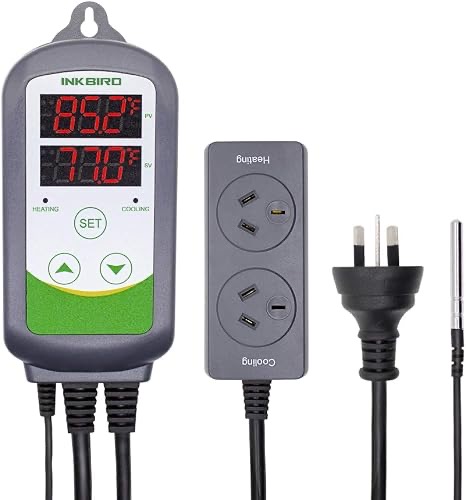
The Inkbird is the most recommended object in Australian home-brew forums for a reason: it switches a heat belt or old fridge to hold fermentation at exactly the yeast's happy temperature, and 548 owners average 4.7 stars. Off-flavours from hot ferments are the classic first-batch killer, and this is the $49 cure.
It's an upgrade to a kit rather than the kit itself, which is precisely the point: the fermenter is commodity plastic, the temperature is the craft.
What We Like:
- Fixes the #1 beginner fault
- Runs fridge or heat belt
- Set-and-forget
What We Don't Like:
- Needs a fridge or belt to control
Other options worth a look
- The Coopers DIY kit — the national starting point at big-box stores and brew shops around $90: fermenter, extract tin, bottles-worth of carbonation drops, first batch inside a fortnight.
- Your local home-brew shop — grain, hops, yeast and the advice that saves batch three; the hobby's real infrastructure, in every city and most big towns.
- KegLand and Grainfather — the all-grain and kegging tiers Australians graduate into, from brew-shop counters and their own sites.
How to start brewing without hating it
Extract first, grain later. Tin-and-water extract brewing teaches sanitation and fermentation with an hour of work; all-grain adds a brew-day and a shed of gear. Skipping the ladder is how garages fill with regret.
Sanitation is 90 per cent of the craft. Every infected batch traces to a shortcut with the no-rinse sanitiser. Clean-obsessed beginners make drinkable beer immediately, which the forums repeat like scripture.
Temperature control beats every recipe upgrade. Ale yeast at 18-20 degrees makes clean beer; the same yeast at 26 makes solvent. The Inkbird-and-old-fridge combination is the single biggest quality jump in the hobby, at the price of a slab.
RELATED: The Best Wine Fridges and The Best Kitchen Scales
FAQs
Is home brew actually cheaper?
Extract batches land around $2 a longneck, less with kegging, more with hop-heavy styles. The savings are real and nobody stays only for them.
How long until I can drink it?
Two weeks fermenting, two weeks bottle-conditioning as a floor, and most beers improve for a month beyond. Patience is the ingredient the kits can't include.