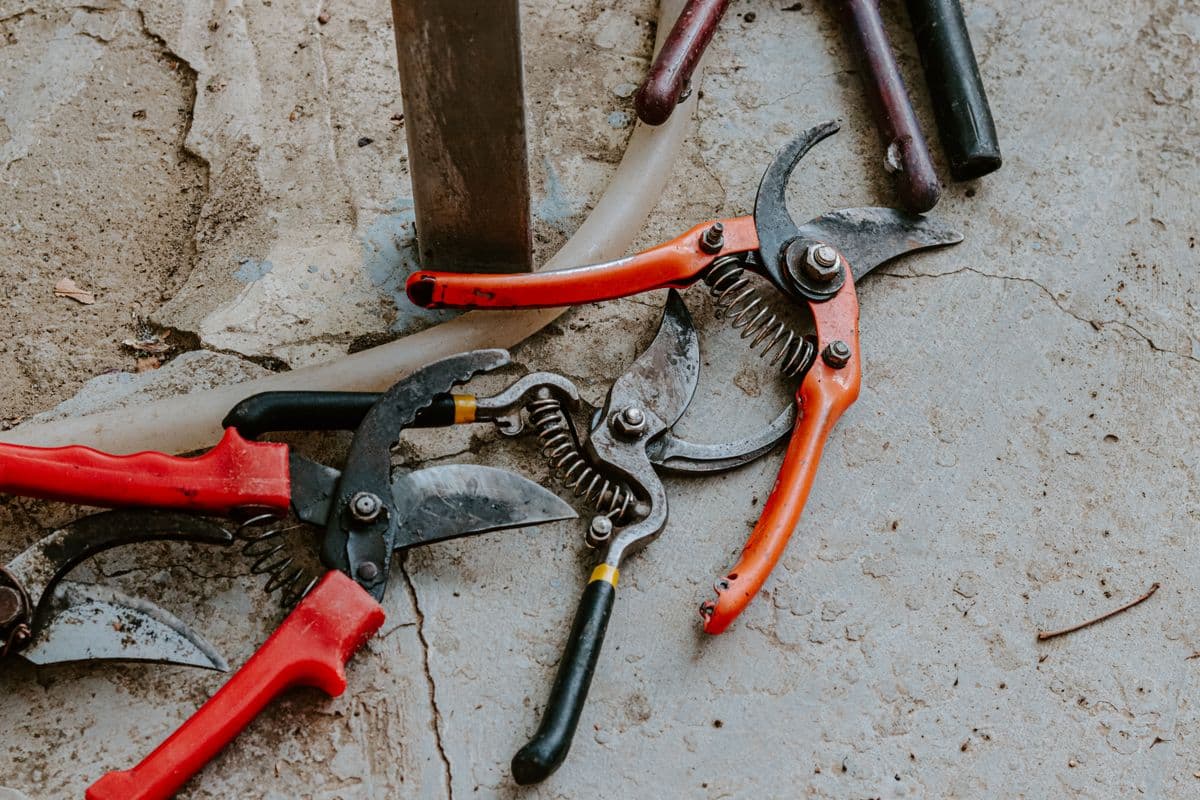
A decent folding saw does what loppers can't and chainsaws shouldn't: branches from wrist-thick to arm-thick, one-handed, from a back pocket. The three below cover the toolshed tiers, and all three cut on the pull stroke like every good pruning saw.
1. Best Overall: Fiskars Folding Saw
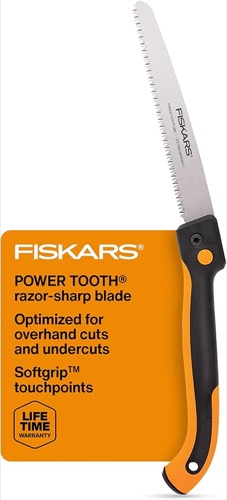
The Fiskars folds the full-size experience into a pocket tool, with 943 owners averaging 4.6 stars. The blade locks open and closed, the teeth stay sharp season after season by owner account, and the handle fills a gloved hand properly.
At around $36 it's the one-saw answer for most gardens. Replacement blades are the weak spot locally, so it's a sharpen-or-replace-the-saw proposition years down the track.
What We Like:
- Locks open and closed
- Comfortable with gloves
- Stays sharp for seasons
What We Don't Like:
- Spare blades hard to find
2. Best Value: WORKPRO 180mm
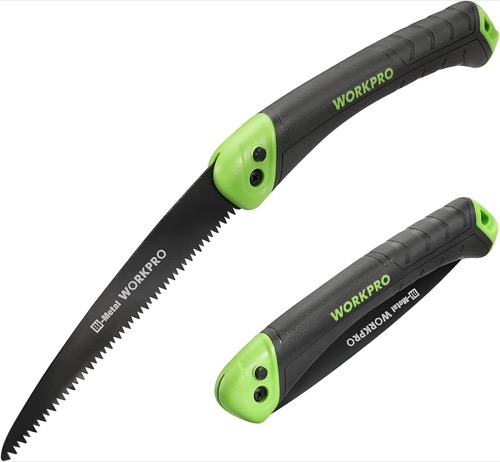
The WORKPRO rates 4.6 stars across 2,700 reviews, at around $23. The bi-metal blade shrugs off green and dry wood alike, and the triple-ground teeth clear sawdust fast enough for quick work through 8cm limbs.
It's the throw-in-the-ute saw. The lock is positive but the pivot loosens with hard seasons, a screwdriver fix owners mention doing once a year.
What We Like:
- Comfortable rubber grip
- Around $23
- Fast-clearing teeth
What We Don't Like:
- Pivot needs occasional tightening
3. Best Fine Cut: SUIZAN Japanese 120mm
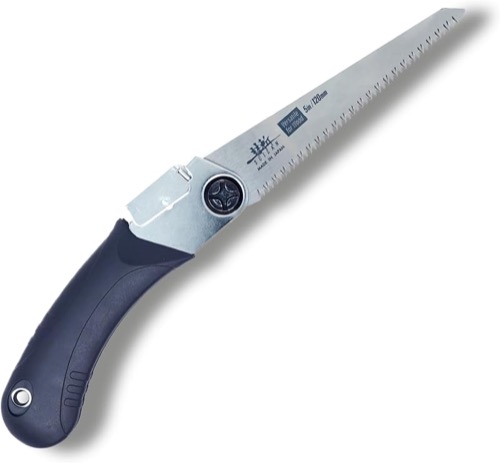
The SUIZAN is the Japanese pull-saw tradition in folding form, and its 4.7-star owners use it as much for clean cuts on living trees and bamboo as for workshop trim. The thin blade leaves surgeon-neat wounds that trees close over well.
At around $30 it complements rather than replaces the brutes above: the fine blade is for precision, and forcing it through thick limbs is how thin blades die.
What We Like:
- Surgically clean cuts
- Great on bamboo and trim
- Genuine Japanese blade
What We Don't Like:
- Not for thick limbs
Other saws worth a look
- Silky — the Japanese professional brand, long recommended here, sold through arborist suppliers. When a saw is a daily tool rather than a Saturday one, Silky's blades are where tradies end up.
- Fixed-blade pruning saws — a Bahco-style fixed saw with a scabbard out-cuts any folder for big clearing days, at the cost of pocketability.
How to pick a pruning saw
Cutting happens on the pull stroke. Every saw here cuts pulling toward you, which keeps thin blades straight and control high. Push saws belong on timber, not trees.
Teeth per inch sets the job. Coarse teeth around 6 to 7 TPI rip through green limbs; finer teeth leave cleaner cuts on live wood the tree must heal. It's why the WORKPRO and SUIZAN both earn a hook on the shed wall.
Cut outside the branch collar. The swollen ring where branch meets trunk is the tree's healing tissue. Cutting just beyond it, not flush, is the difference between a sealed wound and a rot pocket.
RELATED: The Best Secateurs and The Best Hand Saws
FAQs
What size branches suit a folding saw?
Wrist to upper-arm thickness is the sweet spot, per thousands of owner reviews. Beyond that, a fixed pruning saw or a pole saw works less and wobbles more.
How do I stop the blade jamming mid-cut?
Undercut first on anything with weight in it. A shallow cut on the underside stops the branch pinching the blade when it sags, which is the cause of nearly every stuck saw.