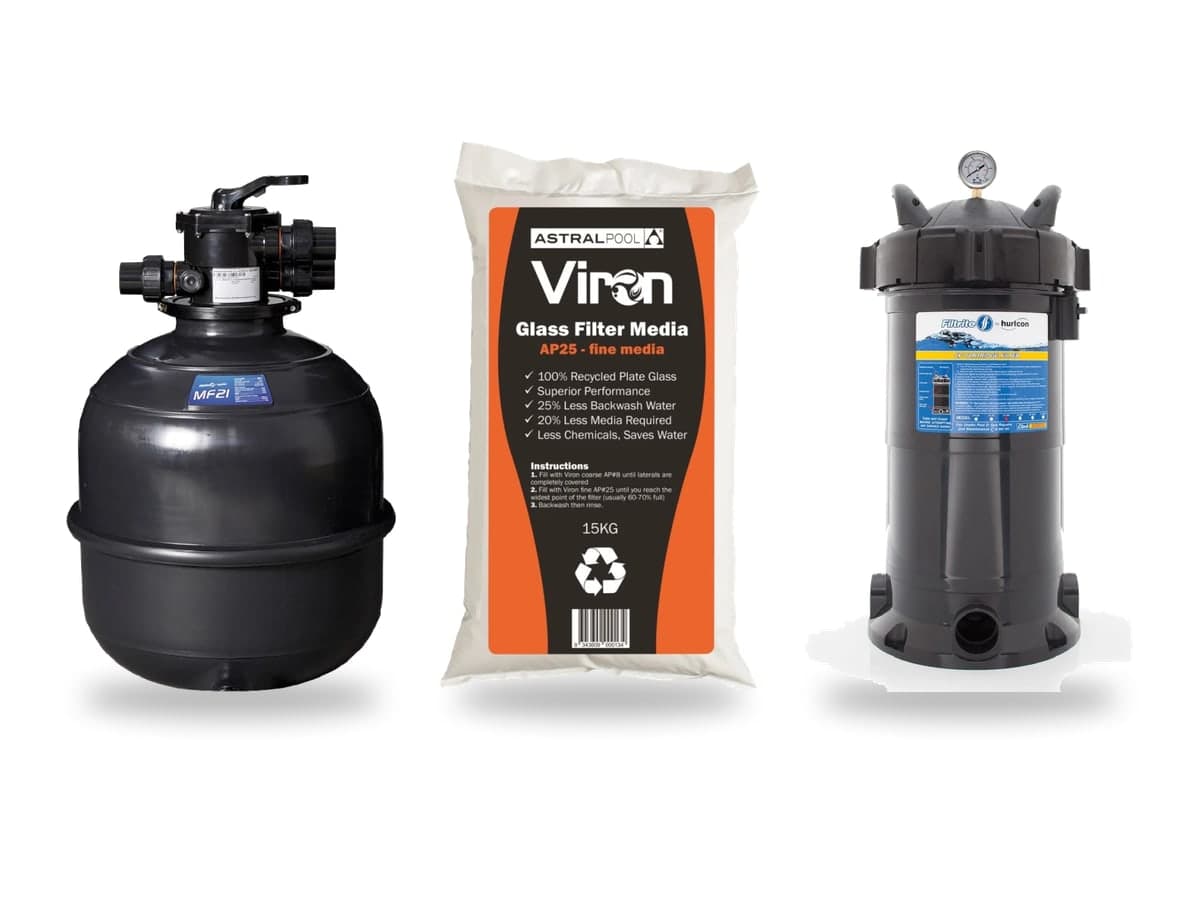
The filter catches what the pump pulls out of the pool, and when it clogs the pressure gauge rises and the water starts to cloud. Home pools use two kinds: a media filter, which is a tank of sand or recycled glass cleaned by backwashing, and a cartridge filter, a pleated element that is lifted out and hosed off. Glass goes into the same tank as sand, in its place. Western Australia's water department says a pool filter should remove particles down to 2 to 6 microns, in its guidance note on swimming pools.
| Sand | Glass media | Cartridge | |
|---|---|---|---|
| Filter | Media filter | Media filter | Cartridge filter |
| Smallest particle caught | 20 microns | 5 microns | 10 microns |
| How it's cleaned | Backwash every 1 to 2 weeks | Backwash every 2 to 3 months | Hose off every 2 to 3 weeks, deep clean every 3 months |
| Water used cleaning it | Backwash water to waste | Less than sand | No backwash |
| How long the media lasts | About 5 years | 8 to 10 years | Cartridge 3 to 5 years |
| Example | Filtrite MF21, $700–800 | Viron glass for an MF21, 5 bags | Filtrite CF100, $600–700 |
Microns, cleaning intervals and media life are AstralPool's figures, except the cartridge cleaning and life, which are Zodiac's. Both brands belong to Fluidra and sell sand, glass and cartridge filters. Prices checked on 28 September 2026.
Sand filters
A sand filter pushes water down through a bed of silica sand. To clean it, the six-position valve on top reverses the flow and flushes the trapped dirt out to waste, which the WA note describes as backwashing. Davey's filter manual says to backwash when the gauge reads 40 to 50 kPa above its clean reading, run it until the water in the sight glass is clear, which takes two or three minutes, then rinse for about a minute.
AstralPool rates standard sand at 20 microns and says it lasts five to seven years, though its running-cost guide says five. Zodiac puts sand at 20 to 40 microns.
Filtrite MF21
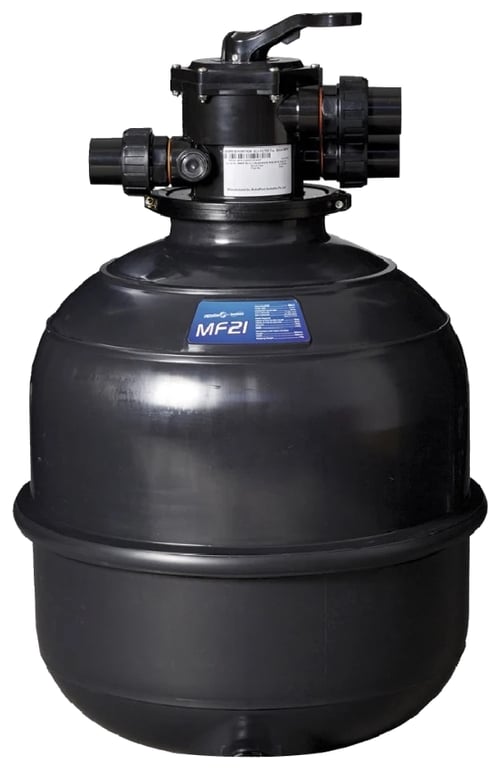
The MF21 is a 21-inch media filter that turns over 85,000 litres in eight hours, according to Clark Rubber, which sells the Filtrite range. It takes 80kg of sand, or two bags of coarse and three of fine glass, and has 40mm ports and a six-position valve. The tank is covered for ten years.
The valve is covered for 12 months, much less than the tank.
What We Like:
- 10-year tank warranty
- Takes sand or glass
- 85,000L in 8 hours
What We Don't Like:
- 12 months on the valve
Glass media
Glass media is crushed recycled glass that fills a media filter in place of sand. AstralPool says glass catches particles down to 5 microns, needs backwashing every two to three months against every one to two weeks for sand, and lasts eight to ten years. Its Viron glass uses up to half the backwash water of sand, AstralPool says, and Zodiac claims its own glass saves up to 65% of the water. These are makers' figures for their own products.
A filter takes less glass than sand by weight: Clark Rubber's MF21 needs 80kg of sand or five 15kg bags of glass.
AstralPool Viron Active Glass
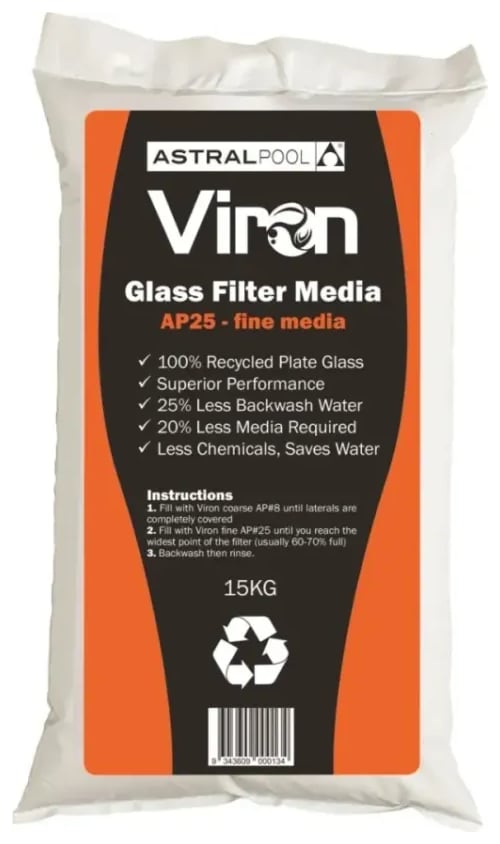
Viron Active Glass is 100% recycled glass sold in 15kg bags, in fine and coarse grades, and a media filter needs both. AstralPool says it filters to 5 microns and cuts backwashing. Clark Rubber sells the coarse grade at the same price as the fine grade linked here.
Filling a 21-inch filter takes five bags, and the two grades are sold separately.
What We Like:
- Recycled glass
- Fewer backwashes
- Fits existing sand filters
What We Don't Like:
- Two grades to buy
Cartridge filters
A cartridge filter strains water through a pleated fabric element and can't be backwashed. The element comes out for cleaning, the WA note says. Zodiac suggests hosing it every two to three weeks, cleaning it when the gauge reads 8 to 10 PSI above normal, deep cleaning every three months and replacing the cartridge every three to five years. AstralPool rates cartridges at 10 microns.
Zodiac and Clark Rubber both say cartridge filters work well at low flow, which suits variable-speed pumps. They use no backwash water: Sydney Water says a sand filter can use up to 8,000 litres a year backwashing, and that cartridge filters don't need backwashing at all.
Filtrite CF100
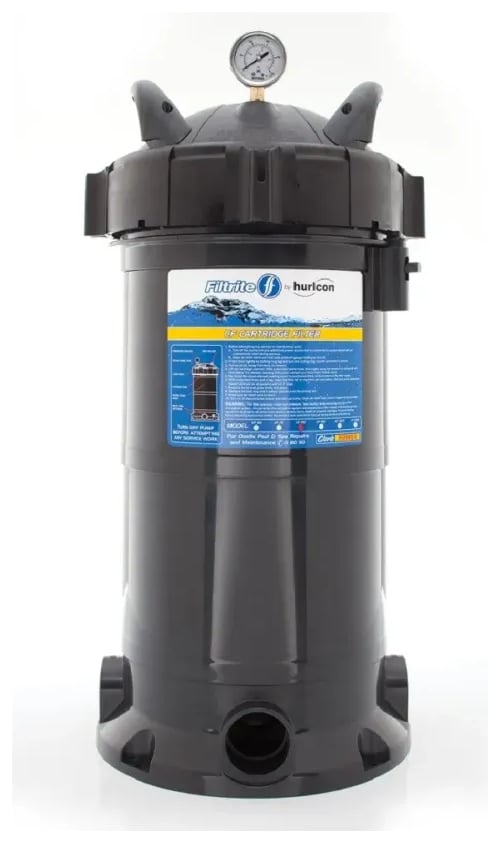
The CF100 has 100 square feet of cartridge, filters 375 litres a minute and turns over 180,000 litres in eight hours, according to Clark Rubber. It is made in Australia, stands 710mm tall with 50mm connections, and Clark Rubber describes it as suited to low-speed pumps.
The cartridge has to be lifted out and hosed down, where a media filter is cleaned by turning the valve.
What We Like:
- No backwash water
- Suits variable-speed pumps
- 180,000L in 8 hours
What We Don't Like:
- Cleaned by hand
Where backwash water can go
A media filter's backwash has to go somewhere, and the rules differ by water authority. Sydney Water says chlorinated pool water must go to the sewer and never the stormwater system. In Western Australia, Water Corporation does not take backwash from home pools into its sewers and refers owners to their council. Hunter Water requires a licensed plumber's connection to the sewer and no backwashing while it rains. In South Australia, backwash is banned from stormwater, according to an EPA sheet that Yorke Peninsula Council republishes.
A cartridge filter produces no backwash water, which suits a pool where it can't go to the sewer.
Which suits which pool
Sand suits a pool where backwash water can go to the sewer, and an owner happy to backwash every week or two.
Glass suits owners of a media filter who want finer filtering and fewer backwashes, without changing the filter.
A cartridge suits a pool with a variable-speed pump, a tight equipment space, or nowhere to send backwash water.
FAQs
Can glass go in a sand filter?
Usually. Clark Rubber lists glass as an option for its Filtrite media filters and gives the number of bags for each size. The filter maker's manual is the place to check.
How often should a sand filter be backwashed?
When the pressure gauge rises: Davey says at 40 to 50 kPa above the clean reading. AstralPool puts that at every one to two weeks for sand.
Which filter catches the finest dirt?
On the makers' figures, glass at about 5 microns, then cartridges at about 10 and sand at about 20.