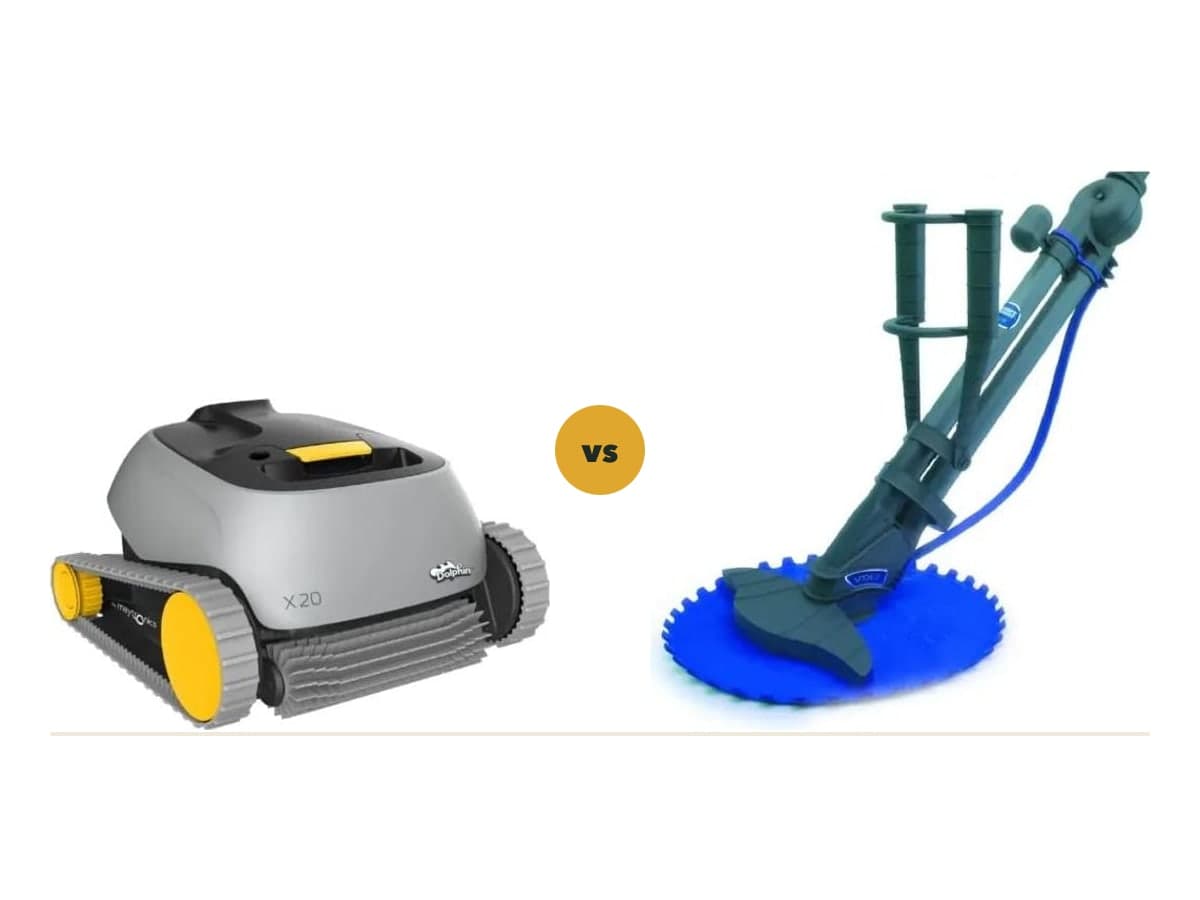
The three kinds of automatic pool cleaner differ in where their power comes from and where the dirt ends up. A robot has its own electric motor and filter and works independently of the pool's pump and filter, according to Zodiac, which makes all three types. A suction cleaner plugs into the skimmer box and is driven by the pool pump. A pressure cleaner runs on water pushed through a return line and collects debris in its own bag.
Robots from the established brands cost the most to buy. A suction cleaner costs less, but it only works while the pool pump runs, and what it picks up goes to the skimmer basket.
The three at a glance
| Robotic | Suction | Pressure | |
|---|---|---|---|
| Power | Own electric motor | Pool filtration pump | Water pressure from the pump |
| Where dirt goes | Filter inside the cleaner | Skimmer basket | Bag on the cleaner |
| Pool pump running | Not needed | Needed | Needed |
| Connects to | Power supply or battery | Skimmer box or suction port | Dedicated return line |
| Example | Dolphin X20, $1,400–1,600 | Kreepy Krauly VTX-7, $700–800 | None at the stores checked |
How each type works is from Zodiac's descriptions; the prices are Clark Rubber's on 27 September 2026.
Robotic cleaners
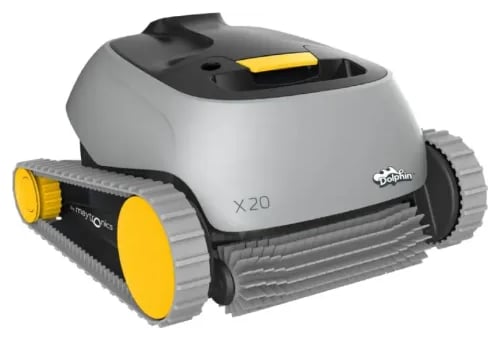
A robot drives itself around the pool, scrubs with its own brushes and holds the dirt in a canister inside the cleaner. Because it does not use the pool pump, it can run with the pump switched off, and the dirt it collects stays out of the pool filter. The Dolphin X20 shown here is a corded robot for the floor and walls of pools as long as 10 metres, and cordless robots such as the WYBOT C1 run on a battery instead.
Robot filters can be fine. Maytronics says its Dolphin Liberty filters can catch particles as small as 20 microns, and WYBOT lists a 10-micron fine filter on its C2. The drawbacks are the price of the established brands, and that a robot has to be lifted out of the pool and emptied after a clean.
What We Like:
- No pool pump needed
- Scrubs walls as well as the floor
- Its own fine filter
What We Don't Like:
- Dolphin and Zodiac cost the most
- Lifting out and emptying
Suction cleaners
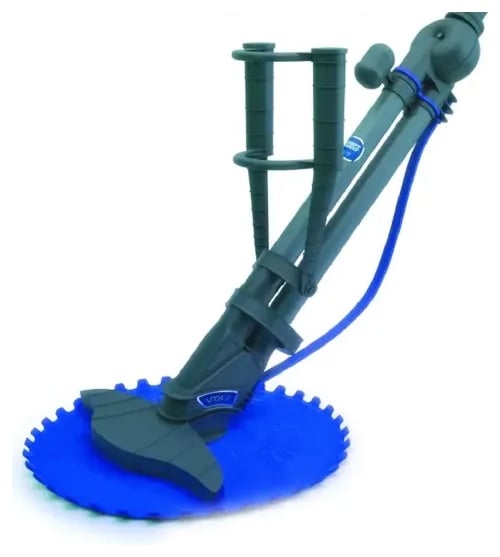
A suction cleaner connects to the skimmer box by a hose, and the pool pump's suction drives it around the pool. Zodiac says its suction cleaners clean the floor in a random pattern and send what they collect to the skimmer basket. Some attach to a dedicated suction port instead, and Hayward rates its TracVac for concrete, fibreglass, vinyl and tiled pools.
The Kreepy Krauly VTX-7 shown here costs about three-quarters as much as Clark Rubber's cheapest Dolphin robot, and the simpler VTX-3 about half as much. It only cleans while the pump runs, so it suits a pool whose pump already runs for several hours a day.
What We Like:
- Costs less than a Dolphin
- No cable or battery
- Runs whenever the pump does
What We Don't Like:
- Needs the pool pump running
- Fills the skimmer basket
Pressure cleaners
A pressure cleaner connects to a dedicated return line, and the water the pump pushes back into the pool drives it along. Debris goes into a bag on the cleaner, which keeps it out of the filter and the pump basket, according to Zodiac, which says pressure cleaners suit pools in leafy areas with heavy debris.
They are the least common type in Australian stores. Clark Rubber and Bunnings both list robotic and suction cleaners but no pressure models, and a pool needs a dedicated return line to use one.
What actually differs
Cost to buy. All three Kreepy Krauly suction cleaners at Clark Rubber cost less than its cheapest Dolphin robot. Cordless robots from newer brands can cost less again: the WYBOT C1 is cheaper than the Kreepy Krauly VTX-7.
Running. A robot runs on its own power. Suction and pressure cleaners need the pool pump running while they clean. Running time costs money, and AstralPool, which makes pumps, says a variable-speed pump running 24 hours a day for a month costs about the same as a single-speed pump running three hours a day.
Where the dirt goes. A robot keeps it in its own filter, a pressure cleaner in its bag, and a suction cleaner sends it to the skimmer basket and on towards the pool filter.
Walls and waterline. Robots climb walls, and many scrub the waterline. Zodiac describes its suction cleaners as floor cleaners, though some suction models, such as Pentair's Rebel 2, are listed as climbing the walls to the waterline.
Which suits which pool
A robot suits owners who want the walls and waterline cleaned and fine dirt caught, without running the pool pump for it.
A suction cleaner suits a pool whose pump already runs daily, and owners who want the lowest price.
A pressure cleaner suits a pool with a dedicated return line under trees that drop a lot of leaves.
FAQs
Which type of pool cleaner is best?
It depends on the pool. A robot cleans the most surfaces and catches fine dirt without using the pool pump, but the established brands cost the most. A suction cleaner costs less and needs no cable or battery, but only runs with the pump.
Are cordless pool robots safe to charge?
Several cordless pool robots have been recalled in Australia over battery faults, so it is worth searching the ACCC's recall list for a model before buying, and charging it as the maker instructs.
Can a robotic cleaner go in an above-ground pool?
Some can. The Dolphin E10 is rated for above-ground pools up to 8 metres, and Aiper sells its Scuba SE for above-ground pools and portable pools only.