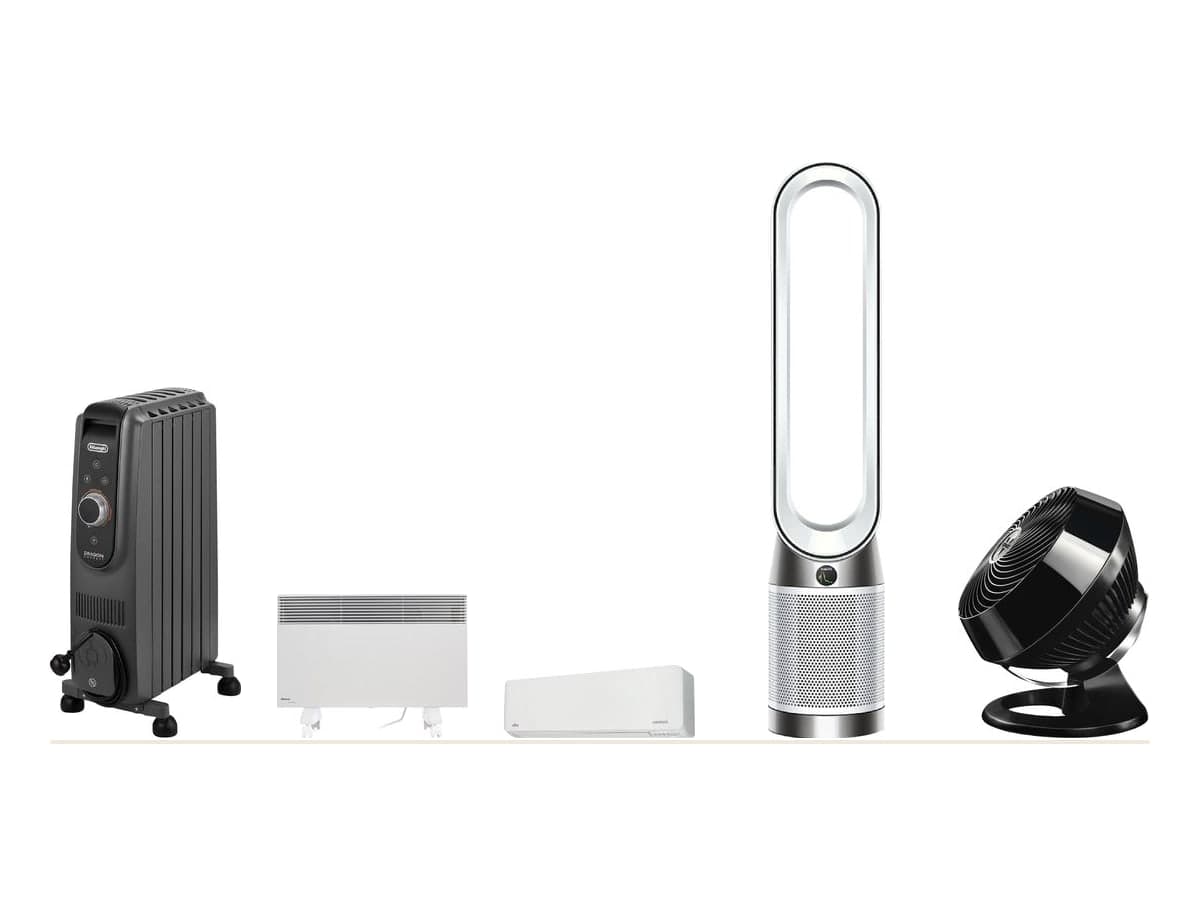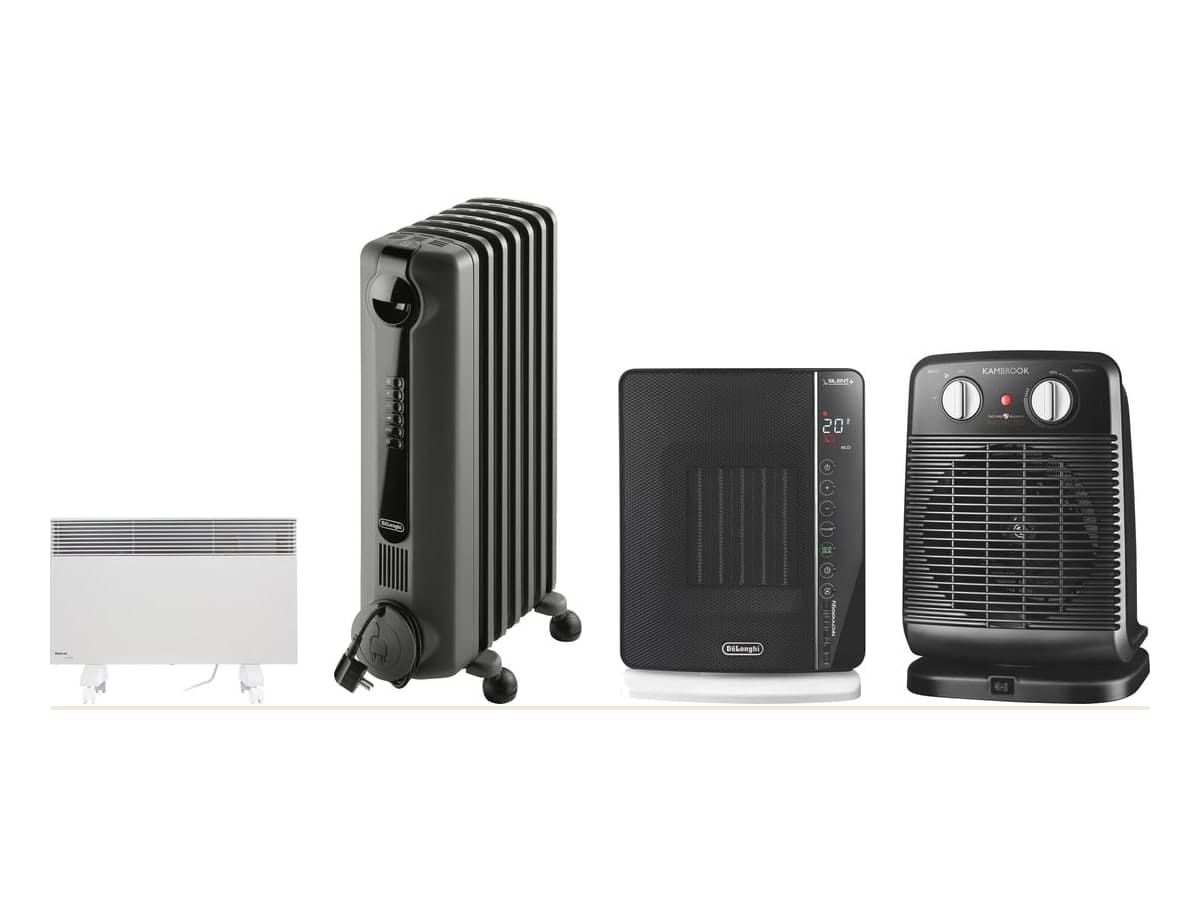
Every plug-in electric heater sold in Australia turns electricity into heat at exactly the same rate. A 2400-watt heater costs the same to run whatever shape it is. So the choice is not about efficiency, it is about how the heat arrives and what happens when the thermostat cuts out.
Panel heaters are silent and slow. Oil columns are slow but keep giving heat back after they switch off. Ceramic and fan heaters are fast, loud and forget everything the moment they stop. Reverse-cycle air conditioning is the only one that breaks the rule, and it is covered at the end.
Panel heater
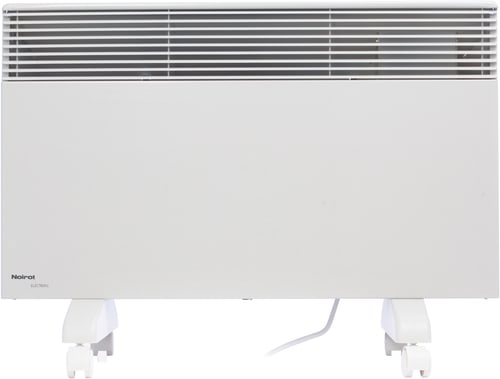
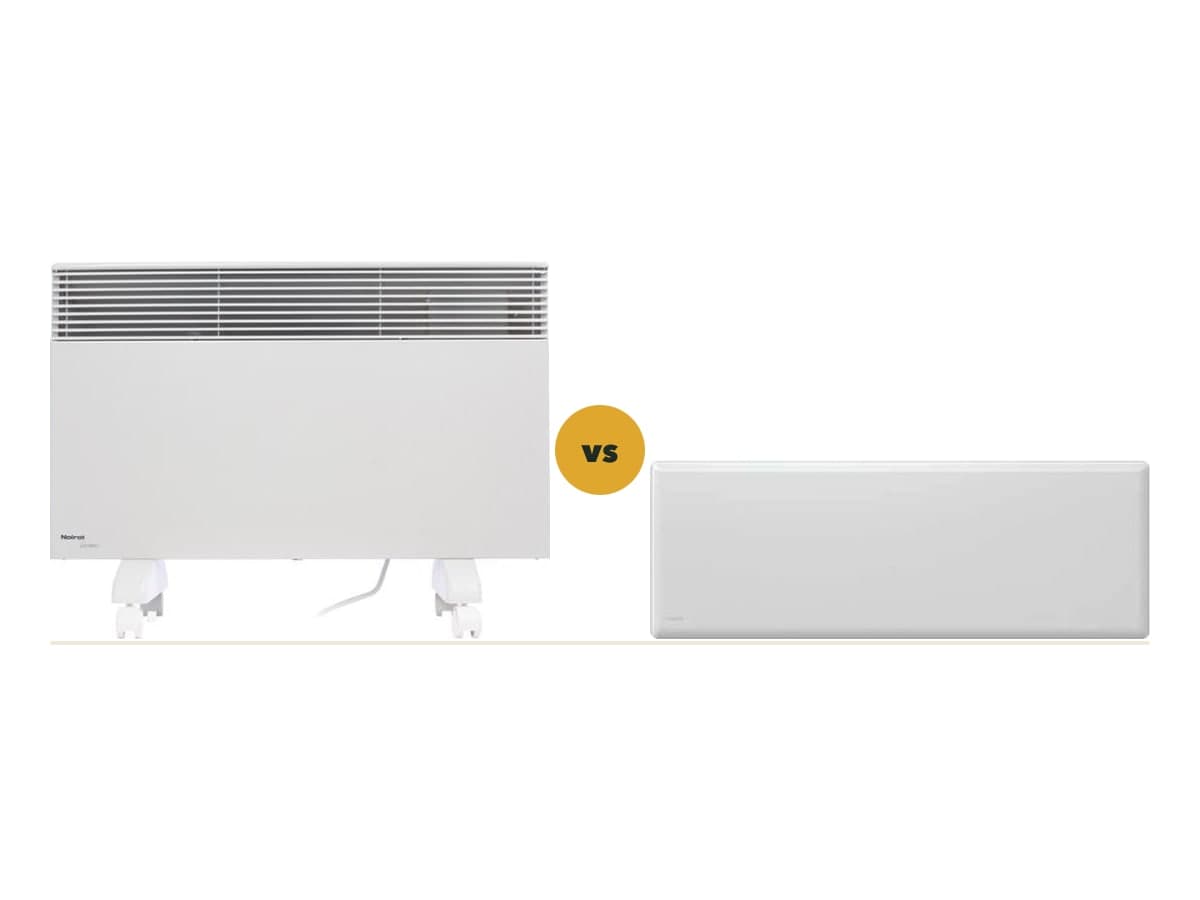
Noirot's Spot Plus 2000W is the reference: a flat panel with no fan, 100mm deep, that hangs on a wall or rolls on castors. It warms the air touching it and lets convection move it around the room. Nothing in it moves, which is why it makes no sound and why Noirot warrants it for the life of the machine. Owners rate it 4.6 at The Good Guys.
It is the slowest of the four to lift a cold room, and the most expensive to buy.
What We Like:
- Completely silent
- Limited lifetime warranty
- Sits flat on a wall
What We Don't Like:
- Slowest to warm a cold room
Oil column
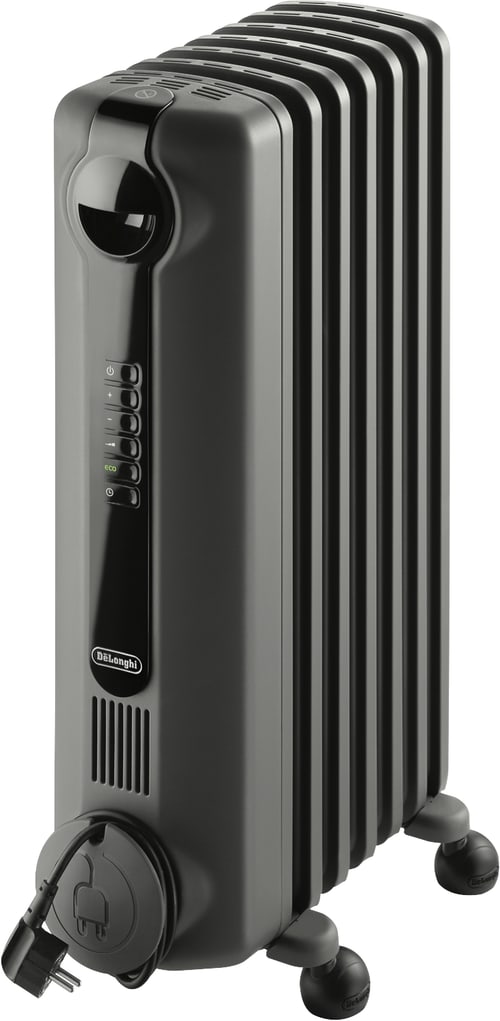
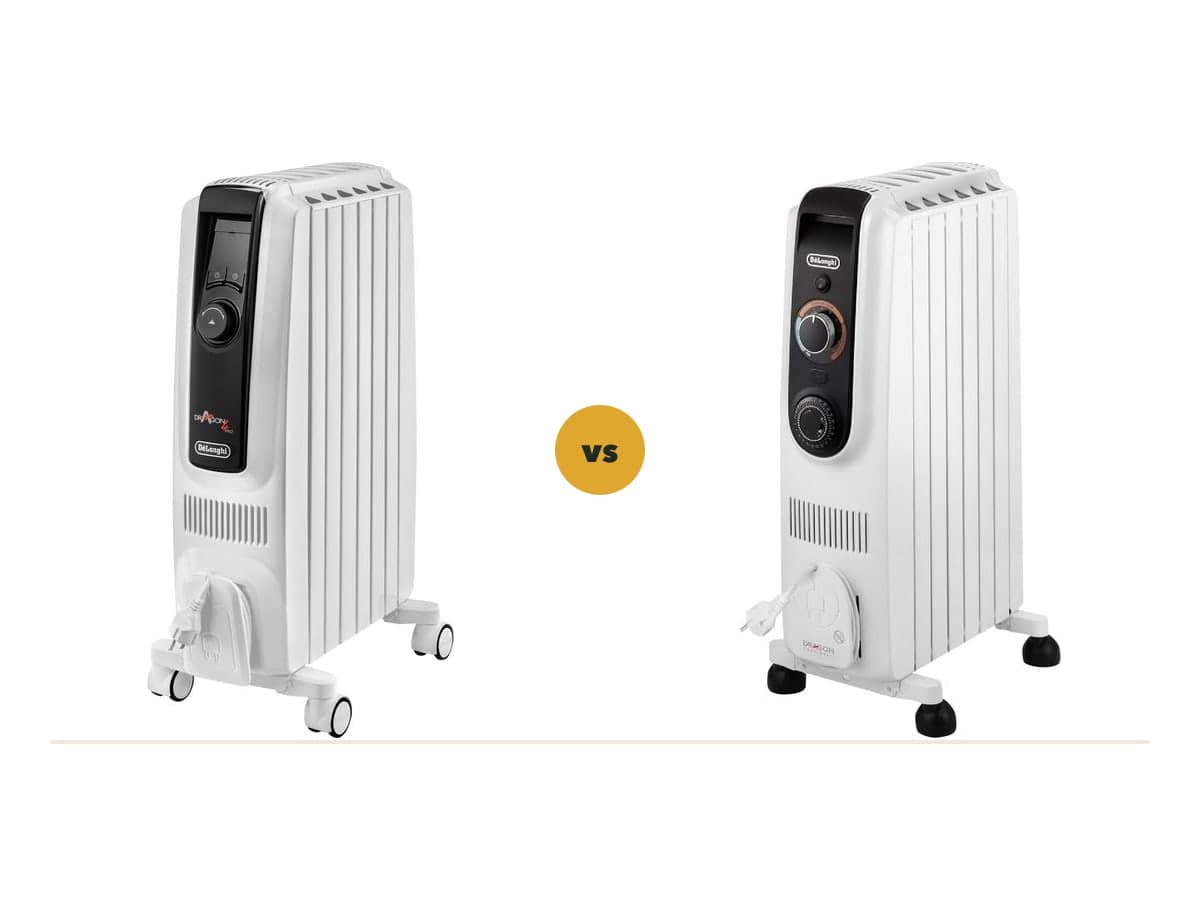
De'Longhi's Radia S Digital is 1500 watts for a room up to 45 cubic metres, with a digital thermostat, 24-hour timer and a seven-year warranty at 9.66kg. The oil sealed in the fins is not fuel; it is a store of heat that keeps radiating after the element cuts out, which smooths the temperature swings. Owners rate it 4.5 at The Good Guys.
It takes ten minutes or so to come up to temperature, and it is heavy to move despite the castors.
What We Like:
- Holds heat after switch-off
- Seven-year warranty
- Silent in use
What We Don't Like:
- Ten minutes before the room changes
Ceramic heater
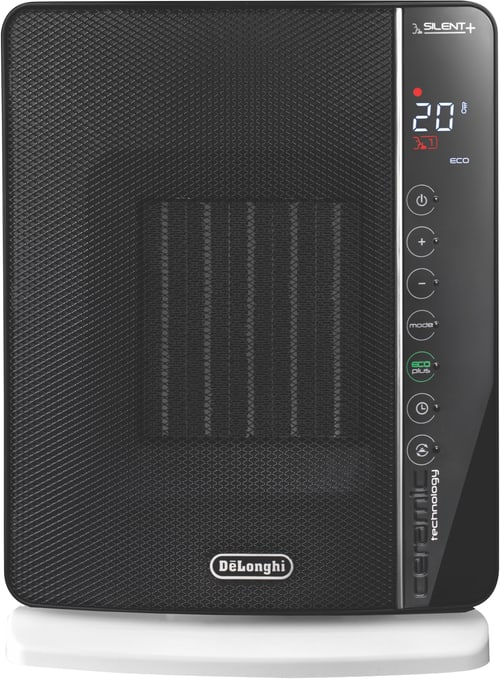
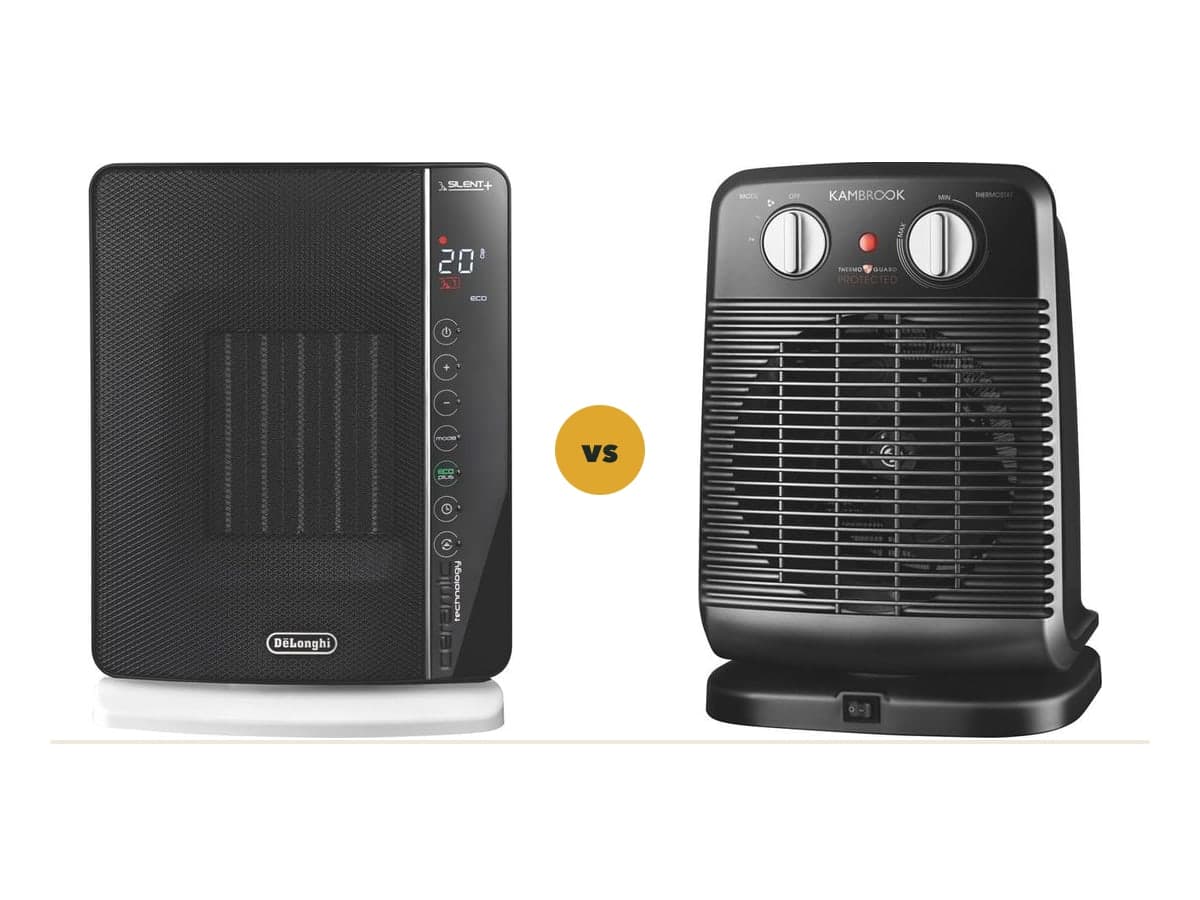
De'Longhi's 2200-watt ceramic heater blows air across a ceramic block rather than a bare wire, with three settings, a thermostat, a timer and a remote, at 2.2kg. It is warm in seconds and quiet enough for a bedroom. Owners rate it 4.6 at The Good Guys.
The warranty is one year, and the heat is gone as soon as the fan stops.
What We Like:
- Warm within seconds
- Quieter than a bare-element fan heater
- 2.2kg
What We Don't Like:
- One-year warranty
Fan heater
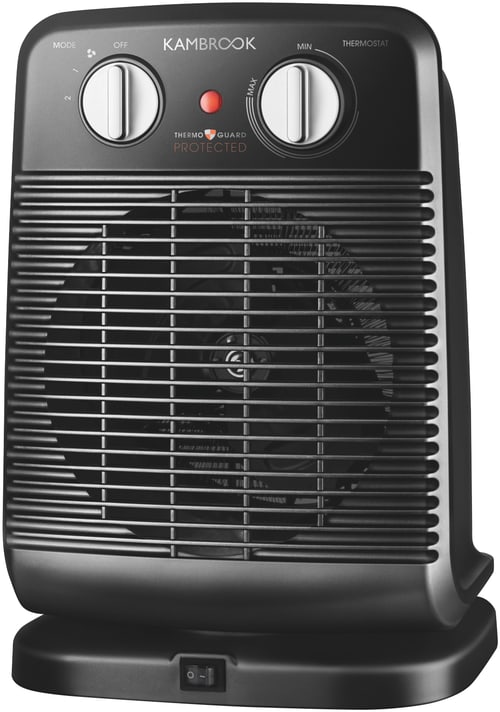
Kambrook's 2400-watt upright is the cheapest way to get heat into a room: two settings, a thermostat, oscillation, a fan-only mode for summer and a tip-over cut-out. Owners rate it 4.2 at The Good Guys.
It is audible across a room, and like the ceramic heater it stops being warm the instant it switches off.
What We Like:
- Cheapest here by a wide margin
- Oscillates across a room
- Doubles as a fan in summer
What We Don't Like:
- Audible in a quiet room
What each type is good at
| Panel | Oil column | Ceramic | Fan | |
|---|---|---|---|---|
| Time to feel warm | 15+ min | 10 min | Seconds | Seconds |
| Noise | None | None | Low | Noticeable |
| Warmth after switch-off | A little | Yes | None | None |
| Holds a room all evening | Yes | Yes | No | No |
| Goes on a wall | Yes | No | No | No |
| Moves between rooms | With castors | Heavy | Easily | Easily |
| Typical warranty | Up to lifetime | 7 years | 1–2 years | 1–2 years |
| Price band | $250–$460 | $80–$310 | $55–$170 | $21–$55 |
| Suits | Bedroom, nursery | Living room, all evening | Bedroom, study | Bathroom, ten-minute jobs |
Side by side
| Panel | Oil column | Ceramic | Fan | |
|---|---|---|---|---|
| Example | Noirot Spot Plus 2000W | De'Longhi Radia S 1500W | De'Longhi DCH7992ER | Kambrook KFH770 |
| Price | $250–300 | $100–150 | $100–150 | $50–100 |
| Power | 2000W | 1500W | 2200W | 2400W |
| Noise | None | None | Low | Noticeable |
| Time to feel warm | 15+ minutes | 10 minutes | Seconds | Seconds |
| Heat after switch-off | A little | Yes | None | None |
| Wall mount | Yes | No | No | No |
| Timer | On T models | 24 hour | Yes | No |
| Warranty | Limited lifetime | 7 years | 1 year | 1 year |
| Owner rating | 4.6 (159) | 4.5 (141) | 4.6 (246) | 4.2 (246) |
Owner ratings are from The Good Guys, with review counts in brackets.
What actually differs
Noise. Panel and oil column heaters have no fan and make no sound at all. Ceramic and fan heaters have to move air to work. In a bedroom this is usually the deciding factor, and no amount of specification changes it.
How long the warmth lasts. An oil column keeps radiating for a while after the power cuts, so the room temperature drifts gently instead of dropping. A fan heater's warmth is gone within a minute. That is why columns suit rooms you sit in all evening and fan heaters suit rooms you pass through.
Speed. Reverse the same list for how fast the heat arrives. A fan heater is warm before you have finished plugging it in; a panel heater takes a quarter of an hour to make a cold room feel different.
Warranty. The spread here is unusually wide: limited lifetime on the Noirot, seven years across De'Longhi's columns, one year on both fan-driven heaters. It tracks how much is inside each one that can fail.
Running cost. Identical per watt-hour. At around 32 cents a kilowatt-hour, a 2400-watt heater running flat out costs about 77 cents an hour. What actually changes the bill is the thermostat: a heater in a closed, insulated room spends most of the evening switched off, and the same heater in a draughty room never stops.
The exception. A reverse-cycle split system moves heat rather than making it, and returns roughly three to four kilowatts of warmth per kilowatt of electricity. Running one costs a fraction of any heater here, which is the argument in what size split system do I need. The catch is installation and a four-figure purchase price.
Which type suits which room
Bedroom, nursery, study: panel or oil column. Silence matters more than speed in a room you sleep in, and both hold a set temperature quietly overnight.
Living room used all evening: oil column, or a panel heater if the room is small. Both keep working between thermostat cycles.
Bathroom or laundry: ceramic or fan. You want heat for ten minutes and then nothing.
A room used all winter, every day: a reverse-cycle split system will cost less to run than any of these by a wide margin, and the saving pays back the installation over a few seasons.
FAQs
Which electric heater is cheapest to run?
None of them. Every plug-in electric heater is 100% efficient at turning electricity into heat, so at the same wattage they cost the same per hour. Only a heat pump beats them, because it moves existing heat instead of creating it.
Why are all the heaters 2400 watts or less?
A standard Australian power point is rated to 10 amps at 240 volts, which caps an appliance at about 2400 watts. Anything more powerful needs its own circuit.
Do oil heaters ever need refilling?
No. The oil is sealed for the life of the heater and never needs topping up.
Is a heater with a thermostat worth paying for?
Yes, and it is the one feature that genuinely changes what you pay to run it. Without a thermostat the heater runs at full power until you switch it off, whether the room needs it or not.