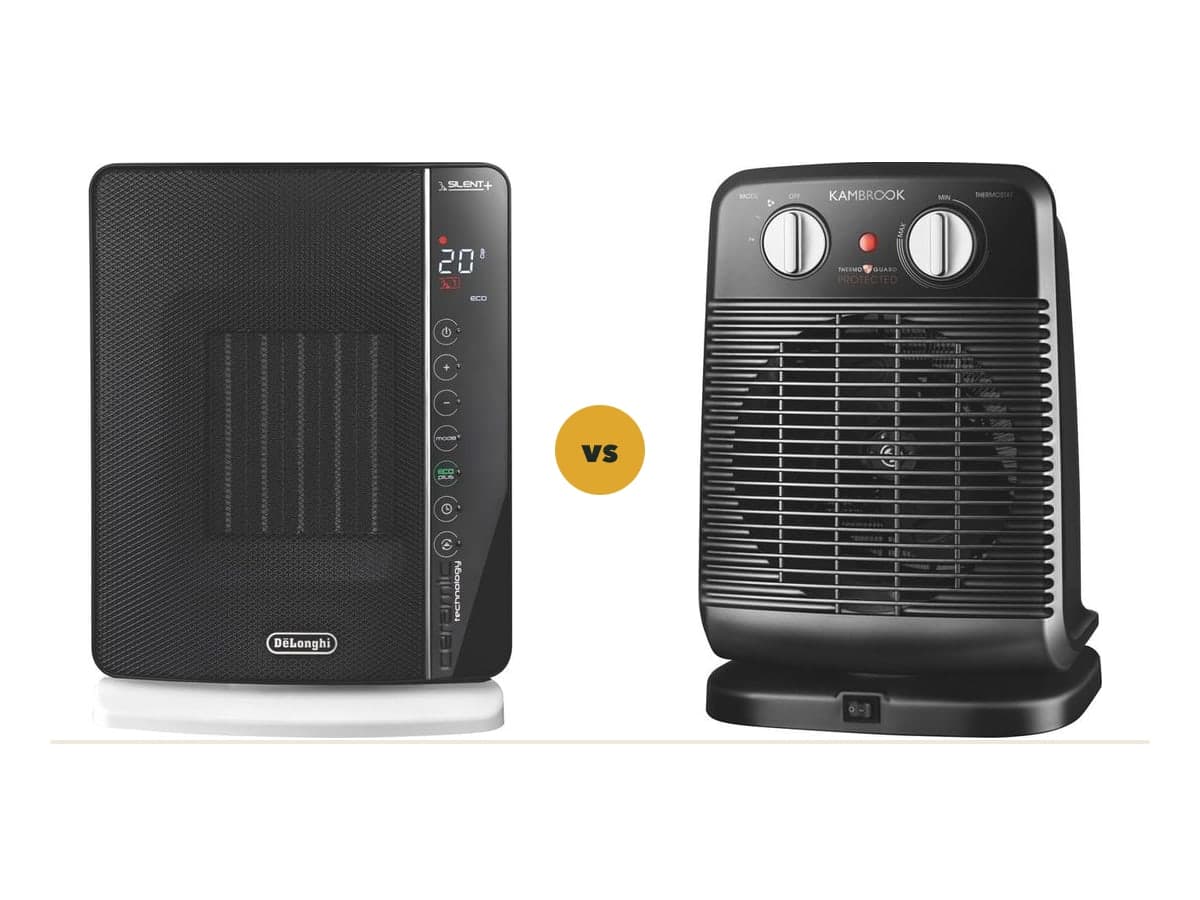
A fan heater sends air across a hot wire. A ceramic heater sends it across a hot ceramic block. Both warm a room the same way, both do it quickly, and both stop the moment you turn them off.
What separates them is everything built around the element. Ceramic heaters run from about $55 to $170 and generally add a thermostat, a timer and sometimes a remote. Fan heaters run from about $21 to $55 and generally have two switches. The two featured below are the common choice at each end, and the full shelf is in the second table.
De'Longhi 2200W Electronic Ceramic
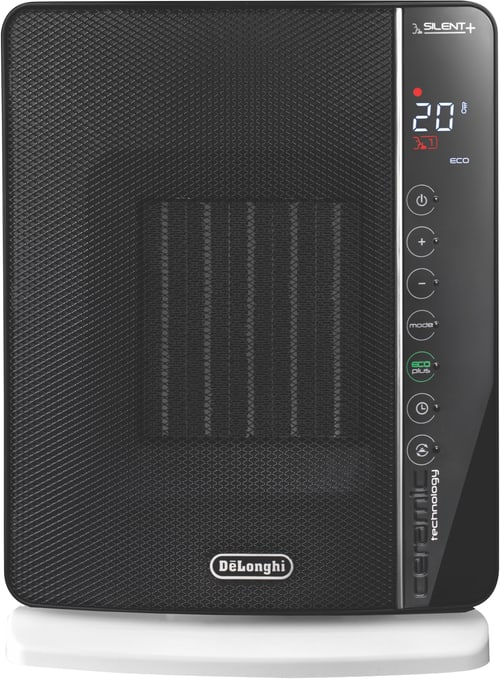
2200 watts, three power settings, a thermostat, a timer and a remote control, at 2.2kg and 372mm tall. One-year warranty. Owners rate it 4.6 at The Good Guys.
Ceramic holds a little heat after switch-off, which is why the fan keeps running briefly to clear it. The element also runs cooler than exposed wire, so it does not produce the hot-dust smell a cheap fan heater gives off when it first starts for the season.
What We Like:
- Thermostat holds a set temperature
- Remote control
- 2.2kg
What We Don't Like:
- One-year warranty
Kambrook 2400W Upright Fan Heater
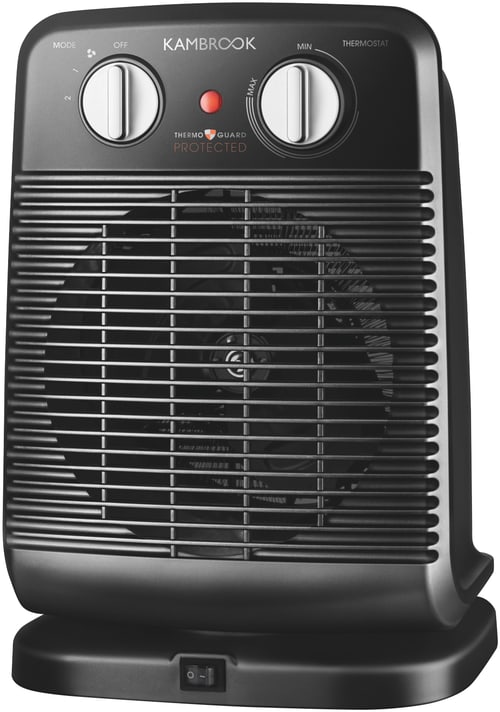
2400 watts, two heat settings plus fan-only, a thermostat, oscillation, a carry handle, tip-over cut-off and overheat protection, at 322mm tall. One-year warranty. Owners rate it 4.2 at The Good Guys.
It is loud enough to notice in a quiet room, and the oscillation is the feature that makes it work in a space bigger than a desk.
What We Like:
- Oscillates across a room
- Fan-only setting for summer
- Costs about a third as much
What We Don't Like:
- Audible in a quiet room
What each type is good at
| Ceramic | Fan | |
|---|---|---|
| Time to feel warm | Seconds | Seconds |
| Noise | Low | Noticeable |
| Warmth after switch-off | A minute or so | None |
| Spread | Directional | Oscillates on most models |
| First-run dust smell | Slight | Pronounced |
| Element temperature | Lower | Higher |
| Typical controls | Thermostat, timer, remote | Two switches, thermostat |
| Price on the shelf | $55–$170 | $21–$55 |
| Suits | Bedroom, study, long sessions | Bathroom, spare room, ten-minute jobs |
What each type costs
| Model | Type | Power | Settings | Warranty | Price |
|---|---|---|---|---|---|
| Goldair GFH220 upright | Fan | 2000W | 2 | 2 years | Under $50 |
| Kambrook KFH770 upright | Fan | 2400W | 2 plus fan only | 1 year | $50–100 |
| Goldair GPCH350 | Ceramic fan | 2000W | 2 | 3 years | $50–100 |
| Dimplex DHCHR16M | Ceramic | 1600W | 2 | 2 years | $50–100 |
| Dimplex DHCHR20M | Ceramic | 2000W | 2 | 2 years | $50–100 |
| Kambrook KCE480 tower | Ceramic | 2200W | 2 | 2 years | $100–150 |
| De'Longhi DCH7992ER | Ceramic | 2200W | 3 | 1 year | $100–150 |
| De'Longhi TCH8993ER tower | Ceramic | 2400W | 3 | 1 year | $150–200 |
The line between the two blurs at the cheap end. Goldair's GPCH350 is sold as a fan heater and has a ceramic element, at around $55 with a three-year warranty, which is longer than either De'Longhi carries.
What actually differs
Noise. Both use a fan, so neither is silent, but a ceramic element needs less airflow to shed the same heat. The Kambrook is the louder of the two, which matters more in a bedroom than in a bathroom you are in for ten minutes.
Controls. A remote and a timer on the De'Longhi against two switches on the Kambrook. Whether that is worth the difference depends entirely on whether the heater lives somewhere you would want to adjust it without getting up.
The first-run smell. Exposed wire burns the dust that settles on it over summer. Ceramic runs cooler and produces less of it.
Spread. The Kambrook oscillates and the De'Longhi does not, so the cheaper heater covers more of a room while the dearer one concentrates on one direction.
Neither holds heat. Switch either off and the warmth is gone within minutes, so neither suits a room you want warm all evening. A column or panel heater is the answer there, covered in panel vs oil column vs fan heater.
Who each one suits
A ceramic heater suits a bedroom or study where it runs for a while and fan noise would be annoying. The De'Longhi above is the well-equipped version; Dimplex's 2kW manual model does the same job for around $72 with two years instead of one.
A fan heater suits a bathroom on a winter morning, a spare room used occasionally, or anywhere heat is wanted for ten minutes at a time. At these prices a second one for another room costs less than most single ceramic models.
FAQs
Is ceramic safer than a wire element?
The element runs at a lower temperature, which is why ceramic heaters are common in bathrooms and bedrooms. Both here have a tip-over cut-out and overheat protection, which matter more than the element type.
Can either heat a large living room?
Not really. Both stop heating the instant they are switched off and neither has the output to hold a big space. They work best on people and small rooms.
Do ceramic heaters use less power?
No. 2200 watts draws 2200 watts. Ceramic changes how the heat is delivered, not how much electricity it takes to make.