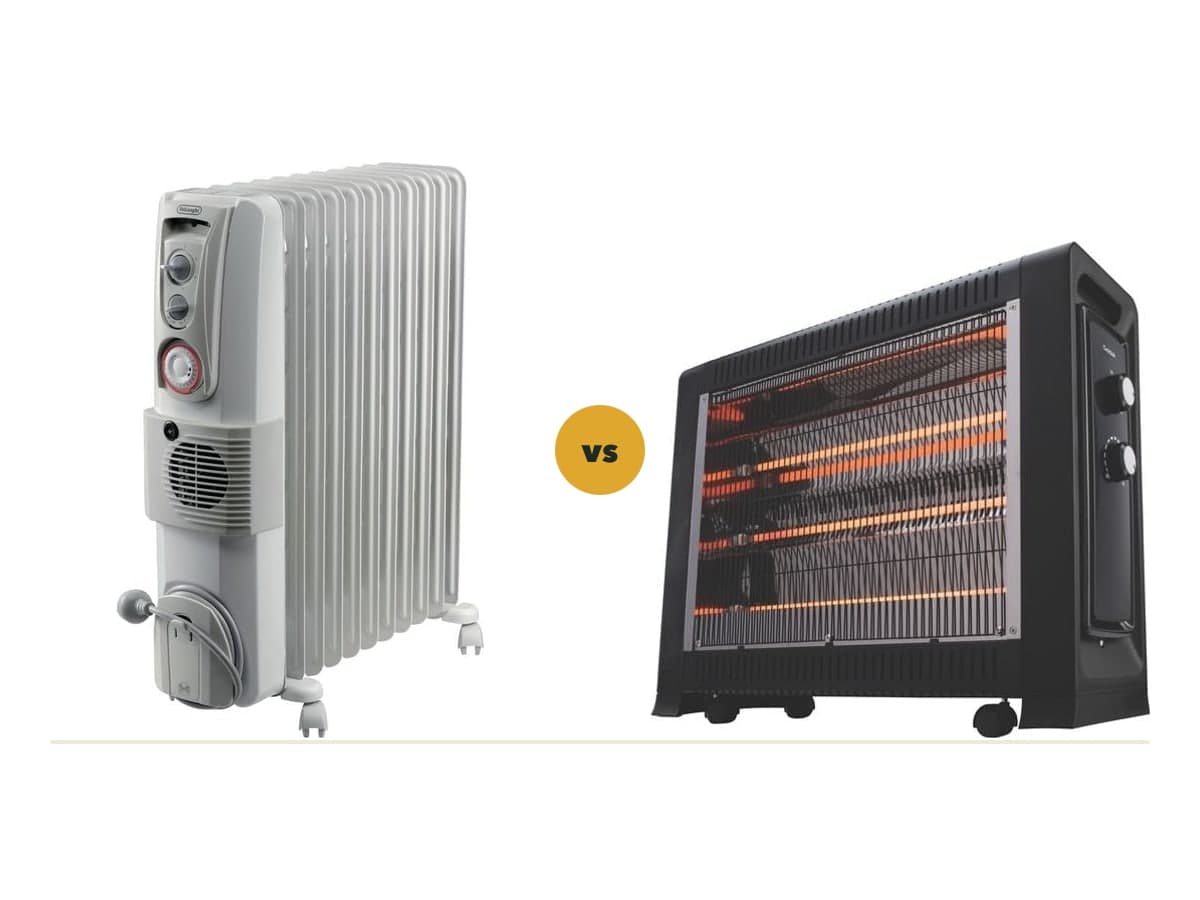
Both brands sell 2400-watt heaters, and 2400 watts is 2400 watts whichever one you plug in. The difference is everything around the element: how long the heat lasts once it switches off, how evenly it spreads, and how long the appliance lasts.
De'Longhi's Thermo column holds heat in sealed oil and keeps radiating after the thermostat cuts out, with a seven-year warranty. Goldair's upright radiant heater warms whatever it points at, almost instantly, and stops the moment it switches off. It costs a quarter as much and is warranted for two years.
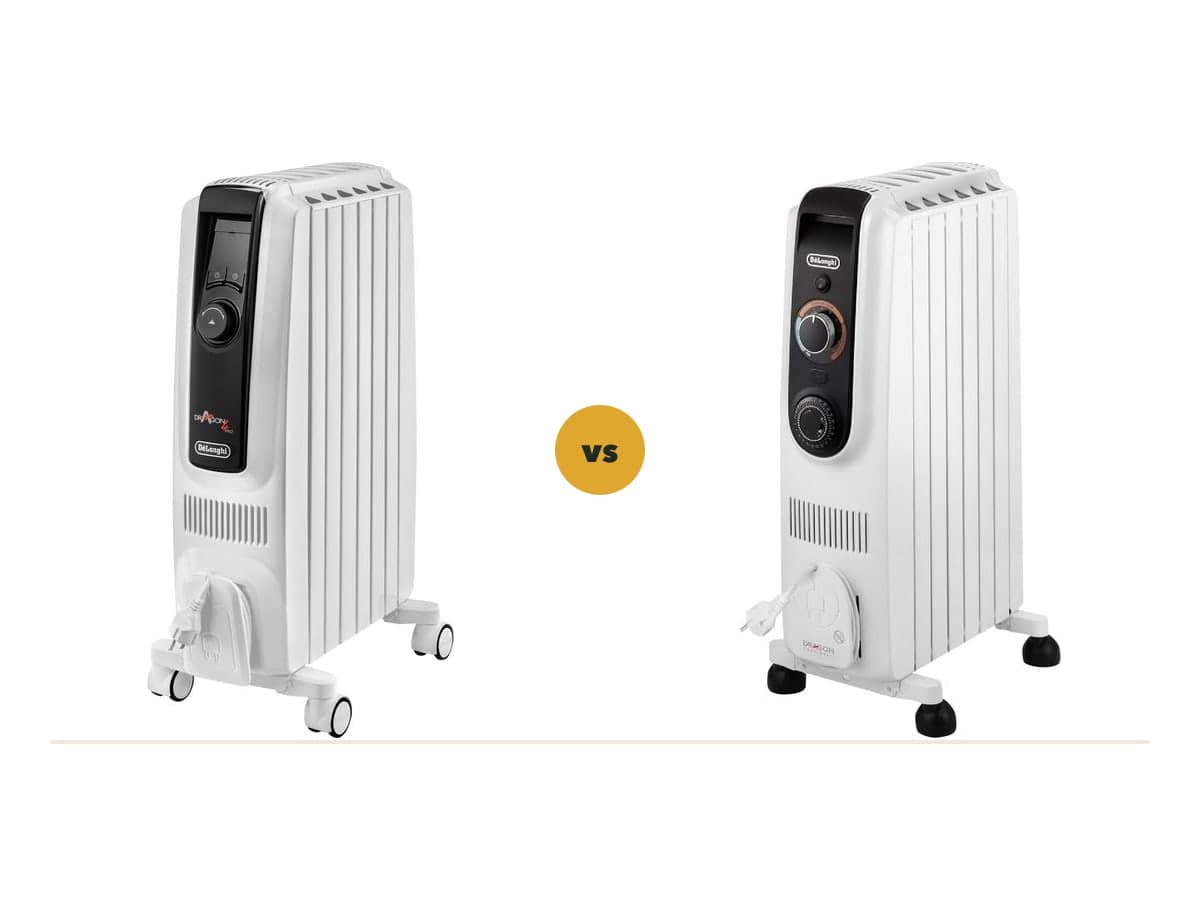
De'Longhi Thermo 2400W
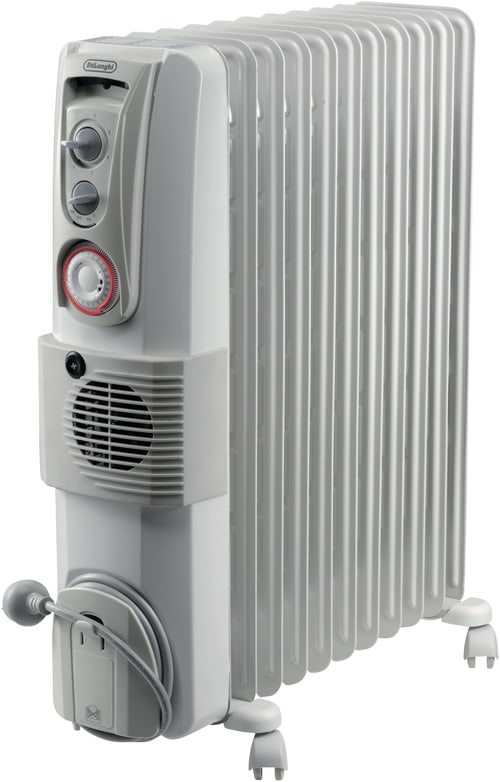
2400 watts for a room up to 70 square metres, with a 24-hour timer, thermostat, tip-over switch and thermal slots in the fins that spread heat while keeping the surface cooler. 15.79kg on castors. Seven-year warranty. Owners rate it 4.5 at The Good Guys.
It takes ten to fifteen minutes before the room feels different, and it is the heaviest thing here to move between rooms.
What We Like:
- Keeps radiating after it cycles off
- 24-hour timer
- Seven-year warranty
What We Don't Like:
- Slow to start, 15.79kg to move
Goldair 2400W Upright Radiant
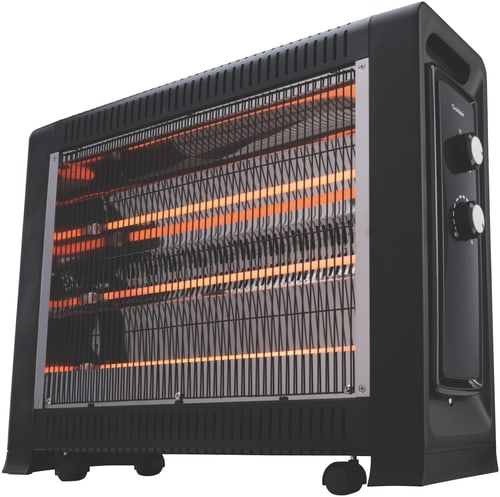
2400 watts across three settings, a thermostat, overheat protection and a tip-over switch, at 5.2kg. Two-year warranty. Owners rate it 4.3 at The Good Guys.
Radiant heat works like sunlight: it warms objects and people in front of it rather than the air, so you feel it within seconds. Step out of its line and the effect disappears.
What We Like:
- Warm within seconds
- 5.2kg, easy to carry
- Around a quarter of the price
What We Don't Like:
- Only heats what it faces
Side by side
| De'Longhi Thermo 2400W | Goldair Radiant 2400W | |
|---|---|---|
| Price | $100–150 | $50–100 |
| Power | 2400W | 2400W |
| Type | Sealed oil column | Upright radiant |
| Room size | Up to 70m² | Line of sight |
| Time to feel warm | 10–15 minutes | Seconds |
| Heat after switch-off | Yes, for some time | None |
| Heat settings | Thermostat | 3 |
| Timer | 24 hour | No |
| Weight | 15.79kg | 5.2kg |
| Warranty | 7 years | 2 years |
| Owner rating | 4.5 (263) | 4.3 (166) |
Owner ratings are from The Good Guys, with review counts in brackets.
What actually differs
How the heat reaches you. The column warms the air, which then circulates and warms the room. The radiant heater warms surfaces directly, so you feel it immediately but the room itself stays cold. Sitting still in one spot suits radiant; using the whole room suits the column.
What happens when it switches off. Oil holds heat. The Thermo keeps giving some back for a while after the thermostat cuts power, which smooths out the temperature. The Goldair stops dead.
Warranty. Seven years against two. Across De'Longhi's column range seven years is standard, and it is the clearest signal of how long each brand expects its heater to last.
Weight. 15.79kg against 5.2kg. If the heater lives in one room, this does not matter. If it follows you around the house, it decides the purchase.
Safety around children. The Thermo's thermal slots lower the surface temperature, and the Goldair's element glows and reaches a much higher temperature behind its guard. Neither belongs near an unsupervised toddler, but they are not equivalent.
Who each one suits
De'Longhi Thermo suits a room used all evening, especially a bedroom that needs to hold temperature overnight.
Goldair Radiant suits a workshop, a garage, a desk or anywhere you want heat on one person now and do not care about the room.
FAQs
Is a cheap heater more expensive to run?
No. At the same wattage the running cost is identical. What changes the bill is how long each one needs to run, and a heater that only warms one person can be switched off sooner than one heating a whole room.
Why does the Goldair feel hotter?
Radiant heat travels straight to your skin instead of going through the air first. The room is no warmer; you are.
Do either need a special power point?
No. Both run on a standard 10-amp Australian socket, which is also why nothing sold for home use goes above about 2400 watts.