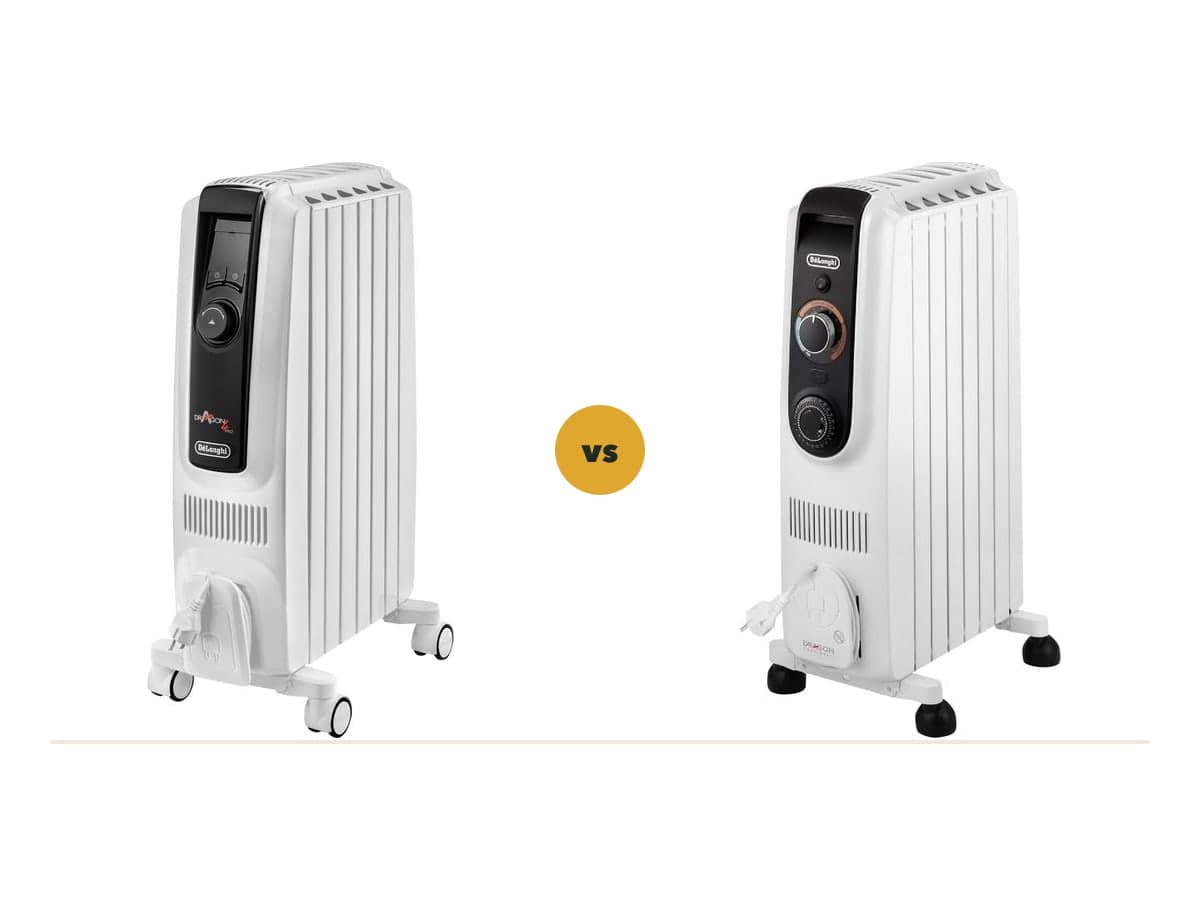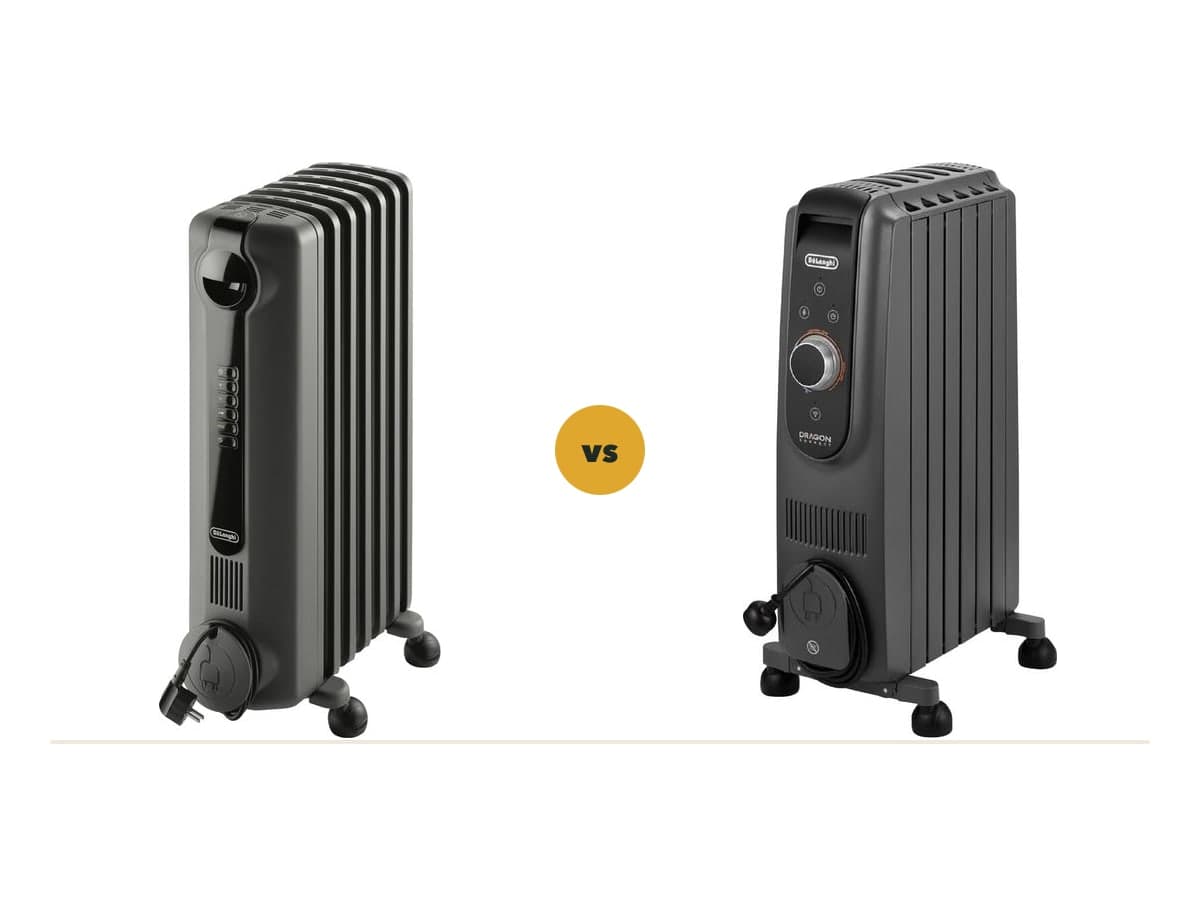
Radia S is the sensible buy for most rooms. At 1500 watts it covers the same 45 cubic metres as a 1500-watt Dragon, carries the same seven-year warranty, and costs roughly half. It is also the lighter and slimmer of the two.
Dragon earns its price in rooms that are hard to heat. The fins are deeper and shaped to pull more air through the column, so it puts out heat faster and holds a large or draughty room more steadily. The Connect version adds Wi-Fi, which matters mainly if you want the heater warm before you get home.
De'Longhi Radia S Digital 1500W
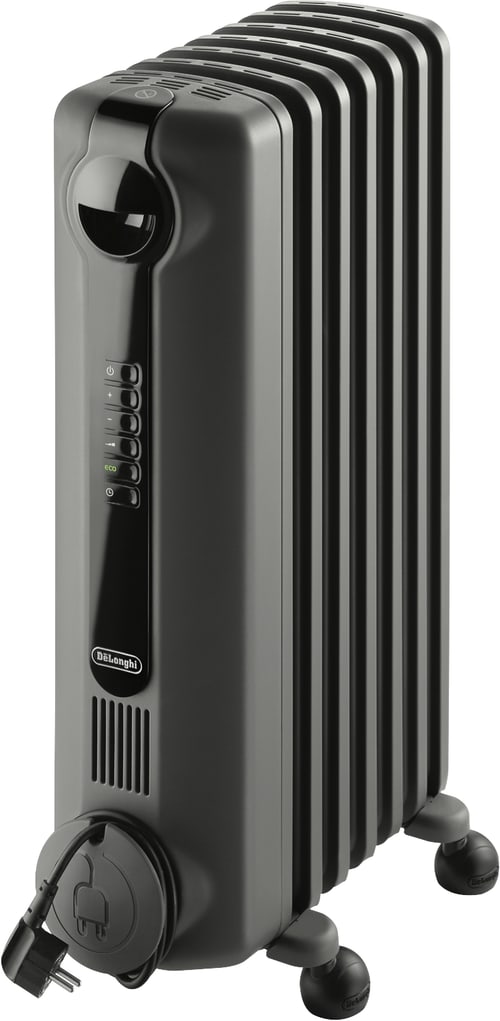
1500 watts for a room up to 45 cubic metres, a digital thermostat, 24-hour timer, Eco function, child lock and a tip-over switch, at 9.66kg and 392mm deep. Castors come pre-assembled and the cord stores in the body. Seven-year warranty. Owners rate it 4.5 at The Good Guys.
The control panel is flat and simple, and there is no app and no fan.
What We Like:
- Half the price of a Dragon
- 9.66kg, the lightest here
- Seven-year warranty
What We Don't Like:
- Slower in a large room
De'Longhi Dragon5 Connect 1500W
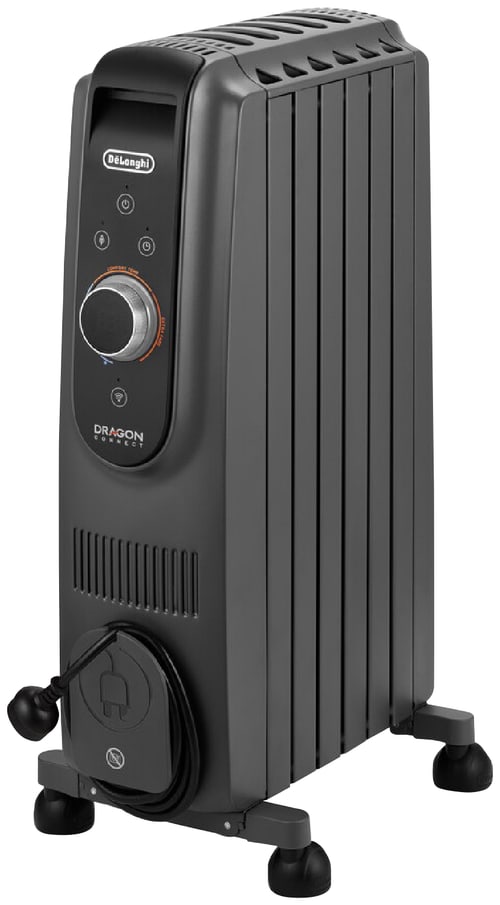
1500 watts across the same 45 cubic metres, with Wi-Fi, a temperature dial, a display with four brightness levels, child lock and a safety thermostat. 11.3kg and 360mm deep. Seven-year warranty. Its rating at The Good Guys comes from only a handful of owners so far, so there is little to read into it either way.
The Dragon's fin design is the real difference, and the Wi-Fi is either used daily or never touched.
What We Like:
- Deeper fins move more air
- Wi-Fi with scheduling
- Dimmable display for bedrooms
What We Don't Like:
- Around double the Radia S price
Side by side
| Radia S Digital 1500W | Dragon5 Connect 1500W | |
|---|---|---|
| Price | $100–150 | $250–300 |
| Power | 1500W | 1500W |
| Room size | Up to 45m³ | Up to 45m³ |
| Thermostat | Digital | Dial with display |
| Timer | 24 hour | Via app |
| Wi-Fi | No | Yes |
| Eco mode | Yes | Yes |
| Child lock | Yes | Yes |
| Weight | 9.66kg | 11.3kg |
| Depth | 392mm | 360mm |
| Warranty | 7 years | 7 years |
| Owner rating | 4.5 (141) | 3.7 (3) |
Owner ratings are from The Good Guys, with review counts in brackets.
What actually differs
Heat-up speed. The Dragon's fins are deeper and vented, so more air passes over hot metal per minute. In a room that loses heat quickly, that shows up as reaching temperature sooner and cycling less.
Controls. Radia S has a digital panel and a 24-hour timer on the heater. Dragon5 Connect moves the schedule into an app, which is genuinely useful for a room you want warm at 6am and pointless if you only ever press the button.
Weight. 9.66kg against 11.3kg. Both roll on castors, but the Radia S is the one to pick if the heater moves between rooms or gets carried upstairs.
Warranty. Seven years on both, which is unusually long for a heater and applies across De'Longhi's column range. The 1000W Radia S is the exception at two years.
Price. The gap is large enough that two Radia S heaters cost less than one Dragon5 Connect, which is worth weighing if you are heating two rooms rather than one.
Who each one suits
Radia S suits bedrooms, studies and anywhere a 1500-watt column is already enough, and households heating more than one room on a budget.
Dragon5 Connect suits large or draughty living rooms, and people who want the heater to run to a schedule from their phone.
FAQs
Do oil column heaters need refilling?
No. The oil is sealed inside the fins and never needs topping up or changing. It is a heat-transfer medium, not fuel.
Which is cheaper to run?
Neither. Both convert electricity to heat at the same rate, so a 1500-watt heater costs the same per hour whichever badge is on it. What changes running cost is how long the thermostat keeps it switched on, which is why the better-insulated room always wins.
Is the 2400W version worth it?
In rooms above about 45 cubic metres, yes. Below that it reaches the set temperature and switches off, so the extra capacity sits idle.