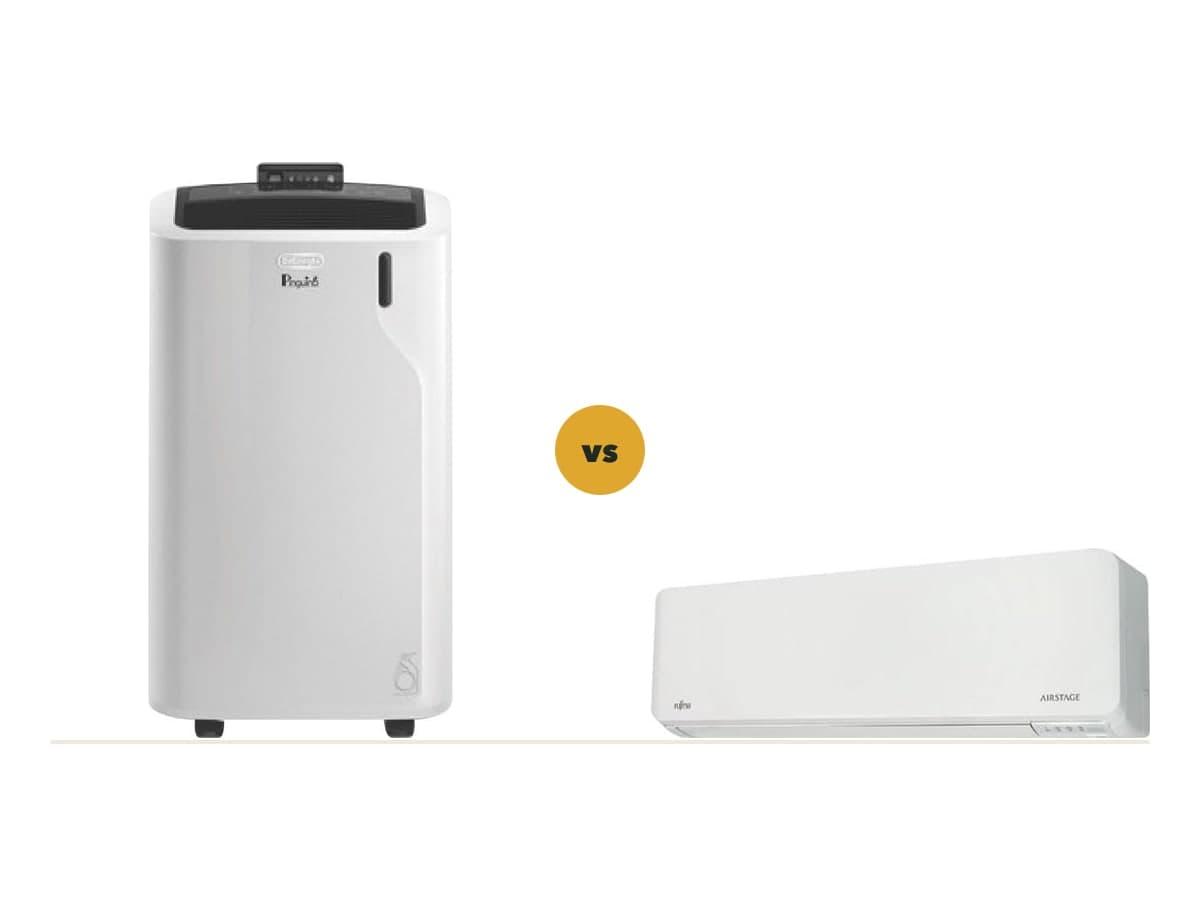
A split system cools better, runs at a fraction of the cost per hour and is nearly silent indoors. A portable costs less up front, needs no installer and no landlord's permission, and can be wheeled into whichever room needs it.
The gap is bigger than the price difference suggests. A portable sits inside the room it is cooling, so the heat its compressor makes is dumped into the same space it is trying to cool, and only the exhaust hose carries part of that back outside.
De'Longhi 2.6kW Portable
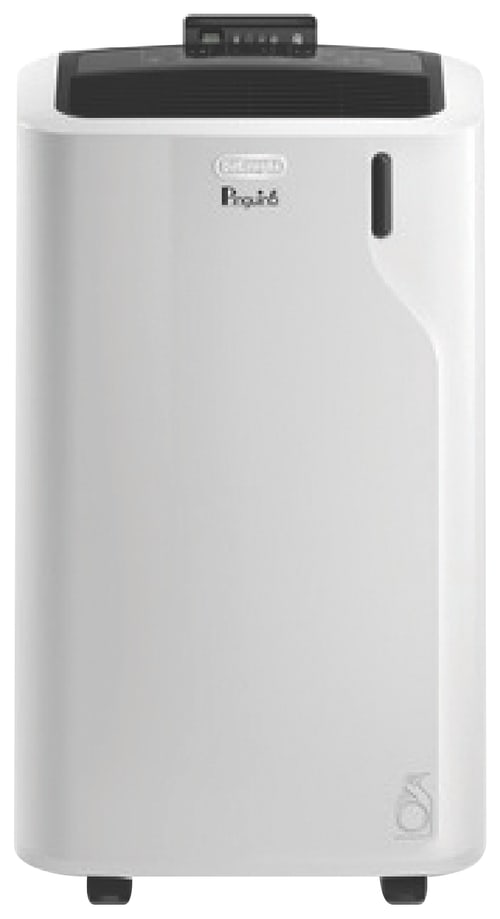
2.6kW of cooling for a room up to 90 cubic metres, three fan speeds, a dehumidifier mode extracting up to 50 litres a day, a 24-hour timer, remote and a window kit in the box. 50dBA, with handles and castors built in. Owners rate it 4.4 at The Good Guys.
50dBA is the quiet one of De'Longhi's portables; the 2.4kW model is rated at 63dBA. Either way the compressor is in the room with you.
What We Like:
- No installation, no permission needed
- 50dBA, quiet for a portable
- Doubles as a dehumidifier
What We Don't Like:
- The compressor sits in the room it is cooling
Fujitsu 3.5kW Split System
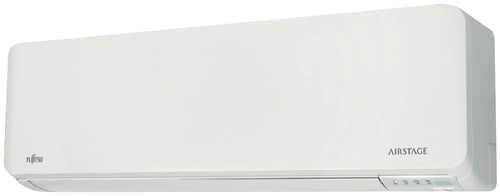
3.5kW cooling and 3.7kW heating, 4.5 cooling stars in an average climate, an inverter compressor, Wi-Fi, a human sensor and a 24-hour timer. The indoor unit runs at 42dBA; the compressor is outside at 59dBA. Five-year warranty. Owners rate it 4.9 at The Good Guys.
The price is the unit only. Installation adds several hundred dollars, more if the outdoor unit needs a bracket or a long pipe run, and it is not something a tenant can do.
What We Like:
- 42dBA indoors
- Heats as well as cools
- 4.5 cooling stars
What We Don't Like:
- Installation cost on top, and it is permanent
What each type is good at
| Portable | Split system | |
|---|---|---|
| Installation | Window kit, none | Licensed installer, permanent |
| Suits a rental | Yes | Rarely |
| Compressor location | In the room with you | Outside |
| Noise where you sit | About 50dBA | About 42dBA |
| Heats as well as cools | No | Reverse-cycle models do |
| Energy label | Not covered | Zoned star rating |
| Moves between rooms | Yes | No |
| Suits | Renters, a few weeks a year | A room used through both seasons |
Side by side
| De'Longhi 2.6kW portable | Fujitsu 3.5kW split | |
|---|---|---|
| Price | $800–900 | $1,300–1,400 |
| Installation | Window kit, none | Licensed installer |
| Cooling | 2.6kW | 3.5kW |
| Heating | No | 3.7kW |
| Room size | Up to 90m³ | Up to 25m² |
| Energy rating | Not rated | 4.5 stars cooling |
| Noise in the room | 50dBA | 42dBA |
| Compressor location | Inside | Outside |
| Dehumidifier mode | Yes, up to 50L/day | Dry mode |
| Moves between rooms | Yes | No |
| Warranty | — | 5 years |
| Owner rating | 4.4 (42) | 4.9 (29) |
Owner ratings are from The Good Guys, with review counts in brackets. Split system prices exclude installation.
What actually differs
Where the heat goes. An air conditioner works by moving heat from inside to outside. A split system puts the hot half of that machine in the garden. A portable keeps the whole machine in the room and vents part of the heat through a hose, so it is fighting itself. The same kilowatt of cooling takes noticeably more electricity as a result.
The window kit. Every portable needs its hose out a window or door, and the panel that seals the gap leaves an opening for warm air to work back in. Casement and awning windows common in older Australian houses are harder to seal than sliding ones.
Noise where you are. 50dBA against 42dBA understates it, because the portable's figure includes the compressor and the split's does not. A portable running overnight in a bedroom is a compressor cycling a metre from your head.
Heating. The Fujitsu is reverse-cycle and heats at 3.7kW for a fraction of what a plug-in heater costs to run. The portable cools and dehumidifies only, so it sits in a cupboard all winter.
Permanence. A split system is screwed to a wall and needs a licensed installer, which rules it out for most rentals. A portable goes back in its box when you move.
Who each one suits
A portable suits renters, a room used occasionally, a house where one bedroom gets unbearable for three weeks a year, and anyone who cannot get approval to drill through a wall.
A split system suits any room used through both summer and winter, and anyone staying put long enough to get the running cost back.
FAQs
How much more does a portable cost to run?
Portables are not covered by the energy rating label, so there is no like-for-like star comparison. The physics is not in dispute though: venting part of the compressor's waste heat back into the room means more electricity for the same cooling.
Can a portable cool a whole house?
No. They are sized for a single closed room, and the hose has to reach a window in that room.
Do portables need draining?
Modern models evaporate most of the condensate out through the exhaust. In humid weather the tank still fills, and the continuous drain hose supplied with the De'Longhi is the way around it.
Is installation included in split system prices?
No. The prices quoted here are for the unit, and installation is a separate quote from a licensed installer.