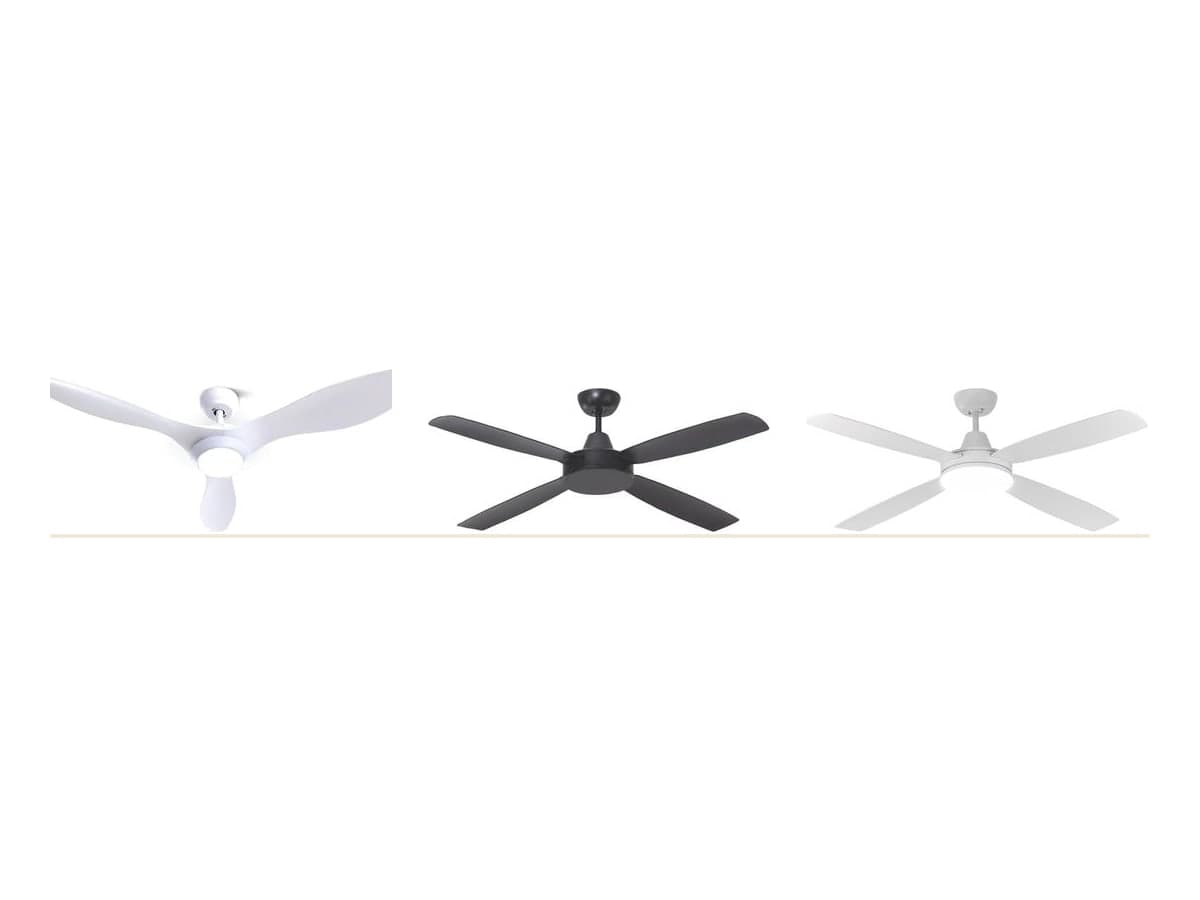
A ceiling fan is the cheapest cooling in the house to run. A DC model draws around 30 watts on high, which is about a cent an hour, against roughly a dollar an hour for a split system. It does not lower the temperature, but moving air across skin makes a room feel three or four degrees cooler, which is often the whole difference.
Three things decide a ceiling fan and none of them is the brand. Blade span sets the room size it suits: 122cm for a bedroom, 132 to 142cm for a living room. A DC motor uses roughly two-thirds less power than an AC one and runs quieter with more speed steps. And a reversible winter mode pushes warm air back down off the ceiling, which is worth having in any room with a heater.
Worth knowing before you shop: the electrical chains barely stock ceiling fans. The Good Guys carries one model in two finishes. Most ceiling fans in Australia are sold through lighting and electrical retailers, which is where the wider choice sits.
1. Best overall: Mercator 137cm Nemoi with Light
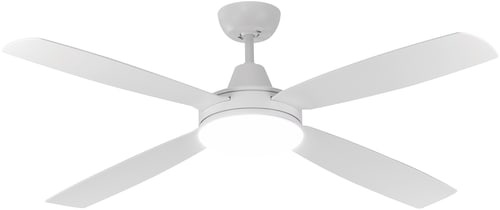
137cm of span with an integrated light, six speeds and a three-year warranty. Owners rate it 4.9 at The Good Guys.
At 137cm it suits a living room or a large bedroom. The integrated light means one ceiling point does both jobs, which matters in a room with a single outlet.
What We Like:
- 137cm span with a light
- Six speeds
- Three-year warranty
What We Don't Like:
- One ceiling point has to serve both
2. Best without a light: Mercator 137cm Nemoi
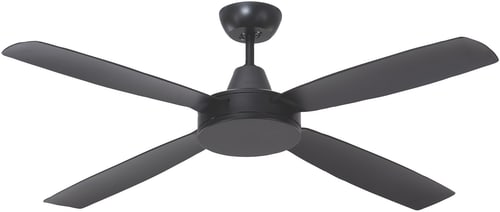
The same 137cm fan without the light, in black or white, for about fifty dollars less. Six speeds, three-year warranty.
This is the one for a room that already has lighting, and the cleaner-looking of the two.
What We Like:
- Around $50 less than the light version
- Black or white
- Three-year warranty
What We Don't Like:
- No light, so the room needs its own
3. Best value: Devanti 52-inch DC Ceiling Fan
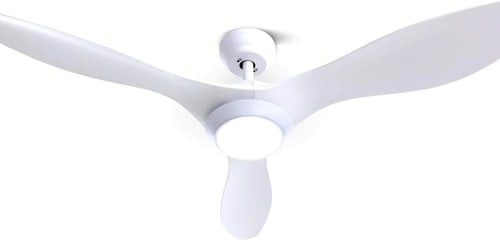
132cm span on a DC motor with six speeds, an eight-hour timer, a reversible winter mode and colour-changing LED lighting, at around $160 on Amazon. Rated 4.6 by owners, shipped from Amazon and sold by an Australian seller.
It is the cheapest way to get a DC motor and a reversible mode together, and it undercuts the Mercator by about $140. The trade is a shorter warranty and a brand with no service network.
What We Like:
- DC motor and reversible winter mode
- Six speeds and an eight-hour timer
- Around $160
What We Don't Like:
- No local service network
How to choose a ceiling fan
| Span | Motor | Speeds | Light | Warranty | Price | |
|---|---|---|---|---|---|---|
| Devanti 52-inch DC | 132cm | DC | 6 | Colour LED | — | $150–200 |
| Mercator Nemoi 137cm | 137cm | — | 6 | No | 3 years | $200–250 |
| Mercator Nemoi 137cm with Light | 137cm | — | 5 | Yes | 3 years | $250–300 |
Mercator figures are from The Good Guys; the Devanti is from Amazon.
Match the span to the room. Up to about 10 square metres wants 91 to 107cm. A normal bedroom wants 122cm. A living room wants 132 to 142cm. Too small and it runs flat out without shifting air; too large in a small room and it is simply loud.
A DC motor is worth paying for. It draws roughly a third of the power of an AC motor, runs quieter, and gives more usable low speeds, which is what makes a fan liveable in a bedroom.
Check the drop and the ceiling height. Blades need to sit at least 2.1 metres off the floor, and a raked ceiling needs an extension rod and a fan rated for it.
Reversible is not a gimmick. Run clockwise and slow in winter and the fan pushes the warm air that has collected at the ceiling back down the walls, which makes a heated room noticeably more even.
Installation needs an electrician. A ceiling fan is hard-wired, so the purchase price is not the full cost. Budget for a licensed installer, more if there is no existing ceiling point.
FAQs
Ceiling fan or split system?
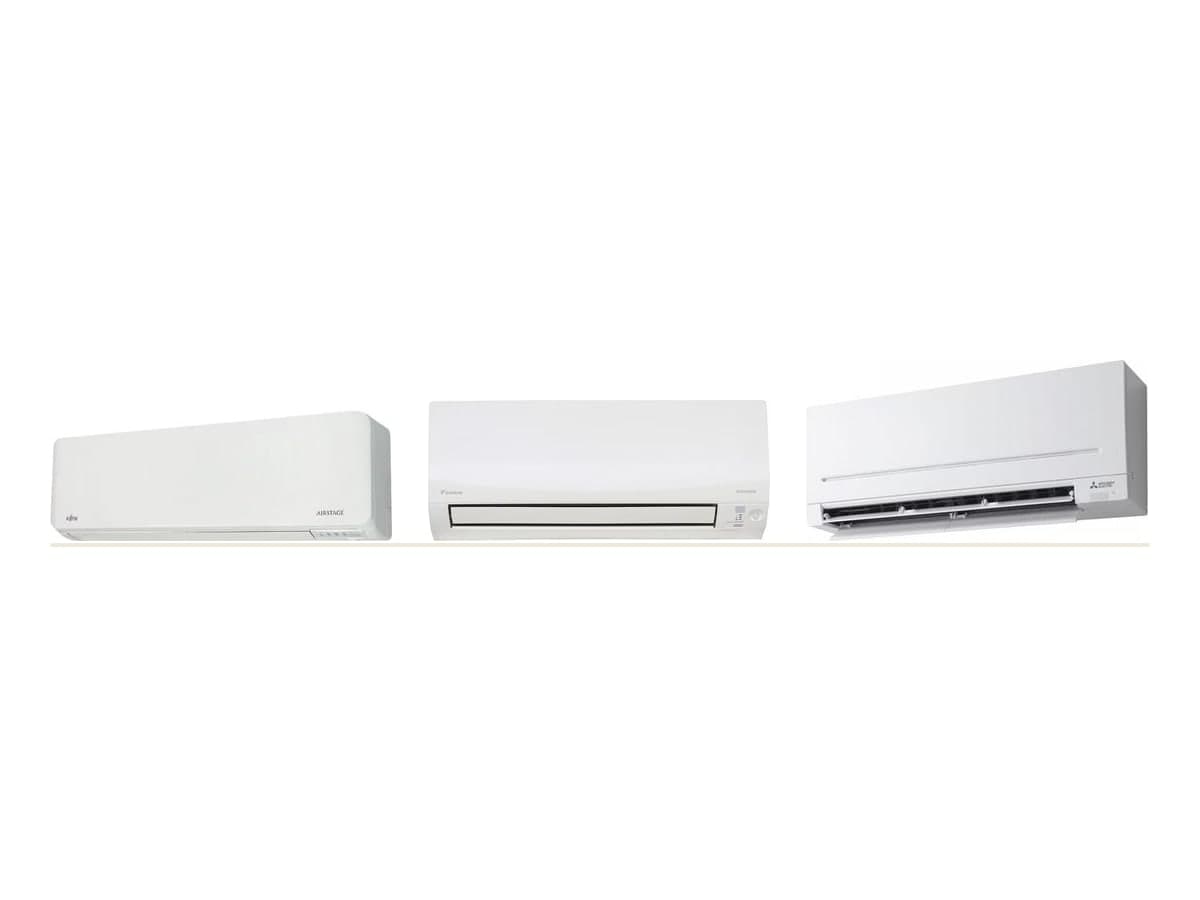
They do different jobs. A fan costs about a cent an hour and makes a room feel cooler while you are in it; a split system actually lowers the temperature for around a dollar an hour. Many houses run both, with the fan letting the air conditioner sit a degree or two warmer.
Do ceiling fans use much power?
A DC fan on high draws around 30 watts, which is less than a light globe. An older AC fan draws roughly three times that.
Why does my fan wobble?
Usually an unbalanced blade or a loose mounting bracket rather than a fault. Balancing kits are cheap, and the bracket should be checked first.
Can I install one myself?
No. Ceiling fans are hard-wired and require a licensed electrician in Australia.