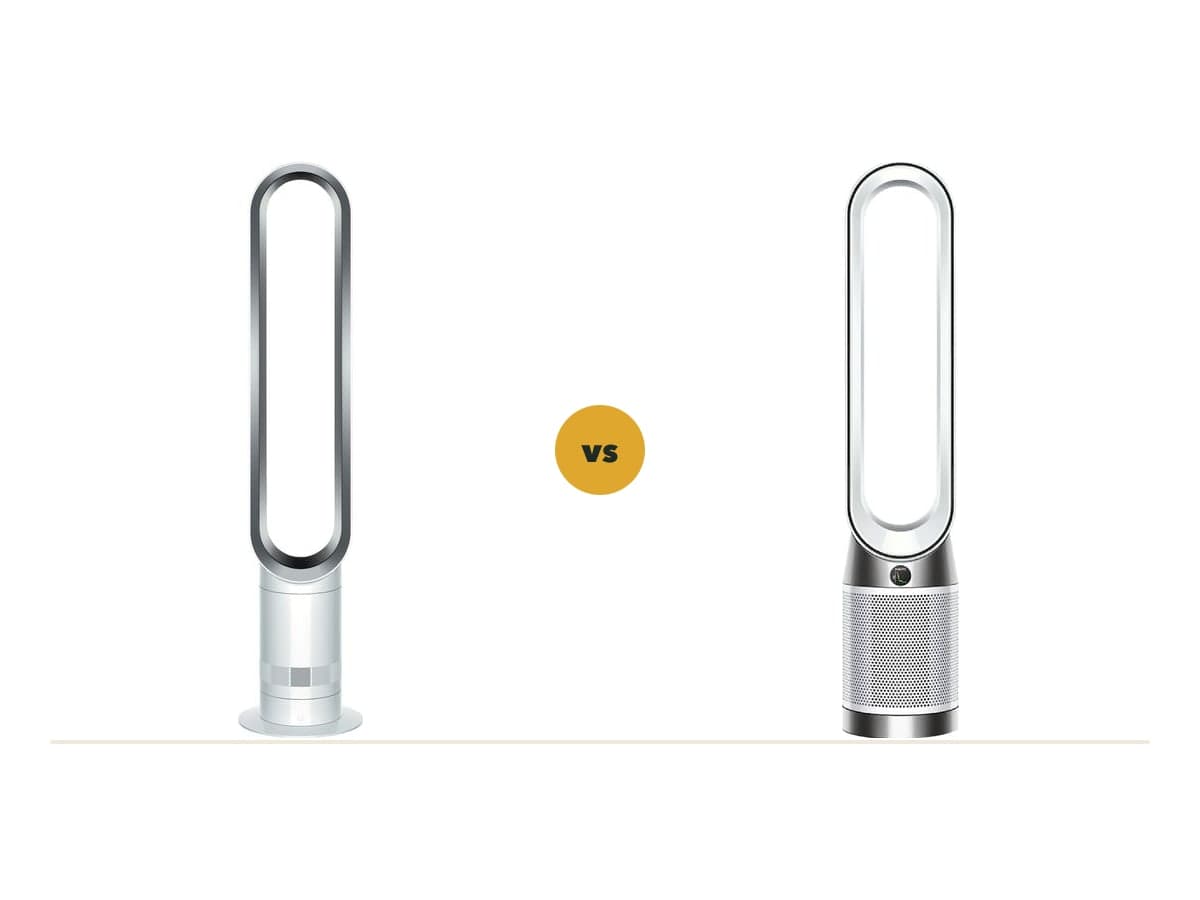
As fans, these two are close. Both are bladeless towers about a metre tall with ten speeds, a remote and a timer, and both push air the same way. The AM07 is lighter, quieter and cheaper.
The TP11 adds a sealed HEPA H13 and activated carbon filter, a sensor that reads the air and adjusts itself, and app control. If nobody in the house has hay fever or asthma, and the windows are not over a main road, the extra buys you cooling you already had.
Dyson AM07 Tower Fan
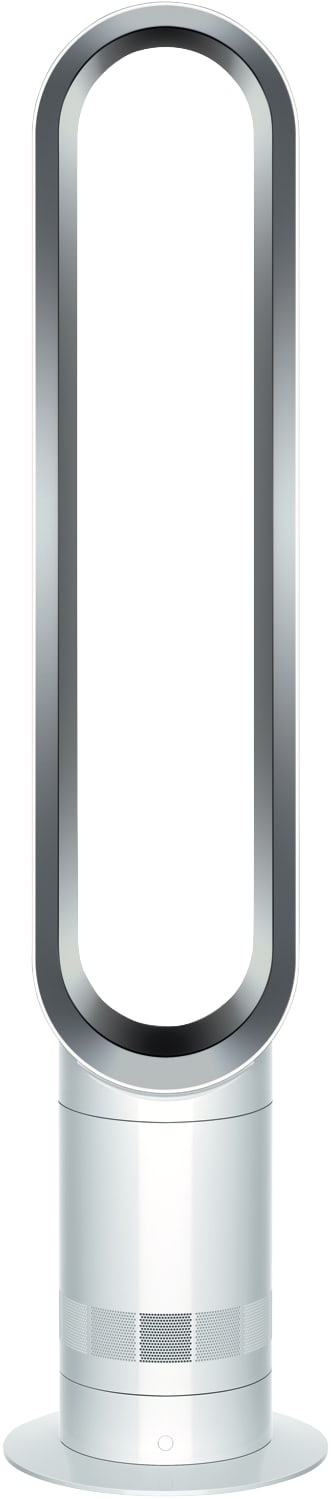
1010mm tall and 2.9kg, ten speeds, 70-degree oscillation, a nine-hour timer and a remote, projecting up to 500 litres of air a second with no blades to clean around. Two-year warranty. Owners rate it 4.5 at The Good Guys.
It does nothing about air quality, and its oscillation covers 70 degrees against the purifier's 350.
What We Like:
- 2.9kg, the lightest here
- Ten speeds and a nine-hour timer
- No blades to clean
What We Don't Like:
- 70° oscillation only
Dyson TP11 Purifier Cool
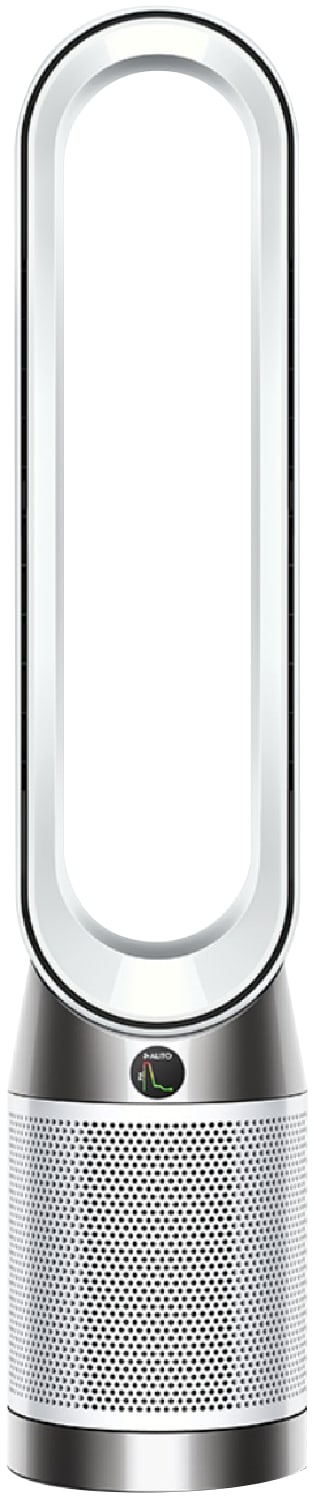
1055mm and 4.72kg, with glass HEPA H13 and activated carbon capturing 99.95% of ultrafine particles, 1044 cubic metres an hour of airflow, ten speeds, 350-degree oscillation, auto mode and app control. Covers 81 cubic metres. 61.4dBA at maximum. Two-year warranty.
Filters are a running cost: the combined HEPA and carbon element is replaced roughly yearly with normal use.
What We Like:
- HEPA H13 plus carbon
- 350° oscillation
- Auto mode adjusts to the air
What We Don't Like:
- A filter to buy every year
What each type is good at
| Fan | Purifier | |
|---|---|---|
| Cools you | Yes, aimed | Yes, spread around the room |
| Filters the air | No | HEPA H13 and carbon |
| Reacts to air quality | No | Auto mode |
| Helps on a smoke day | No | Yes, with the windows shut |
| Ongoing cost | Power only | Power plus a filter about yearly |
| Weight to carry between rooms | 2.9kg | 4.72kg |
| Suits | Cooling, and moving around the house | Hay fever, asthma, traffic, smoke |
Side by side
| Dyson AM07 fan | Dyson TP11 purifier | |
|---|---|---|
| Price | $350–400 | $500–600 |
| Filtration | None | HEPA H13 and carbon |
| Air quality sensor | No | Yes, with auto mode |
| Speeds | 10 | 10 |
| Oscillation | 70° | 350° |
| Airflow | 500L/sec projected | 1044m³/hr |
| Timer | 9 hours | Via app |
| Wi-Fi | No | Yes |
| Height | 1010mm | 1055mm |
| Weight | 2.9kg | 4.72kg |
| Running cost | Power only | Power plus yearly filter |
| Warranty | 2 years | 2 years |
| Owner rating | 4.5 (146) | 5 (1) |
Owner ratings are from The Good Guys, with review counts in brackets.
What actually differs
The filter, and what it costs to keep. A sealed HEPA H13 element captures 99.95% of ultrafine particles including pollen, smoke and dust. It also has to be replaced about once a year, so the purifier's price gap over the fan widens every twelve months rather than closing.
Oscillation. 350 degrees against 70. The purifier is designed to circulate the whole room's air through the filter; the fan is designed to point at people. For cooling, a narrow sweep aimed at the couch is arguably more useful.
Auto mode. The TP11 reads particulate levels and sets its own speed, which is the feature that makes a purifier worth leaving on. A fan has nothing to sense.
Weight. 2.9kg against 4.72kg. Both are easy enough to carry, but the fan is the one that gets moved between rooms without thinking about it.
Bushfire smoke. Worth separating from general air quality. On a smoke day a sealed HEPA purifier makes a measurable difference indoors with the windows shut, and a fan makes none.
Who each one suits
AM07 fan suits anyone who wants cooling, quiet and something easy to move, in a house where air quality is not a concern.
TP11 purifier suits households with hay fever or asthma, homes near heavy traffic, and anywhere summers now include smoke days.
FAQs
Does a purifier cool as well as a fan?
At full speed the TP11 moves plenty of air, but it is pushing it through a dense filter, and its 350-degree sweep spreads that air around the room rather than at you. As a personal cooling device the fan is more direct.
Can the filter be washed and reused?
No. The HEPA element is glass media and cannot be cleaned. The machine tracks its hours and notifies you when it needs changing.
Is the AM07 still current?
It is an older design that Dyson has kept in the line-up, and it remains the cheapest way into a bladeless Dyson tower. Its rating comes from a substantial number of owners.
Do purifiers use much power?
Very little on low, which is where auto mode keeps them most of the time. The cost of ownership is the filter rather than the electricity.