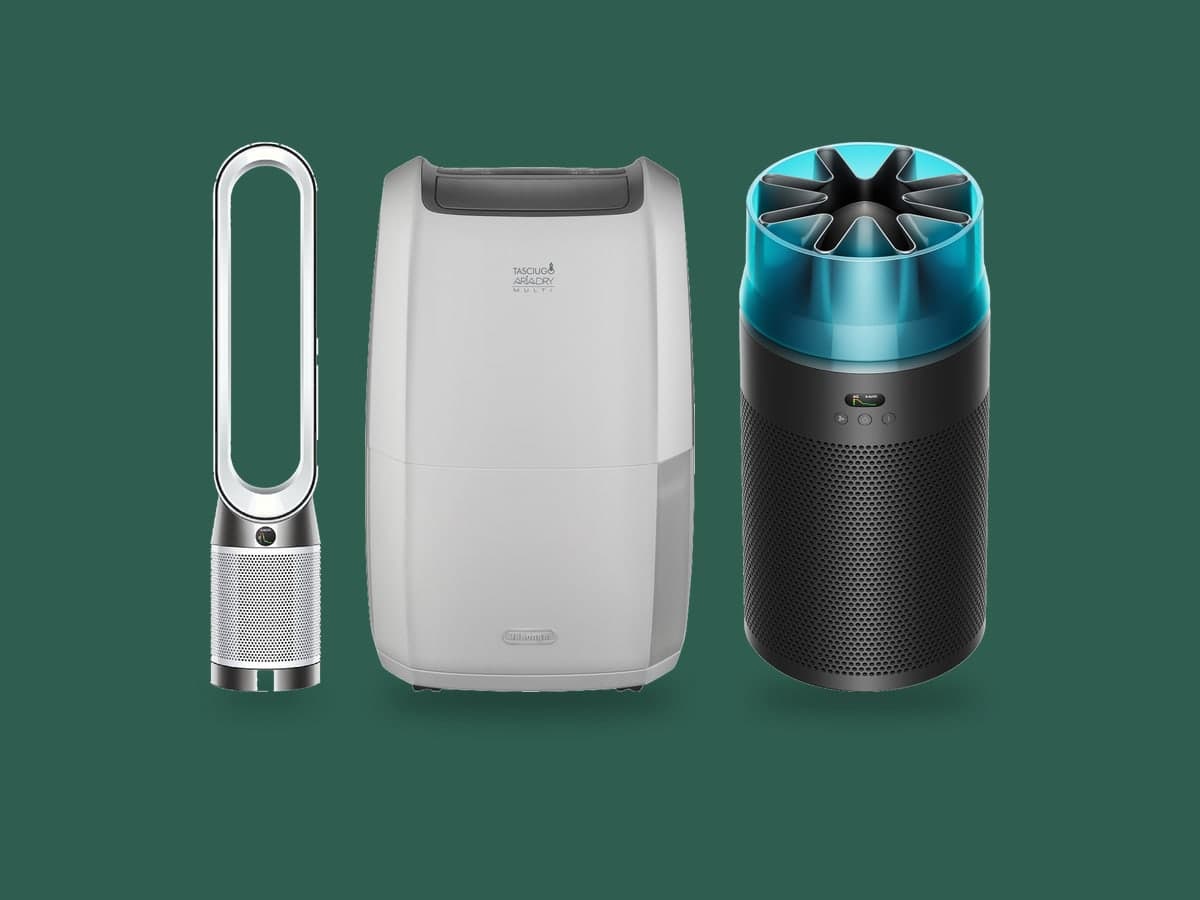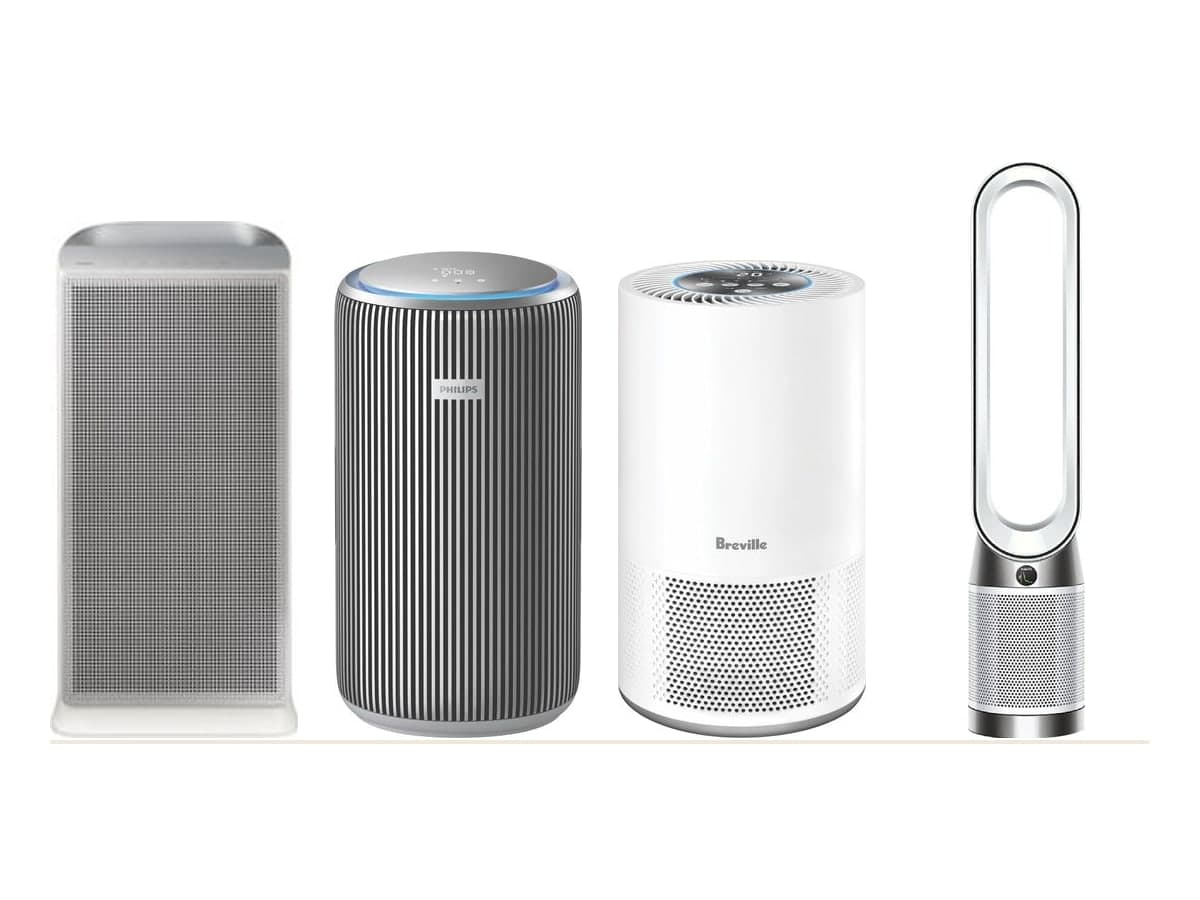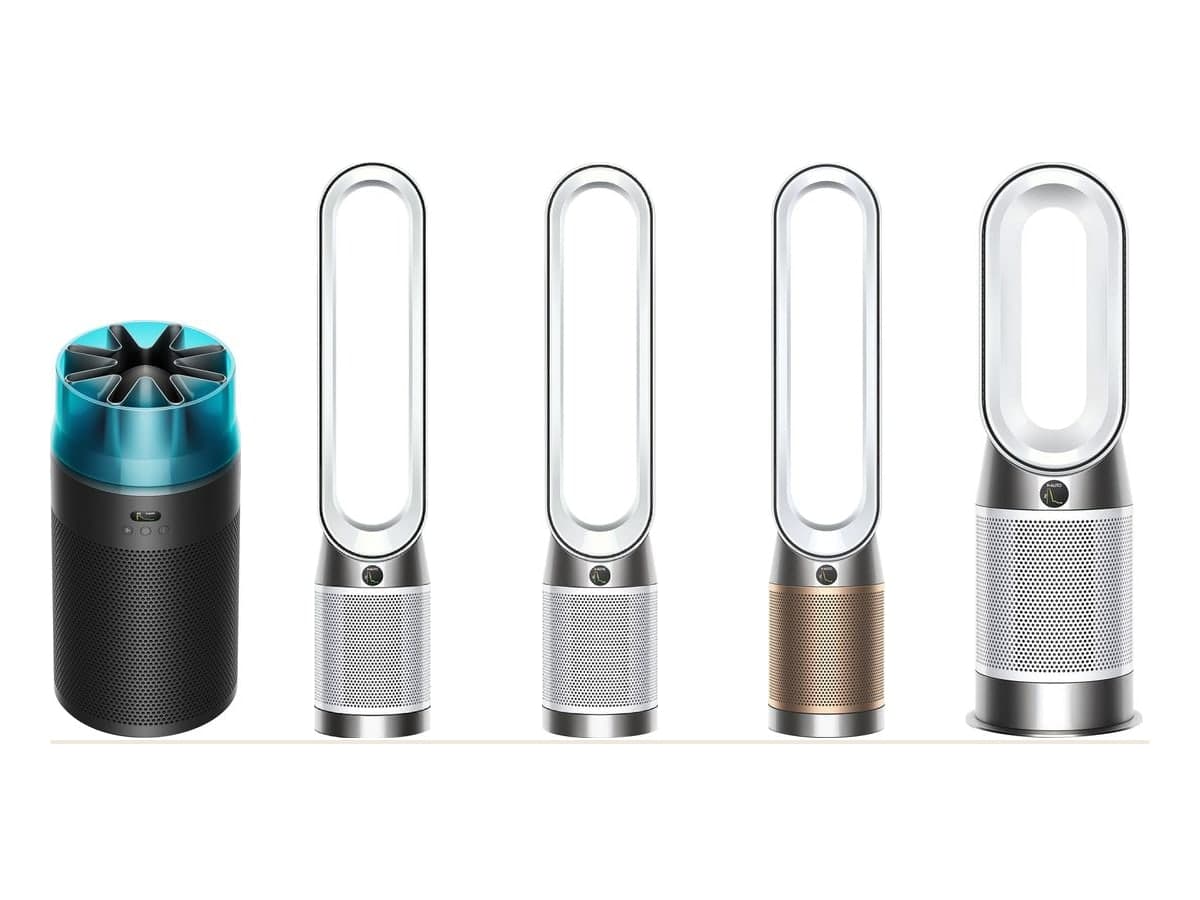
Dyson's naming works once you know the two letters at the front. TP is a tower that purifies and cools. HP is the same tower with a heater in it, so it works in winter as well. HJ is the HushJet, a squat unit that only purifies and is the quietest of them.
The number after the letters is the generation, not the size. Every tower here covers the same 81 cubic metres and oscillates 350 degrees. What actually separates them is which filter is fitted and whether the machine heats.
HJ10 HushJet Purifier Compact
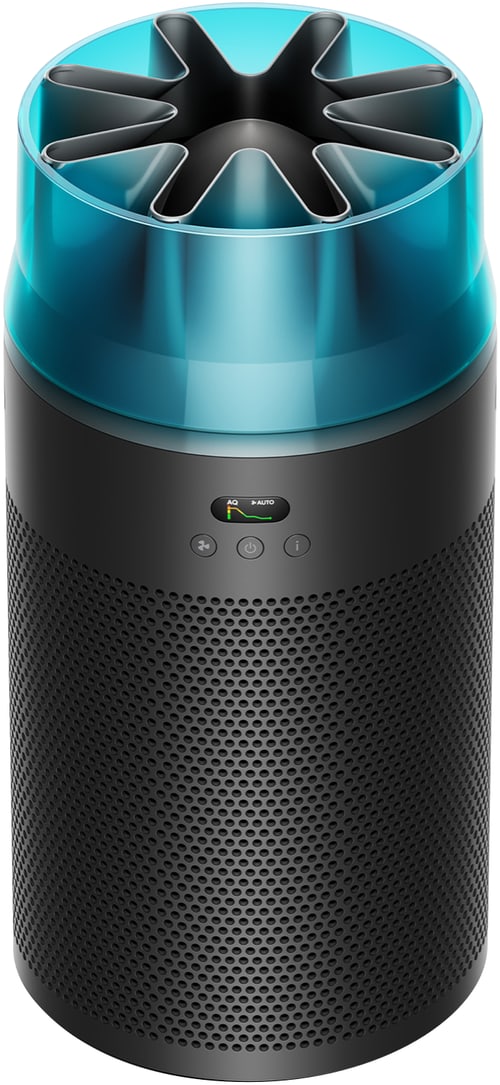
The odd one out and the cheapest: 470mm tall, 3.15kg, rated for rooms up to 100 square metres, with an electrostatic filter good for five years and an activated carbon filter for one. App control, Alexa and Google. Two-year warranty. Owners rate it 4.7 at The Good Guys.
It does not cool you and it does not heat. It is a purifier, which is why it is smaller and quieter than the towers.
What We Like:
- Five-year electrostatic filter
- 470mm tall, fits on a shelf
- Cheapest here
What We Don't Like:
- No cooling airflow at all
TP11 Purifier Cool
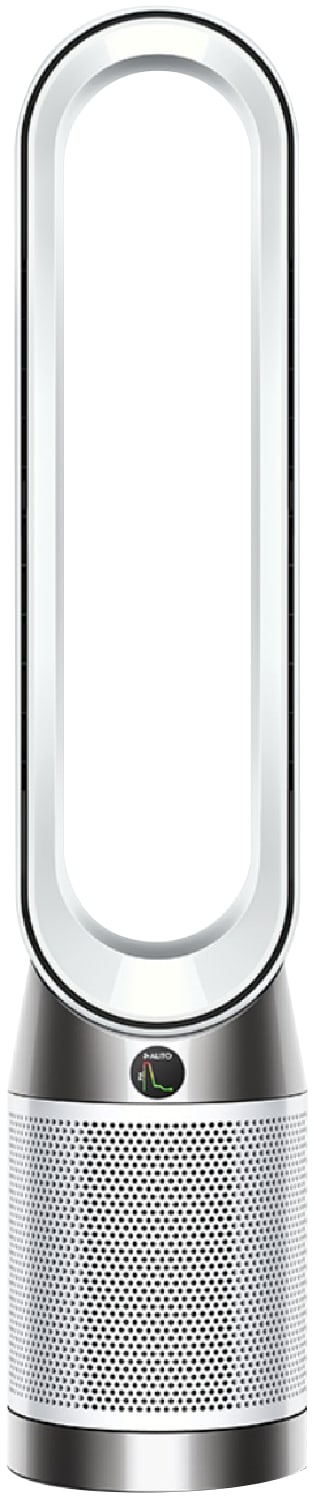
The current standard tower: 1055mm, 4.72kg, glass HEPA H13 and activated carbon capturing 99.95% of ultrafine particles, 10 airflow speeds, 350-degree oscillation, auto mode that reads the air and adjusts itself, and 1044 cubic metres an hour of airflow. 61.4dBA at maximum. Two-year warranty.
Its rating comes from a single owner so far, so there is nothing to read into the number yet.
What We Like:
- HEPA H13 plus carbon
- 1044m³/hr, the highest airflow here
- Auto mode reads the room
What We Don't Like:
- 61.4dBA at full speed
TP10 Purifier Cool Gen 1
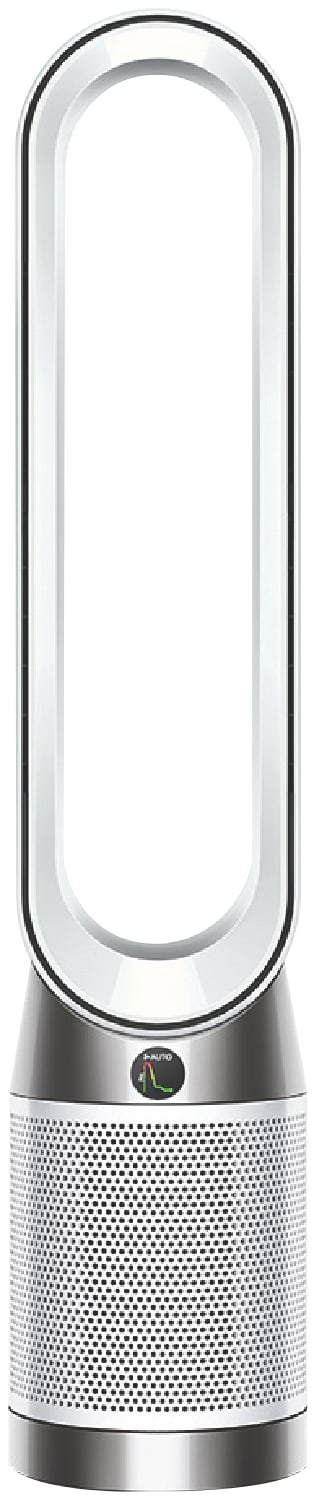
The same 1050mm tower and the same HEPA H13 and carbon filter as the TP11, with 10 airflow settings, night mode and on-screen air quality. What it drops is the app: there is no Wi-Fi on this one. Owners rate it 4.6 at The Good Guys.
It costs more than the TP11 despite doing less, which happens when an older model has not been cleared through yet.
What We Like:
- Same H13 filtration as the TP11
- On-screen air quality reporting
What We Don't Like:
- No Wi-Fi, and priced above the TP11
TP09 Purifier Cool Formaldehyde
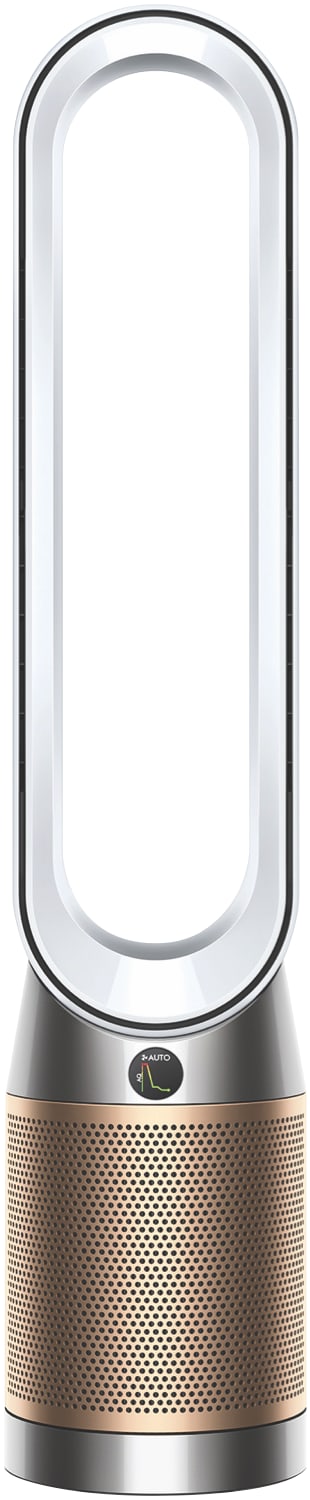
The tower with the formaldehyde filter: HEPA H13, activated carbon and a catalytic filter that breaks formaldehyde down continuously rather than trapping it. Diffused mode pushes air backwards so it purifies without a draught, which matters in winter. Wi-Fi, voice control. Owners rate it 4.6 at The Good Guys.
It is the most expensive here, and formaldehyde is the specific thing the premium buys.
What We Like:
- Destroys formaldehyde rather than trapping it
- Diffused mode purifies without a draught
What We Don't Like:
- The dearest in the range
HP11 Purifier Hot + Cool
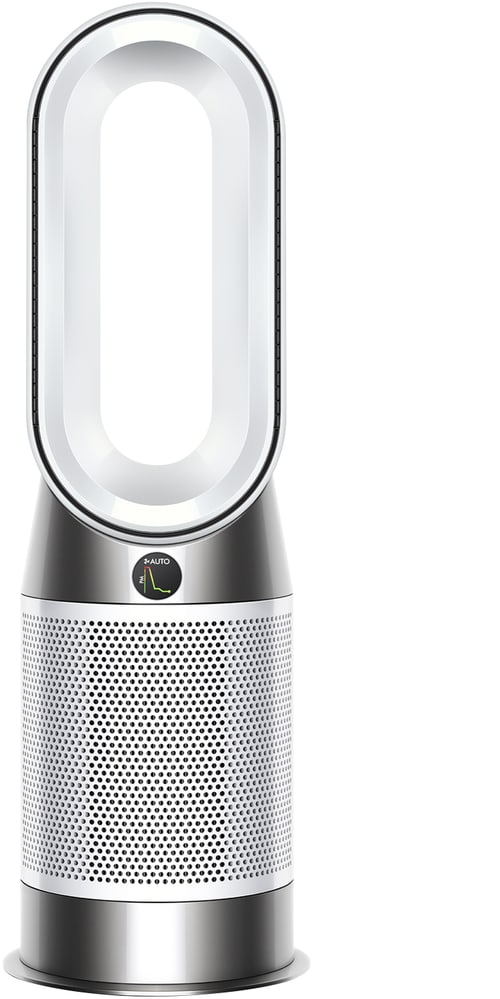
The TP11's filtration in a shorter 765mm body with a heater added: HEPA H13 and carbon, 10 speeds, 350-degree oscillation, auto and night modes, 63dBA at maximum. 5.26kg. Owners rate it 4.9 at The Good Guys.
As a heater it is 2000 watts of fan-forced heat, so it costs the same to run as any other plug-in heater and stops being warm the moment it switches off.
What We Like:
- Purifies, heats and cools
- Same H13 filtration as the TP11
- 765mm, shorter than the towers
What We Don't Like:
- As a heater it holds no heat at all
HP12 Purifier Hot + Cool De-Nox
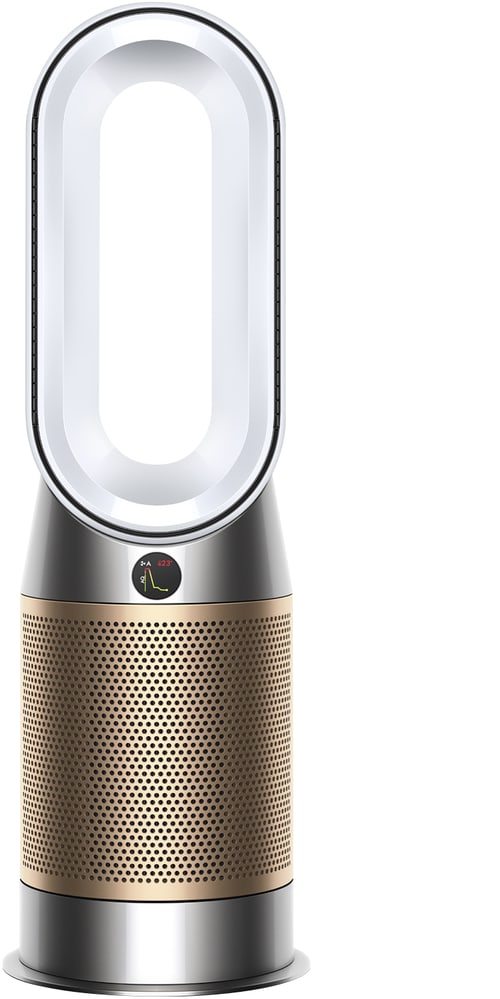
The HP11 with a different filter: three-stage HEPA H13 and K-Carbon that destroys formaldehyde and captures 50% more nitrogen dioxide than standard carbon. Same 765mm body, same 63dBA, 5.55kg. Owners rate it 4.7 at The Good Guys.
Nitrogen dioxide is mostly a traffic and gas-cooking pollutant, so the upgrade matters on a busy road and much less on a quiet street.
What We Like:
- Captures 50% more NO2
- Destroys formaldehyde
- Heats and cools
What We Don't Like:
- $100 more than the HP11 for a filter difference
The range at a glance
| HJ10 HushJet | TP11 | TP10 | TP09 | HP11 | HP12 | |
|---|---|---|---|---|---|---|
| Price | $500–600 | $500–600 | $700–800 | $1,000–1,100 | $700–800 | $800–900 |
| Purifies | Yes | Yes | Yes | Yes | Yes | Yes |
| Cools | No | Yes | Yes | Yes | Yes | Yes |
| Heats | No | No | No | No | Yes | Yes |
| Filter | Electrostatic, carbon | HEPA H13, carbon | HEPA H13, carbon | HEPA H13, carbon, catalytic | HEPA H13, carbon | HEPA H13, K-Carbon |
| Formaldehyde | No | No | No | Yes | No | Yes |
| Wi-Fi | Yes | Yes | No | Yes | Yes | Yes |
| Oscillation | — | 350° | 350° | 350° | 350° | 350° |
| Height | 470mm | 1055mm | 1050mm | 1050mm | 765mm | 765mm |
| Weight | 3.15kg | 4.72kg | 4.73kg | 4.65kg | 5.26kg | 5.55kg |
| Max noise | — | 61.4dBA | — | — | 63dBA | 63dBA |
| Warranty | 2 years | 2 years | 2 years | 2 years | 2 years | 2 years |
| Owner rating | 4.7 (10) | 5 (1) | 4.6 (7) | 4.6 (12) | 4.9 (31) | 4.7 (22) |
Owner ratings are from The Good Guys, with review counts in brackets. The TP07 tower is also still stocked at around $949 with the same HEPA H13 filtration as the TP11.
What actually differs
Whether it heats. HP models add a heater and lose 290mm of height. That is the first fork in the range and the one that decides whether the machine earns its shelf space in July.
Which filter. Three options. Standard is glass HEPA H13 plus activated carbon, which captures 99.95% of ultrafine particles. The TP09 adds a catalytic filter that destroys formaldehyde. The HP12's K-Carbon does formaldehyde and captures half again as much nitrogen dioxide. The HushJet is the exception, using an electrostatic filter rated for five years instead of a HEPA element.
Filter cost over time. Dyson's HEPA and carbon filters are replaced as a unit, typically yearly with normal use. The HushJet's five-year electrostatic element changes that arithmetic considerably.
Noise. 61 to 63dBA is the maximum on full airflow, and all of them have a night mode that dims the display and caps the fan. A purifier in a bedroom spends most of its time on low.
What does not differ. Coverage is 81 cubic metres on every tower, oscillation is 350 degrees on every tower, warranty is two years across the range, and every one of them has auto mode and app control except the TP10.
Which one suits which room
HJ10 HushJet suits a bedroom or study where purifying is the only job, and where a five-year filter beats an annual one.
TP11 suits a living room that needs purifying year round and cooling in summer, at the best price of the towers.
TP09 suits a new build, a recently renovated room or anywhere with new cabinetry and flooring, which is where formaldehyde actually comes from.
HP11 suits a room that needs all three jobs and has space for only one machine.
HP12 suits the same, on a busy road or in a house that cooks on gas.
FAQs
Do Dyson purifiers really capture 99.95% of particles?
That is the H13 glass HEPA rating and it is a standard test. The practical limit is airflow: a purifier only cleans air that passes through it, so room size, where it sits and how long it runs matter as much as the filter grade.
How often do the filters need replacing?
Dyson quotes about twelve months of normal use for the combined HEPA and carbon filters, and the machine tracks hours and tells you. The HushJet's electrostatic filter is rated for five years, with its carbon filter on a yearly cycle.
Is a Dyson purifier a good heater?
It is a 2000-watt fan heater with a filter in front of it. It heats a room as fast as any fan heater and stops the moment it switches off, so it suits a room you are in rather than one you want warm all night.
Does the formaldehyde filter need replacing?
No. The catalytic filter regenerates itself and is designed to last the life of the machine, unlike the HEPA and carbon element.