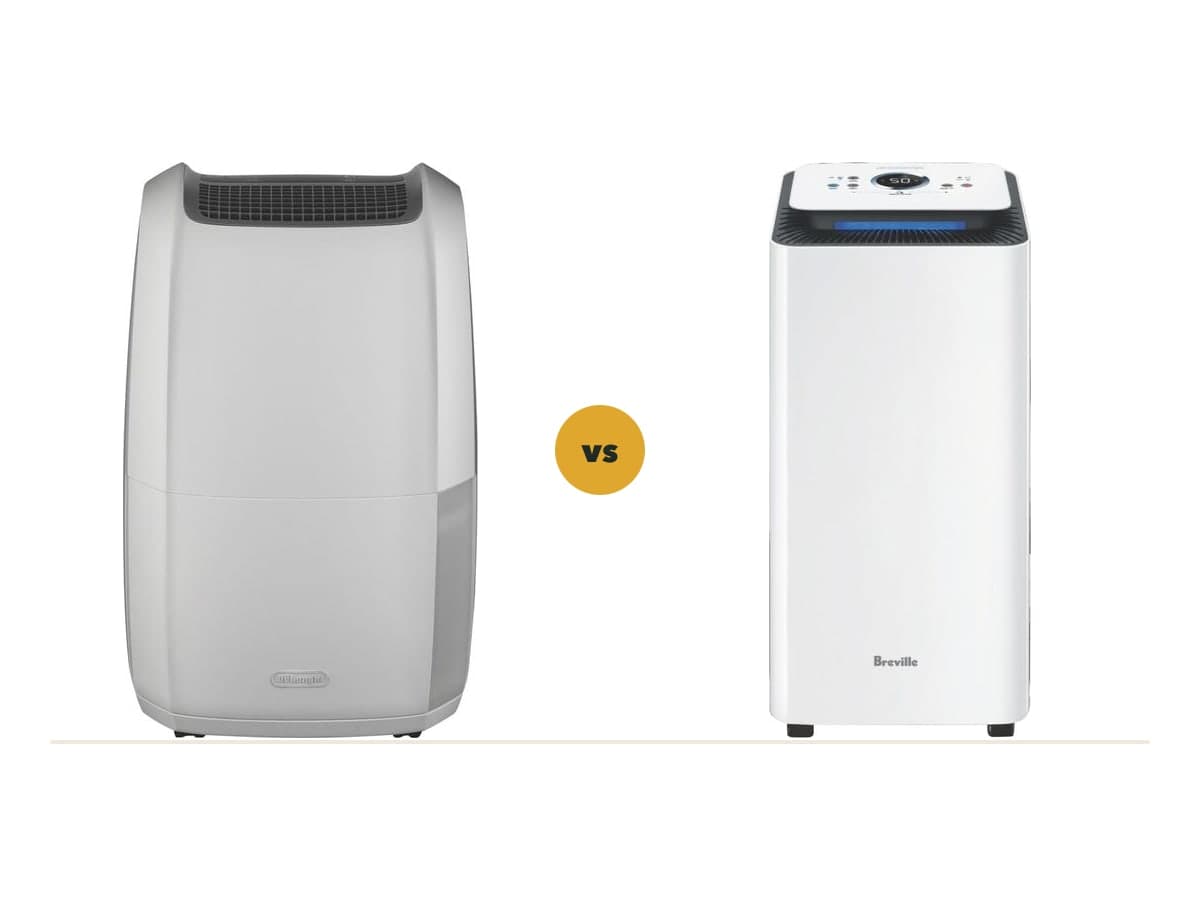
At the same price, these two solve the same problem differently. Breville's Smart Dry Plus is built around holding a room at a set humidity, adjustable between 30 and 80 percent in five-point steps, with a sensor that keeps it there. De'Longhi's 21-litre machine is built around extraction and filtration: more water out per day, and a four-stage filter including a HEPA-type element and activated carbon.
For a damp bedroom or a wardrobe wall going mouldy, the Breville's control is the more useful half. For drying washing indoors through a wet winter, the De'Longhi moves more water.
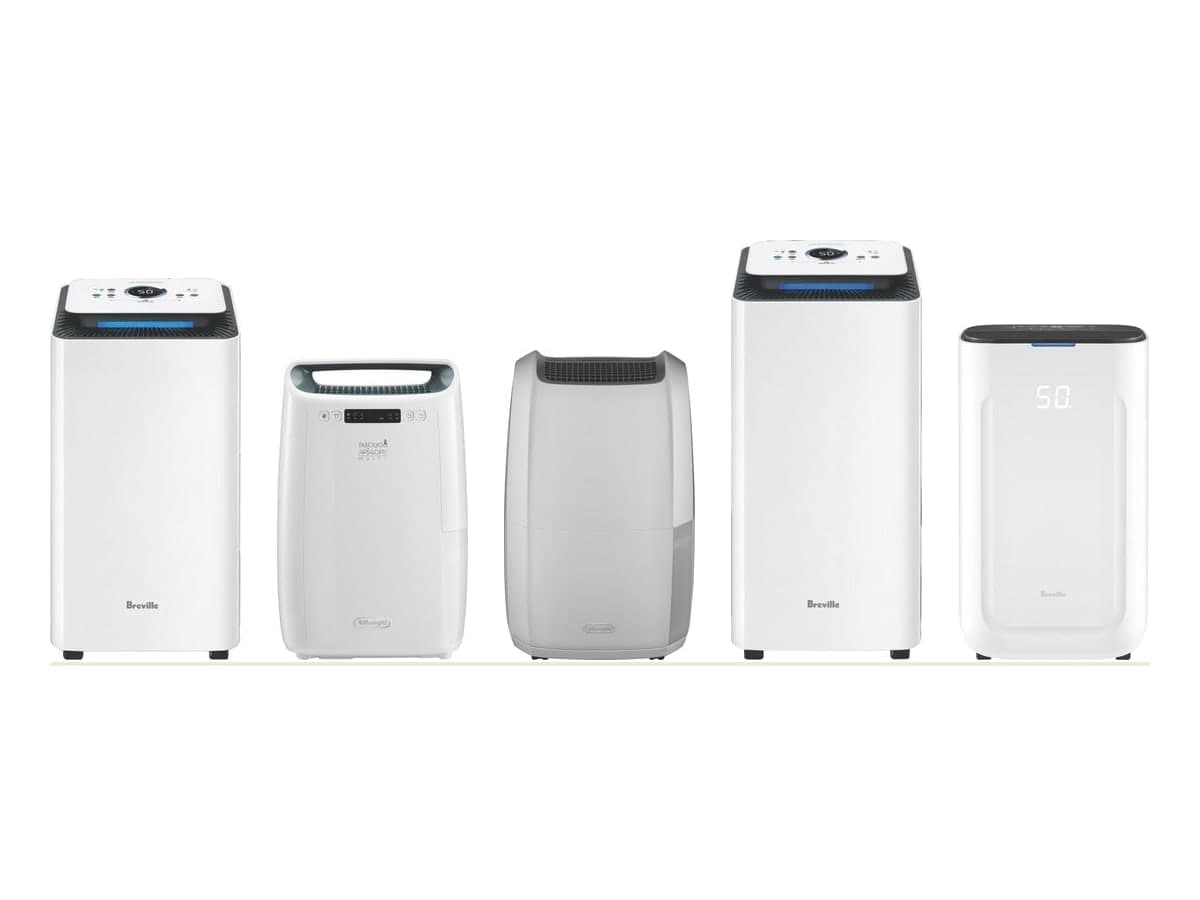
De'Longhi 21L Tasciugo AriaDry
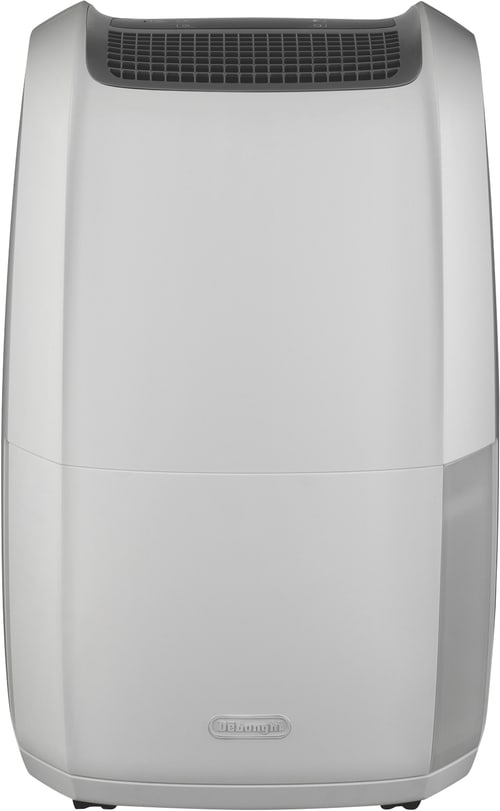
21 litres a day from a 5-litre tank, for rooms up to 90 cubic metres, with four-stage filtration, a laundry function, Real Feel control that manages humidity and temperature together, Wi-Fi, a 12-hour timer and an anti-frost device. 490 watts, 13.5kg on castors, continuous drain hose included. Two-year warranty. Owners rate it 4.5 at The Good Guys.
The tank is only 5 litres against 21 litres a day of extraction, so in genuinely damp conditions it needs emptying more than once a day unless the drain hose is used.
What We Like:
- 21L a day
- Four-stage filtration including carbon
- Anti-frost for cold rooms
What We Don't Like:
- 5L tank fills quickly at full extraction
Breville Smart Dry Plus
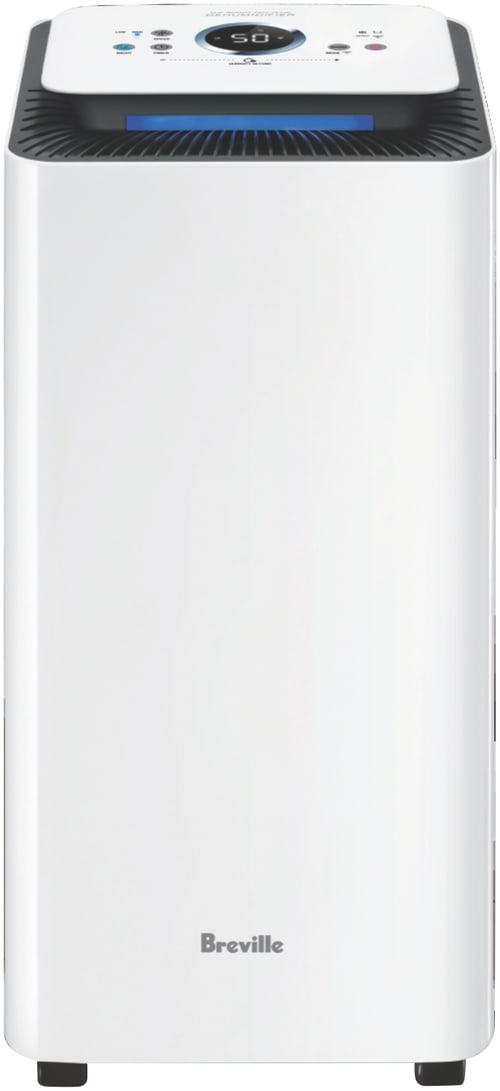
Rooms up to 50 square metres, a 3.5-litre tank, humidity held anywhere between 30 and 80 percent in 5 percent steps, two automatic fan speeds, laundry mode, a timer and Wi-Fi with Alexa and Google. A pre-filter for dust and pet dander plus ionisation. 350 watts, 14.5kg. Two-year warranty. Owners rate it 4.5 at The Good Guys.
Breville does not publish a daily extraction figure for this model, which makes it hard to compare directly against the De'Longhi on the one number that matters most in a wet room.
What We Like:
- Humidity set point in 5% steps
- 350W, the lower draw
- Live humidity display
What We Don't Like:
- No published extraction rate
The two ranges at a glance
| Extraction | Tank | Room | Power | Warranty | Price | |
|---|---|---|---|---|---|---|
| De'Longhi | ||||||
| Tasciugo AriaDry Multi 16L | 16L/day | 2.1L | 75m³ | 285W | 1 year | $450–500 |
| Tasciugo AriaDry Multi 25L | 25L/day | 5L | 100m³ | 490W | 1 year | $500–600 |
| Tasciugo Aria Dry 21L | 21L/day | 5L | 90m³ | 490W | 2 years | $600–700 |
| Breville | ||||||
| the Smart Dry | 10L/day | 2.5L | 30m² | 350W | — | $350–400 |
| the Smart Dry Plus | Not published | 3.5L | 50m² | 350W | 2 years | $600–700 |
| Smart Dry 2-in-1 Viral Protect | 25L/day | 6.5L | 60m² | 420W | 2 years | $700–800 |
The two brands do not quote room size the same way: De'Longhi uses cubic metres and Breville square metres, so those columns are not directly comparable.
What actually differs
Filtration. The De'Longhi runs air through four stages including a HEPA-type filter and activated carbon, which is what takes the musty smell out of a damp room rather than just the moisture. The Breville has a pre-filter and ionisation, which handles dust and dander but is a step below on odours.
Control. Breville lets you name a humidity percentage and holds it. De'Longhi's Real Feel works on humidity and temperature together, which is a different and slightly less predictable idea. If the goal is keeping a room below 55 percent to stop mould, naming the number is easier.
Power draw. 490 watts against 350. Both are small next to a heater, and the higher draw goes with the higher extraction rate.
Cold rooms. The De'Longhi has an electronic anti-frost device, which matters in an unheated room in winter. Refrigerant dehumidifiers lose efficiency as the air gets colder and can ice up without it.
The rest of each range. De'Longhi also sells a 25L model at a lower price than the 21L, and a 16L at around $499 that draws only 285 watts and runs at 40dBA. Breville's 2-in-1 Viral Protect combines 25L a day of extraction with a HEPA-13 air purifier for around $749, which is the one to look at if a purifier is on the list as well.
Who each one suits
De'Longhi 21L suits drying washing indoors, a damp laundry or bathroom, and rooms where the smell is as much of a problem as the moisture.
Breville Smart Dry Plus suits holding a bedroom or living room at a steady humidity through a wet season, with the lower power draw and the clearer controls.
FAQs
What humidity should a room sit at?
Between 40 and 60 percent suits most houses. Below 40 it starts to feel dry; above 60 is where mould and dust mites become comfortable.
Does a dehumidifier heat the room?
Slightly. The compressor's waste heat goes into the room, which is why a dehumidifier running all day in a closed space raises the temperature a degree or two. In winter that is a small bonus.
Can one be left running unattended?
Yes, with the continuous drain hose connected and the outlet somewhere that can take the water. Both units switch off when the tank is full if the hose is not used.
Do they help with asthma?
Controlling humidity reduces dust mites and mould, which are common triggers. The filtration is a secondary benefit, and neither is a substitute for a dedicated purifier with a sealed HEPA filter.