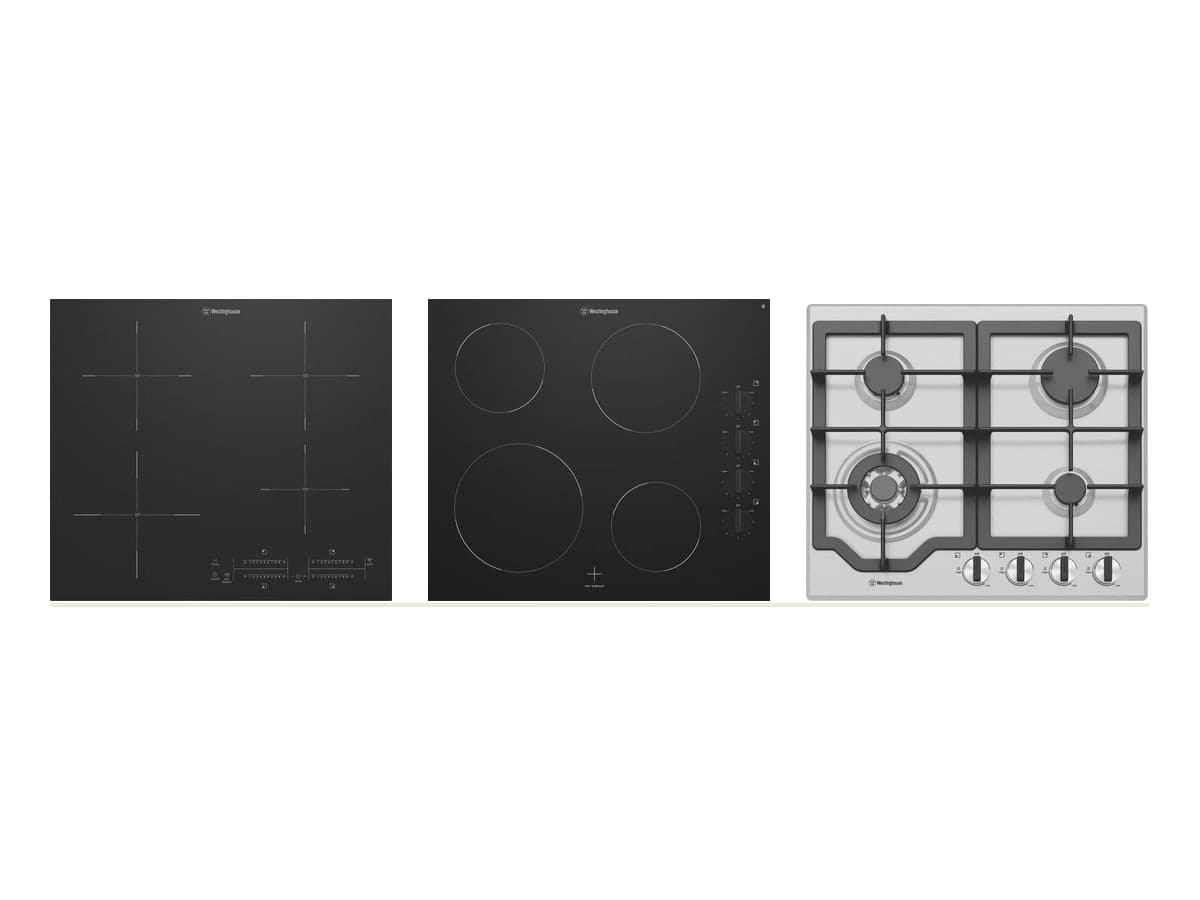
Induction is the one to choose in a new or renovated kitchen: it puts more heat into the pan than either alternative, responds instantly, and the glass stays cool enough to wipe while you cook. Ceramic is the cheap electric option at less than half the price. Gas suits anyone with an existing gas point who cooks with a wok or wants a cooktop that still works when the power is out.
The comparison below uses three Westinghouse 60cm models so brand, build and warranty are held constant and only the technology changes.
Induction
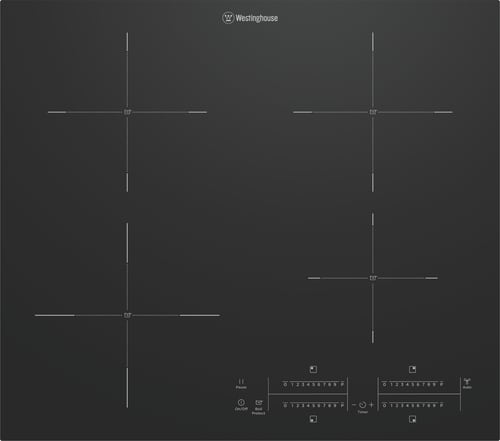
A coil under the glass creates a magnetic field that heats the pan directly. Nothing heats except the cookware and whatever it touches. Westinghouse's 60cm delivers 3600W across four zones with touch-and-slide control, a 99-minute timer, keep-warm and pause functions. Owners rate it 4.7 from nearly 30 reviews at The Good Guys.
Two catches. Pans must be magnetic: if a fridge magnet does not stick to the base, it will not work, which rules out most aluminium, copper and some stainless. And at around $1,100 it is nearly three times the ceramic price.
What We Like:
- 3600W, the most heat here
- Glass stays cool, wipes clean
- Instant response
What We Don't Like:
- Needs magnetic cookware
Ceramic
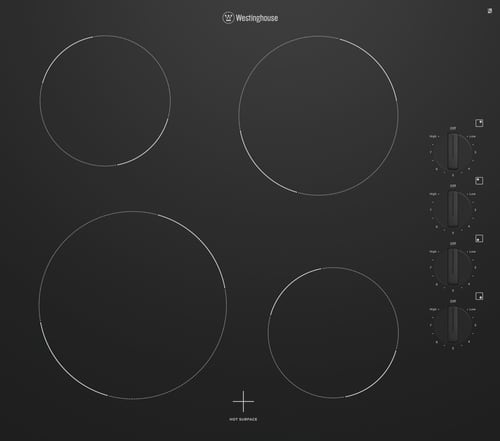
A radiant element glows under the glass, heats the glass, and the glass heats the pan. Westinghouse's 60cm gives 2300W across four zones with knob control and a residual heat indicator. Owners rate it 4.6 from more than 220 reviews at The Good Guys.
It takes any flat-bottomed pan, which is its main advantage. It is also slow to heat and slow to cool, and because the glass gets hot, spills bake on.
What We Like:
- Under $400
- Takes any flat pan
- Rated 4.6 by owners
What We Don't Like:
- Slow to respond, spills bake on
Gas
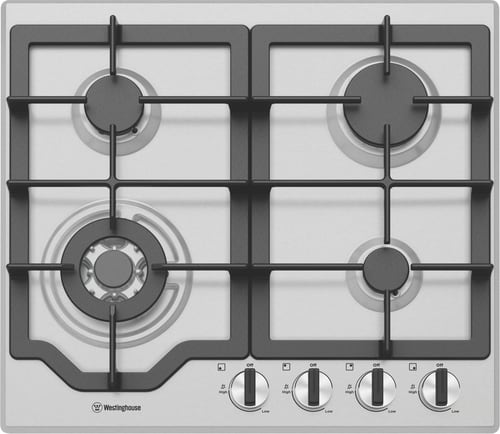
A flame under a trivet. Westinghouse's 60cm gives 14.4 megajoules across four burners with knob control, and runs on natural gas or LPG. Owners rate it 4.5 from more than 250 reviews at The Good Guys.
Gas is the only one of the three that works in a blackout, and the only one that heats a round-bottomed wok properly. It is also the only one that puts combustion products into the kitchen, which is why new builds in several states are moving away from it.
What We Like:
- Works without power
- Suits a wok
- Visible flame control
What We Don't Like:
- Burns fuel in the room, and trivets need cleaning
What each type is good at
| Induction | Ceramic | Gas | |
|---|---|---|---|
| Boil time | Fastest | Slowest | Middle |
| Response to a control change | Instant | Slow | Instant |
| Works in a blackout | No | No | Yes, with a match |
| Needs particular pans | Yes, magnetic bases | No | No |
| Surface stays cool | Mostly | No | No |
| Cleaning | Wipe flat glass | Wipe flat glass | Trivets and burner caps |
| Installation | Often a dedicated circuit | Standard | Gas fitter, plus a licensed connection |
| Typical price | $999–$1,799 | $394–$649 | $549 and up |
| Suits | Speed and control | A low purchase price | Cooks who want a flame, and blackout-prone areas |
Side by side
| Induction | Ceramic | Gas | |
|---|---|---|---|
| Example | Westinghouse 60cm | Westinghouse 60cm | Westinghouse 60cm |
| Price | $1,000–1,100 | $350–400 | $500–600 |
| Max power | 3600W | 2300W | 14.4MJ |
| Zones | 4 | 4 | 4 burners |
| Controls | Touch and slide, 9 levels | Knob, 9 levels | Knob |
| Heats | The pan | The glass, then the pan | The pan and the air |
| Response | Instant | Slow | Instant |
| Cookware | Magnetic only | Any flat base | Any |
| Surface while cooking | Warm where the pan sits | Hot all over the zone | Hot trivets |
| Works in a blackout | No | No | Yes |
| Cleaning | Wipe the flat glass | Wipe, but spills bake on | Lift trivets, clean burners |
| Warranty | 2 years | 2 years | 2 years |
| Owner rating | 4.7 (27) | 4.6 (224) | 4.5 (253) |
Owner ratings are from The Good Guys.
What actually differs
Speed. Induction gets a large pot of water boiling faster than gas and much faster than ceramic, because almost all the energy ends up in the pan rather than heating the air around it.
Control. Induction and gas both respond the moment you change the setting. Ceramic lags by many seconds in both directions, which is why it burns sauces.
Cleaning. Induction glass stays cool enough that a boilover wipes off. Ceramic glass is hot across the whole zone, so the same spill carbonises. Gas means lifting trivets and scrubbing burner caps.
Cookware. The induction question that trips people up. Cast iron and most stainless work; aluminium, copper and some cheap stainless do not. Test with a fridge magnet before buying a cooktop, not after.
Installation. Induction and ceramic need a dedicated electrical circuit, usually 32 amps for a 60cm induction, which is an electrician's job in most kitchens. Gas needs a gas point and a certified gas fitter. There are 10-amp plug-in induction cooktops with power sharing, such as Omega's 60cm at around $680 rated 4.9, for kitchens without the switchboard capacity.
Safety. Induction has no exposed heat source and shuts off when the pan lifts. It can interfere with some pacemakers, which is worth raising with a cardiologist if that applies.
Which suits you
Induction suits a renovation with switchboard capacity, anyone replacing cookware anyway, households with small children, and anyone who cooks enough to notice response time.
Ceramic suits a tight budget, a rental refit, or a second kitchen where the cooktop gets occasional use.
Gas suits an existing gas connection, wok cooking, a bushfire-prone area where blackouts are common, and anyone who simply cooks better on a flame.
FAQs
Does induction need special saucepans?
It needs magnetic ones. Most modern stainless and all cast iron work. A magnet stuck to the base is the whole test.
Is induction cheaper to run than gas?
Per unit of heat into the pan, yes, because far less is wasted. Whether it is cheaper on the bill depends on your electricity and gas tariffs, and on whether you have solar.
Will an induction cooktop work with my existing wiring?
A full-size 60cm induction typically needs a dedicated 32-amp circuit. Power-sharing models that run on a 10-amp plug exist and cost a little more; they throttle zones when all four run hard.
Are gas cooktops being banned?
Several Australian jurisdictions have restricted new gas connections in new residential builds. Existing connections are not affected, and gas cooktops remain on sale.