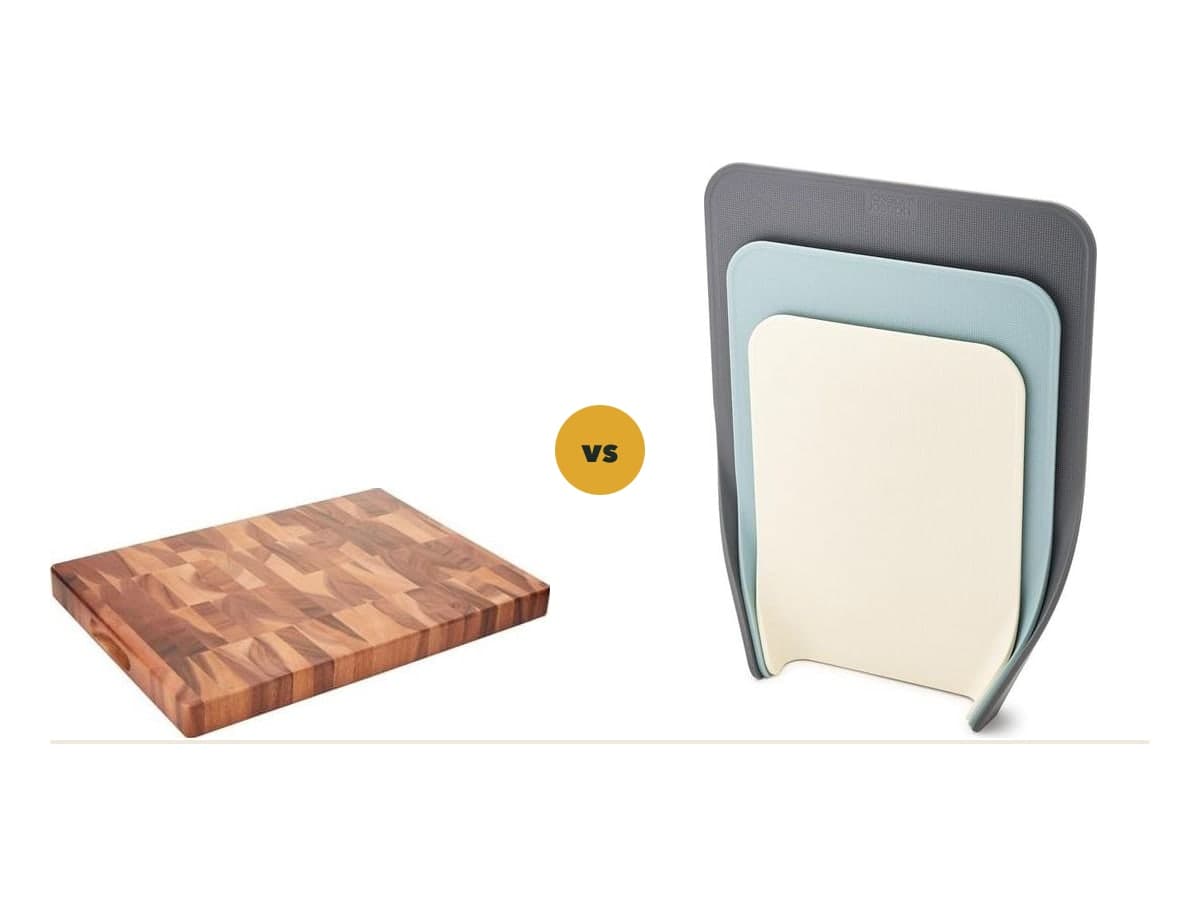
At home, a wooden board and a plastic one are equally safe as long as they are kept clean and not badly worn, according to the Food Safety Information Council. The council's one exception is raw meat, poultry and seafood, where it advises plastic or glass because wood is porous.
The other differences are practical. Plastic goes in the dishwasher and wood does not, wood needs oiling, and plastic sheds microplastics as it is cut.
The two at a glance
| Wood | Plastic | |
|---|---|---|
| Safe at home if kept clean | Yes | Yes |
| Raw meat, poultry, seafood | Not advised | Advised |
| Dishwasher | No, hand wash | Yes |
| Upkeep | Oil about once a month | None |
| Sheds microplastics | No | Yes |
| Replace when | Worn or deeply grooved | Worn or deeply grooved |
Advice is from the Food Safety Information Council and the University of Maine's cooperative extension service.
What the research found
In a 1994 study at the University of Wisconsin–Madison, food microbiologists put bacteria including Salmonella, Listeria and E. coli onto blocks cut from new and used plastic and wooden boards. The bacteria could be recovered from plastic for minutes to hours, and multiplied if the blocks were left overnight. Clean wood usually soaked up the liquid within 3 to 10 minutes, and fewer bacteria could be recovered from it, whether the wood was new or used. Where large numbers were applied, the count on the wood had fallen by at least 98 per cent after 12 hours.
The authors concluded that the results did not support the common belief that plastic boards are more hygienic than wood. For general use, the Food Safety Information Council also treats the two as equal, while its advice on raw meat favours plastic or glass.
Both materials wear out. Plastic boards develop knife scars where bacteria can grow, according to the University of Maine, and the council says any board with hard-to-clean grooves should be thrown away.
Microplastics
A plastic board loses small particles to the food as it is cut. A 2023 paper in Environmental Science & Technology estimated that one person could take in 7.4 to 50.7 grams of microplastics a year from a polyethylene board, or 49.5 grams from a polypropylene one. Those estimates rest on the researchers' own assumptions about how much a person chops. Polypropylene shed more than polyethylene in their tests. A preliminary test of the polyethylene particles on mouse cells found no effect on the cells' survival over 72 hours.
Wooden board
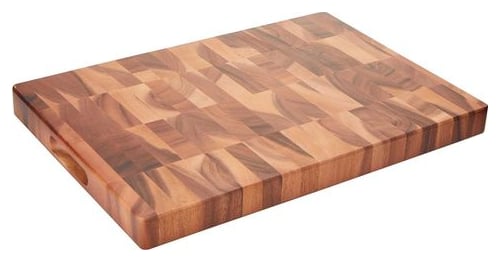
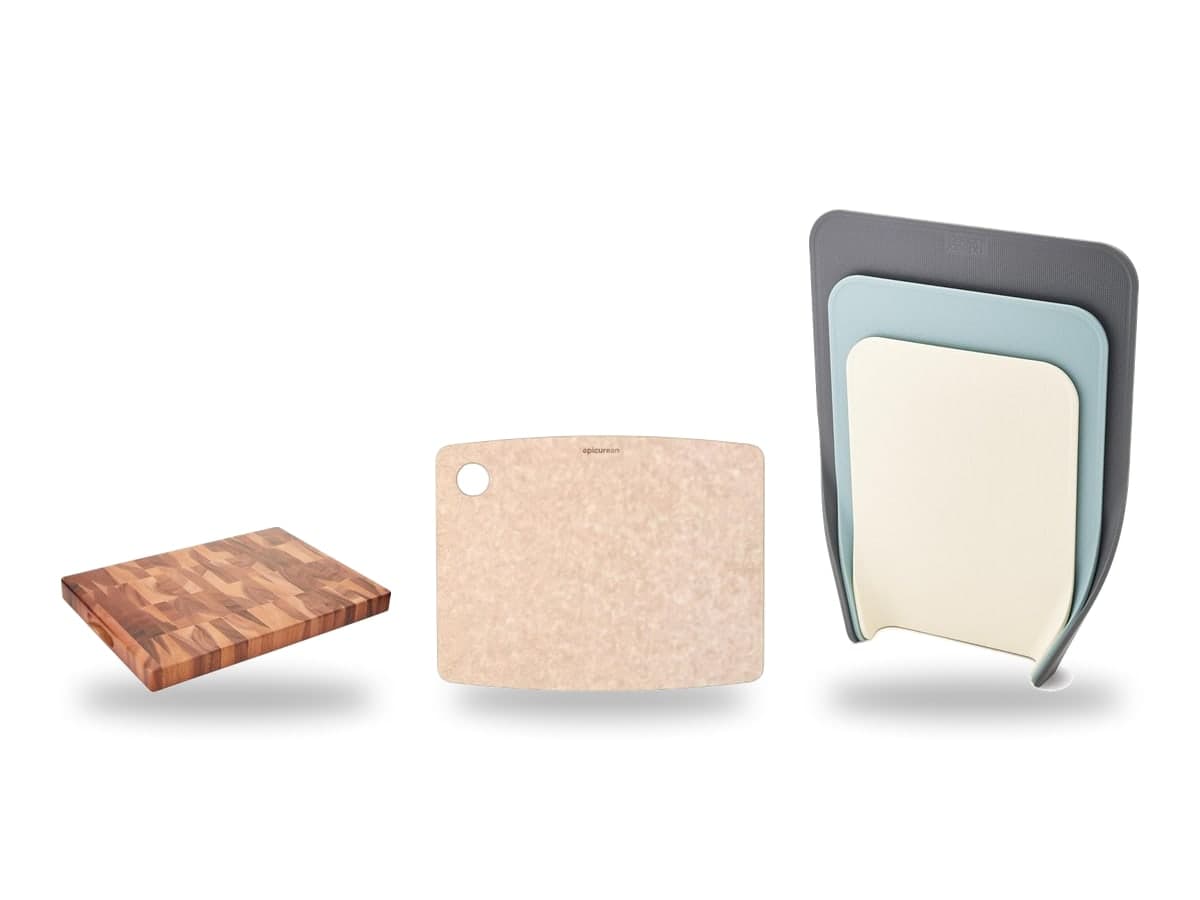
This Davis & Waddell board is acacia, 50 x 35 x 4cm, built from end-grain blocks glued together with the grain facing up. It is washed by hand, and its listing warns that soaking or strong sun can warp or split it.
The University of Maine suggests rubbing a wooden board with food-safe mineral oil or beeswax roughly monthly, and advises against olive or vegetable oil, which go sticky and rancid. Owners like the look and size of this board. The most common complaint is cracking at the joins.
What We Like:
- Big enough for carving
- End grain faces up
- 4cm thick
What We Don't Like:
- Joins can crack, say owners
- Needs oiling
Plastic board
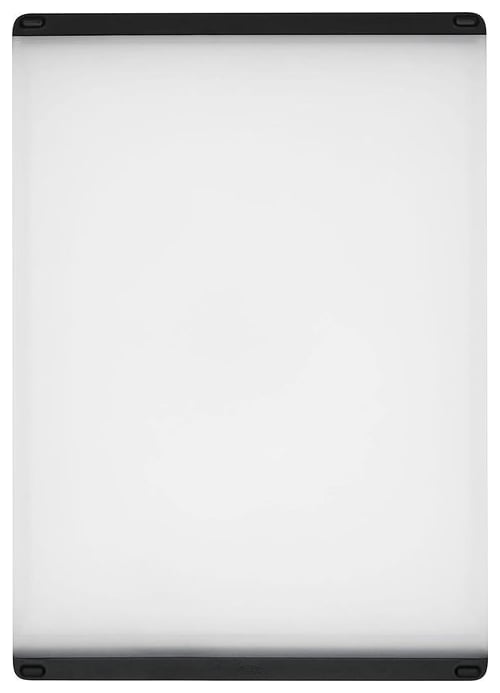
The OXO Good Grips utility board is polypropylene, 38 x 27cm, with non-slip feet and a drip catcher, and it goes in the dishwasher. The Food Safety Information Council rates plastic boards well because a dishwasher can clean them with very hot water. Owners like its size; the complaints are about the feet slipping and some boards warping.
A kitchen that wants a separate board for each kind of food can buy colour-coded sets, such as the six Hygiplas boards sold by Nisbets, where red is for raw meat and green for fruit and vegetables.
What We Like:
- Goes in the dishwasher
- Non-slip feet
- Drip catcher
What We Don't Like:
- Feet slip for some owners
- Some boards warp
What actually differs
Raw meat. The Food Safety Information Council advises plastic or glass over wood for raw meat, poultry and seafood. FSANZ suggests keeping one board for raw meat and a second for food that will be eaten without cooking.
Cleaning. The council says every board should be scrubbed with hot water and detergent, then dried, after raw food. Plastic can go through the dishwasher as well. Wood should not be left to soak, the University of Maine says, because the moisture can warp or crack it.
Upkeep. A wooden board needs oiling about once a month. A plastic board needs nothing beyond washing.
Microplastics. Only plastic sheds them.
Which suits which cook
Wood suits bread, vegetables and serving, for cooks happy to wash a board by hand and oil it.
Plastic suits raw meat, poultry and seafood, and cooks who want every board to go in the dishwasher. One of each covers both jobs.
FAQs
Are wooden chopping boards more hygienic than plastic?
In the University of Wisconsin tests, fewer bacteria could be recovered from wood than from plastic. For home use, the Food Safety Information Council treats the two as equally safe as long as they are kept clean.
Which chopping board should you use for raw meat?
The Food Safety Information Council advises plastic or glass, because wood is porous.
Can a wooden chopping board go in the dishwasher?
It is best not to. The University of Maine says boards glued together from pieces of wood tend to crack or separate in a dishwasher, and even solid wood may warp.
What oil should you use on a wooden chopping board?
The University of Maine recommends food-safe mineral oil or beeswax, applied about monthly, and advises against cooking oils such as olive oil.