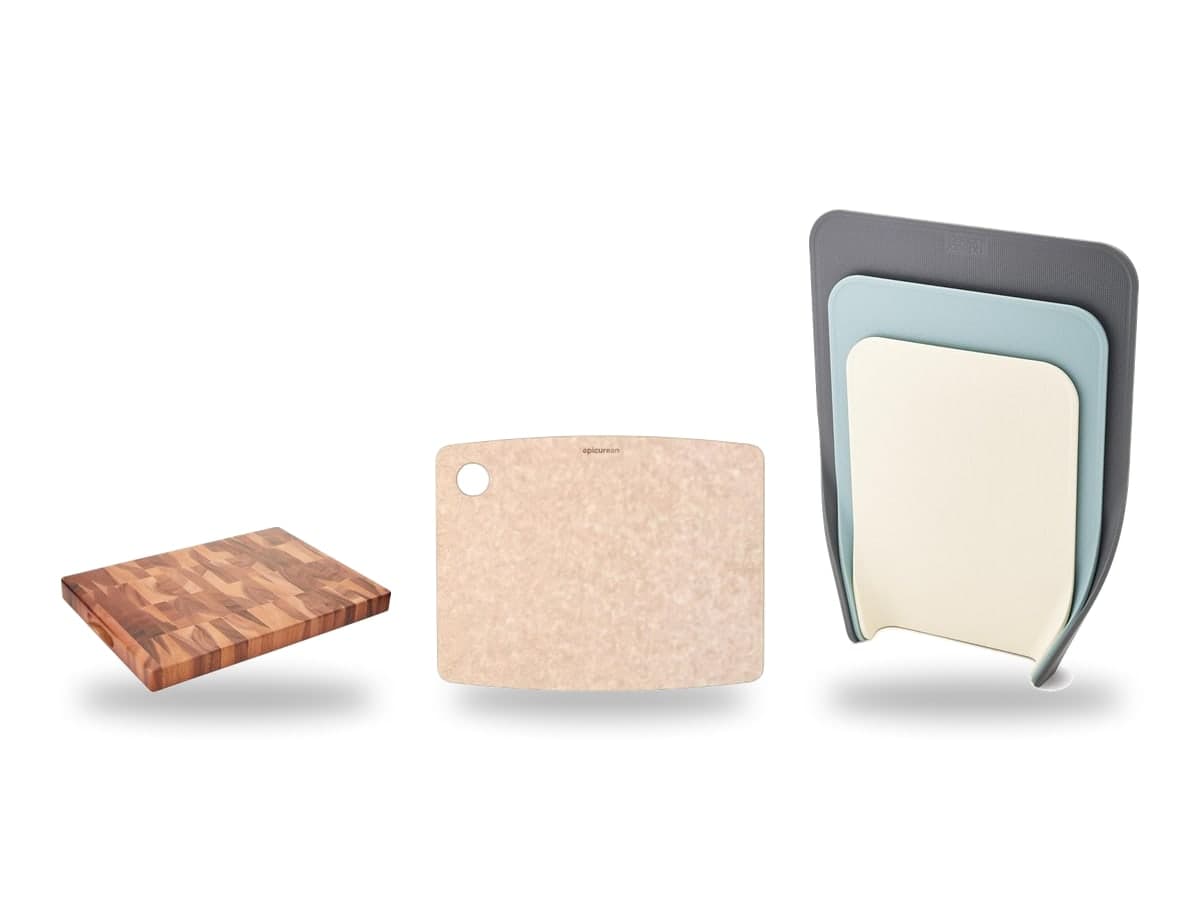
A chopping board that is too small spills food onto the bench, and one that slides makes every cut harder to control. For home kitchens, the Food Safety Information Council says it does not matter whether a board is wood, plastic or glass, so long as the board is clean and not badly worn. For raw meat, seafood and poultry, it advises plastic or glass rather than wood.
Food Standards Australia New Zealand suggests one board for raw meat and another for food that will not be cooked. A wooden board for bread and vegetables and a plastic one for raw meat follows both pieces of advice.
| Board | Material | Size | Dishwasher | Price |
|---|---|---|---|---|
| Davis & Waddell End Grain | Acacia wood | 50 x 35 x 4cm | No | $50–100 |
| OXO Good Grips Utility | Polypropylene | 38 x 27cm | Yes | Under $50 |
| Epicurean Kitchen Series | Paper composite | 29 x 23cm | Yes | Under $50 |
| Joseph Joseph Nest Chop | Plastic, set of 3 | Largest 34 x 25cm | Yes | Under $50 |
Sizes and materials are from each listing. Prices were checked at Amazon and Harris Scarfe on 27 September 2026.
1. Best Wooden Board: Davis & Waddell Acacia End Grain
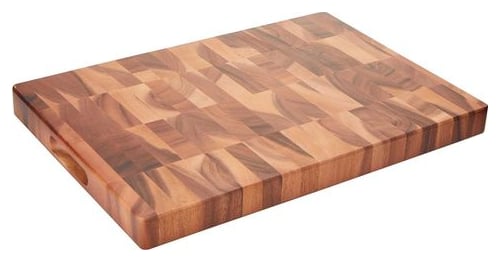
This is a 50 x 35cm acacia board, 4cm thick, made with the end grain facing up, which the listing says is friendly to knife blades. It is designed in Australia and made in Thailand. Harris Scarfe and Amazon sell the same board, model D3153.
It is hand wash only, and the listing warns against soaking it or leaving it in direct sunlight, which can warp or split the board. Owner reviews praise its look and value. Owners who comment on durability more often report cracks or split joins than say it has held up.
What We Like:
- Large 50 x 35cm surface
- End grain
- 4cm thick
What We Don't Like:
- Cracking and splitting reports
- Hand wash only
2. Best Plastic Board: OXO Good Grips Utility
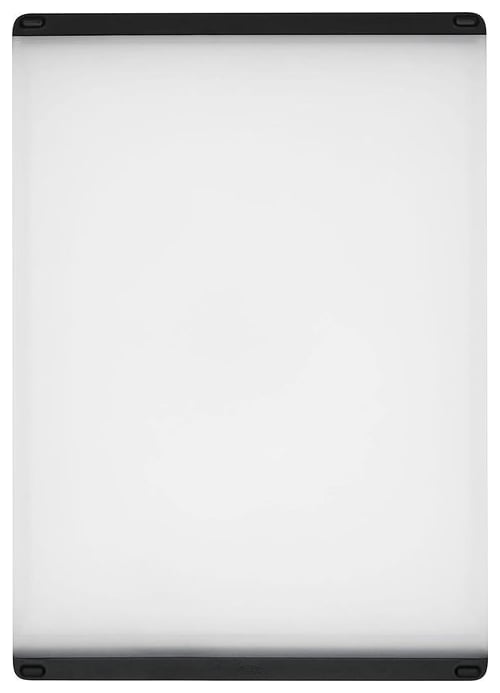
OXO's utility board is a 38 x 27cm polypropylene board with two usable sides, a drip catcher, pouring corners and non-slip feet. It goes in the dishwasher, and the Food Safety Information Council points out that plastic boards can be washed at high temperatures there.
Owner reviews rate the size and the design. They are split on how well the feet grip and how long the board lasts, with some reporting warping. A few find it thin.
What We Like:
- Dishwasher safe
- Drip catcher and pouring corners
- Both sides usable
What We Don't Like:
- Mixed reports on grip
- Some warping reports
3. Best Composite Board: Epicurean Kitchen Series
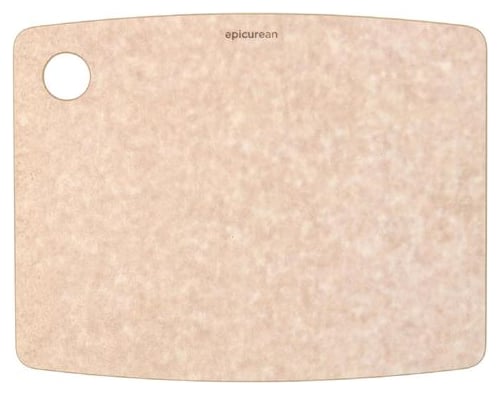
Epicurean boards are made in the USA from Richlite, a paper composite, and the listing describes the surface as non-porous and knife friendly. The board is 6mm thick and light, goes in the dishwasher, and takes heat up to 176°C (350°F), so it doubles as a trivet. The 29 x 23cm size suits a few vegetables or a block of cheese rather than a roast.
Owner reviews like that it goes in the dishwasher and is easy to look after. Of the owners who mention price, most say it is not worth it.
What We Like:
- Dishwasher safe
- Heat resistant to 176°C
- No oiling needed
What We Don't Like:
- Small at 29 x 23cm
- Mixed views on value
4. Best Nesting Set: Joseph Joseph Nest Chop
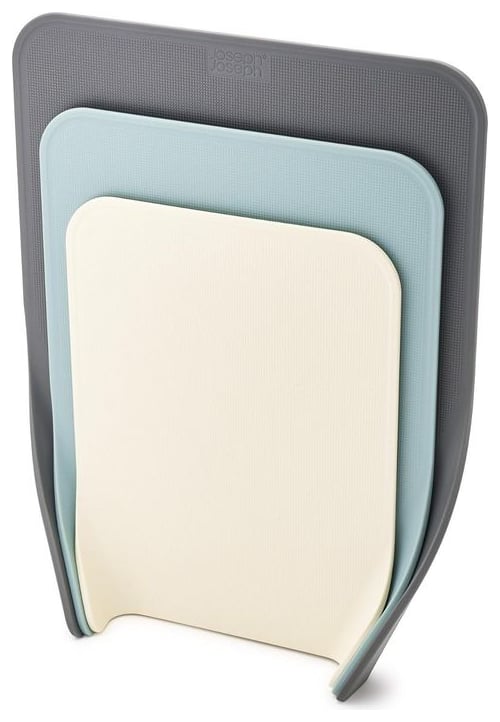
The Nest Chop is three plastic boards in graded sizes that stack inside one another, with textured cutting surfaces, non-slip bases and curved ends for tipping food into a pan. Three boards make it easy to keep one for raw meat.
Owner reviews like how little space the set takes. The complaints are about the boards breaking, cleaning, and the curved ends, which some owners find get in the way.
What We Like:
- Three boards in one stack
- Non-slip bases
- Takes little space
What We Don't Like:
- Breakage reports
- Curved ends get in the way for some
Other options worth a look
- Hygiplas colour-coded boards, 6-pack. Six 45 x 30cm low-density plastic boards, one colour per food: red for raw meat, yellow for raw poultry, blue for raw fish, brown for cooked meat, green for fruit and vegetables and white for dairy, sold by Nisbets. They are dishwasher safe; the rack is sold separately.
- Hygiplas high-density board. A single 45 x 30cm, 12mm board in heavier high-density plastic, which Nisbets says resists knife scratches and warping better than low-density boards, sold by Nisbets.
How to pick a chopping board
Wood or plastic. Both are fine for home use if they are kept clean, though the Food Safety Information Council recommends against wood for raw meat, seafood and poultry. The research behind that, and what each material needs, is covered in wood vs plastic chopping boards.
Size. A small board suits a lemon or a block of cheese. A large board, such as the 50 x 35cm Davis & Waddell, leaves room to push chopped food aside while you keep cutting.
Care. Plastic and composite boards can go in the dishwasher. A wooden board is washed by hand and oiled from time to time. The University of Maine recommends a monthly coat of food-grade mineral oil or beeswax, and not cooking oils, which can turn sticky and rancid.
FAQs
When should you replace a chopping board?
When it is badly worn or has grooves that are hard to clean, the Food Safety Information Council says. This applies to wooden and plastic boards alike.
Can you put a wooden chopping board in the dishwasher?
Davis & Waddell's is hand wash only. An end-grain board is made from many pieces of wood glued together, and the University of Maine warns that boards built that way can crack or come apart in a dishwasher.
Do plastic chopping boards shed microplastics?
Yes. A 2023 study put the figure at somewhere between about 7 and 50 grams a year for one person, depending on the board, with polypropylene shedding more than polyethylene. The study and its limits are covered in wood vs plastic chopping boards.