Buying a mattress online means buying it unseen, and every brand answers that with a home trial. The terms of that trial are rarely read until someone wants to use them.
The differences are bigger than the headline number suggests. Two brands both advertising "100 nights" can differ on whether you may return in week one, whether collection is free where you live, whether the refund includes what you paid for delivery, and whether the mattress has to be clean enough for a charity to accept.
This page sets out what seven Australian mattress brands commit to. Terms were read off each brand's own trial, returns and warranty pages on 21 September 2026 and they do change, so the brand's page is the final word.
The comparison
| Brand | Trial | Minimum before you can return | Who pays to take it away | Warranty |
|---|---|---|---|---|
| Emma | 150 nights | None stated | Free in the serviced area; a non-refundable $79 or $160 regional fee | 10 years (5 on beds) |
| Onebed | 125 nights | 30 nights | Free collection, donated to charity | 15 years limited |
| Koala | 120 days | 7 nights | Free in six metro areas only; outside them you deliver it to a fulfilment centre | 10 years |
| Ecosa | 100 nights | None stated | Free pickup by a charity partner | 15 years on the Ecosa mattress |
| Macoda | 100 nights | 28 nights requested, not required | Free collection, but $100 if you return inside 14 days | 10 years |
| Sleeping Duck | 100 nights | 21 nights per firmness setting | Free pickup | 10 years limited |
| Ergoflex | 30 nights | 30 nights | Free in most metro; $100 to $350 regional | 10 years (2 on the cover) |
Trial length is the least important number
Every brand leads with it, and it changes the outcome least.
A longer trial covers a change of season. A mattress bought in April on a 150-night trial is still returnable in September, which matters because foam that felt fine in winter can run hot in February. A 30-night trial closes before the weather turns.
The minimum you have to sleep on it
This term runs the opposite way to trial length, and it is the one that catches people out.
Onebed asks for 30 nights before a return is allowed at all. If you know on night three that the firmness is wrong, you wait out the month.
Ergoflex's trial is 30 nights and they ask you to sleep the whole 30. You do not have to have the mattress collected by day 30, but you do have to tell them inside it.
Macoda suggests 28 nights, which is a suggestion rather than a condition, but returning inside the first 14 days costs $100 in early collection.
Koala asks for seven nights, the shortest of the group.
Sleeping Duck works differently, because the Mach II's firmness is adjustable. Instead of a minimum before returning, they ask for 21 nights on each firmness setting before you change it again. The swaps are free.
The brands give the same reason for the minimums: new foam is firmer than settled foam, and they expect most people to adjust to a new surface within a couple of weeks.
Who pays to take it away
This is the term with the biggest gap between brands, and the easiest to miss, because it only applies to some addresses.
Koala draws the line at six metro areas. The 120-day trial applies everywhere, but free collection covers metro Sydney, Melbourne, Brisbane, Adelaide, Canberra and Perth. Outside those, you keep the trial and deliver the mattress to a Koala fulfilment centre in one of five capitals yourself.
Ergoflex charges $100 to $350 for regional collection, depending on distance, so the amount is at least known in advance.
Emma charges a non-refundable $79 or $160 regional fee depending on location.
Macoda's approach is different again: where free collection is not possible, getting the mattress to a registered charity or a recycling facility is the customer's job, and the refund waits until a third party confirms receipt.
Ecosa and Onebed both route returns through charity partners and do not flag a regional surcharge on their trial pages.
Outside a capital city, this row matters more than the trial length.
What the warranty actually covers
A mattress warranty is not a satisfaction guarantee. Once the trial closes, a claim needs a defect, and the defect that matters is sagging.
Emma set the threshold at a permanent indentation greater than 2.5cm, visible to the naked eye, under correct use. Most brands use a similar figure, and correct use is the clause a base can fall foul of: slats too far apart, or a mattress on the floor, is enough to refuse a claim. What each brand asks for varies from 5cm to 12cm, and two of the seven publish no figure at all, which we set out in bed base slat spacing and what each warranty requires.
The length itself rarely decides anything. Onebed's 15 years and Koala's 10 both run longer than most people keep a mattress, and both are limited warranties covering repair or replacement rather than a refund.
The conditions that end a return
Every brand here routes returned mattresses to charity or recycling, and that shapes the conditions. A mattress has to be in a state a charity will accept.
In practice that means no stains, no tears, no strong odours and no sign of pests. Emma name mould, significant dirt, strong odours and bed bugs as disqualifying. Onebed require the mattress to be in a condition their charity partners will take.
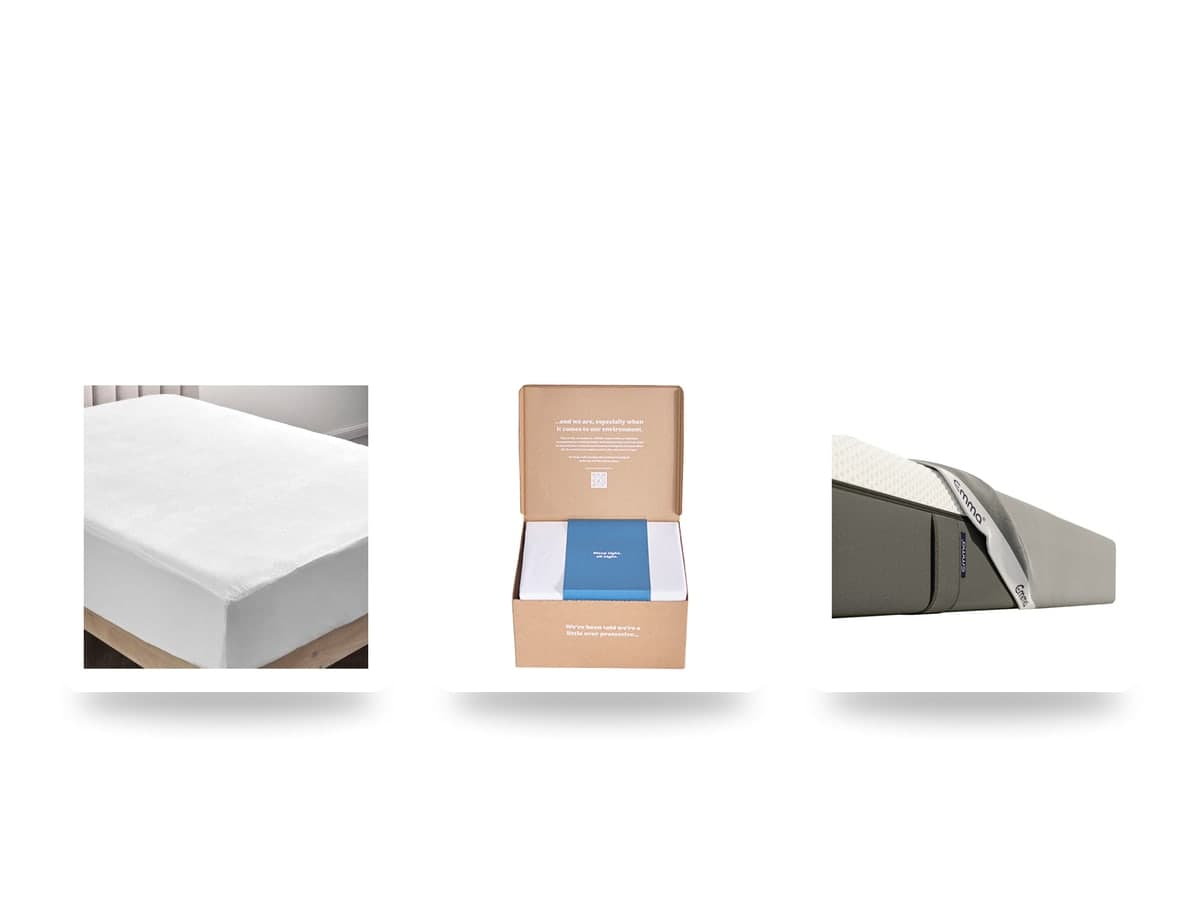
A mattress protector from day one keeps the trial usable. One spill in week two can cost you the right to return.
Two brands also cap how many you may send back. Ecosa allow one return of up to two mattresses per household, and Sleeping Duck allow two per household. That limit matters to anyone furnishing several bedrooms at once.
FAQ
Does the trial cover the delivery fee?
Usually not. Koala refund the product price and specifically exclude delivery and assembly charges such as premium or room-service delivery. Emma's regional fee is described as non-refundable. The freight is generally yours either way.
How long until the money comes back?
Emma state 14 days from pickup, Koala five to seven business days from receiving the return, and Onebed approximately 30 days. Macoda refund once collection has happened.
Can I return a mattress bought on sale?
All seven describe the trial as applying to the mattress rather than to a price, and none of the trial pages carve out sale stock. Promotional bundles are the thing to check, because an accessory included free is often treated separately from the mattress.
Is a longer trial worth paying more for?
Only if you are buying in a mild month. A 150-night trial covers a mattress bought in autumn through to the first hot nights, which is when foam most often changes someone's mind.
What happens to the mattress after it goes back?
None of these are resold as new. Ecosa, Onebed and Macoda all route returns to charities or recyclers.