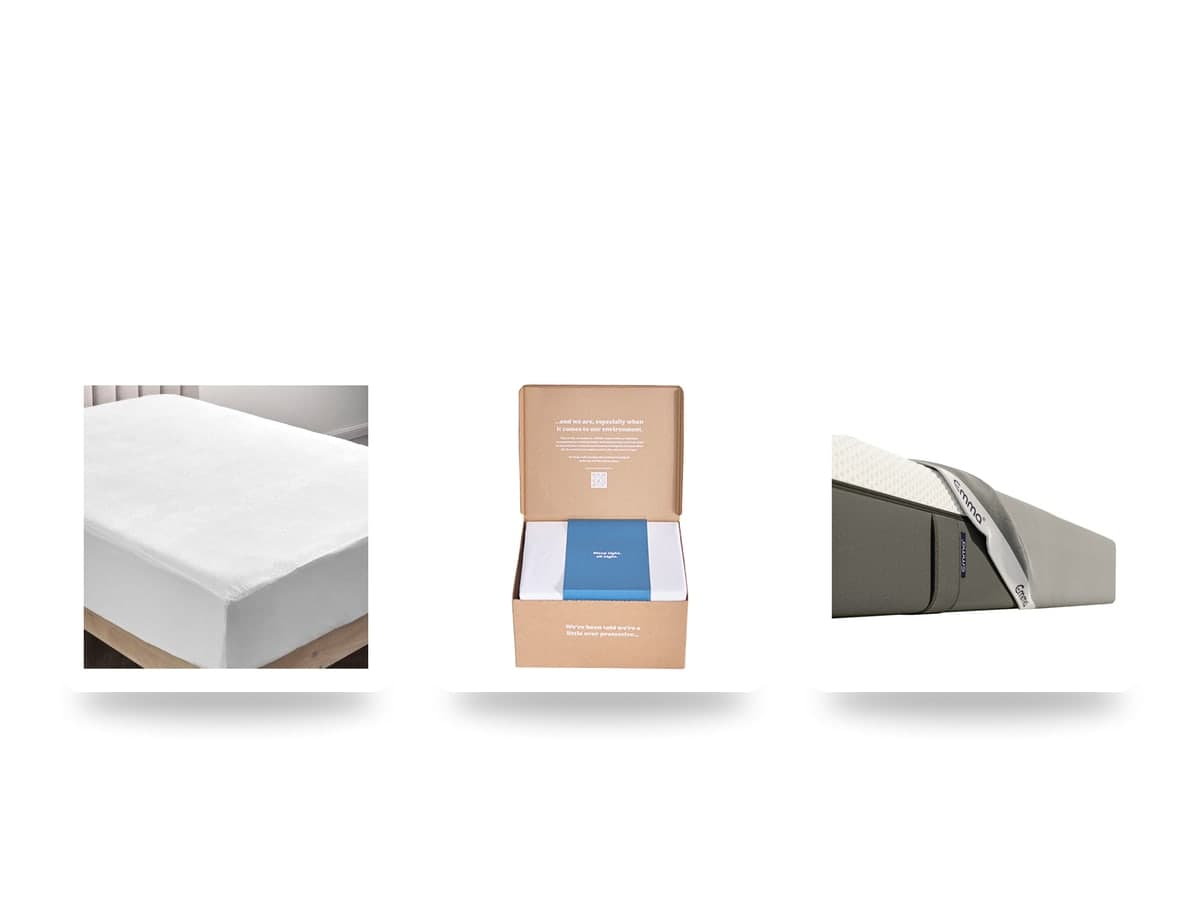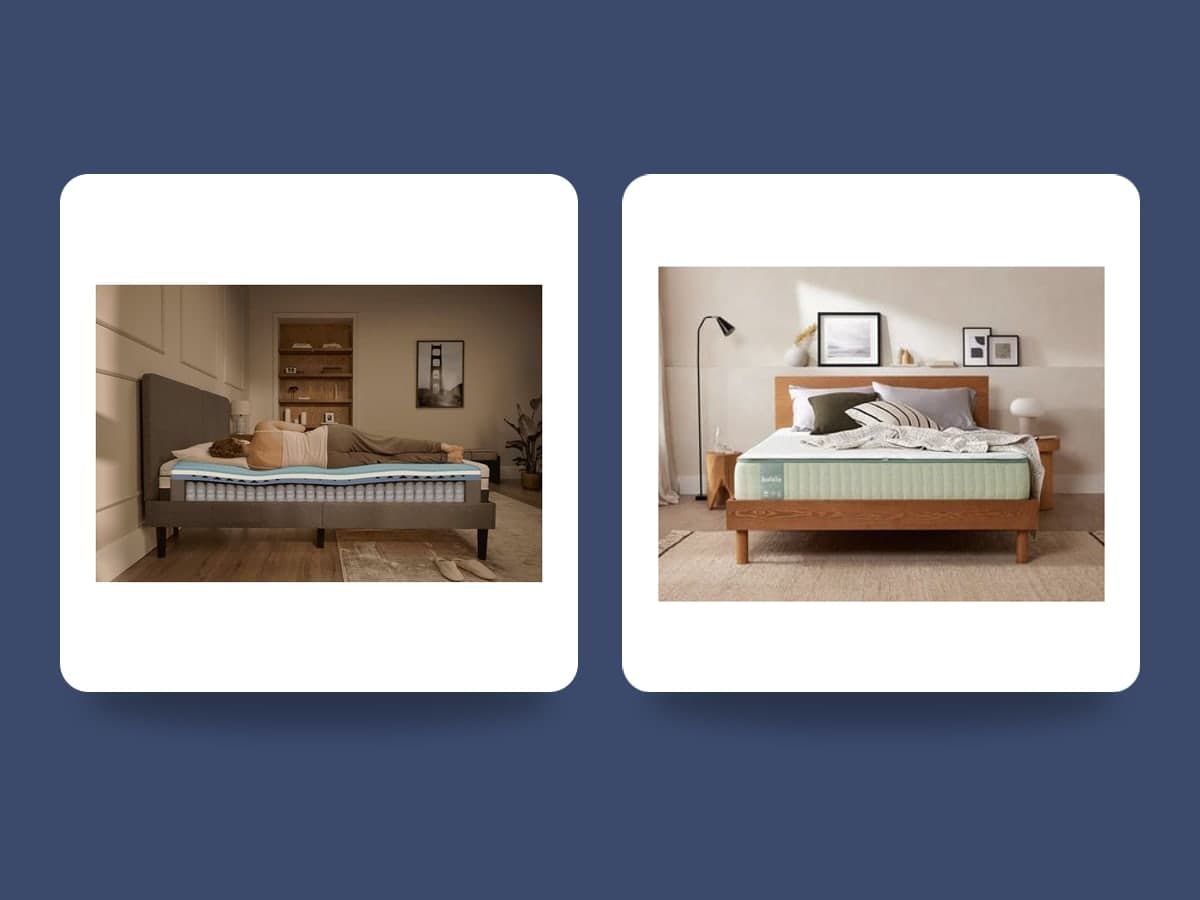
Anyone replacing a mattress they liked runs into the same problem: firmness is the thing that decided it, and there is no shared scale to carry across brands.
The gap is wider than an imprecise translation. Two Australian brands publish a rating out of 10 and their scales run in opposite directions, so the same number means the opposite thing depending on whose site you are reading. Everything below was taken from the brands' own product pages on 22 September 2026.
Emma and Ecosa rate firmness in opposite directions
Emma states it plainly on the Luxe product page: "On a scale from 1 (firm) to 10 (soft), the Emma Luxe and Luxe Plus are 7.6 mattresses." One is firm and ten is soft, so 7.6 sits on the soft side.
Ecosa runs the scale the other way, describing its range between "Plush (2-4)" and "Firm (7-8)". Low is soft and high is firm, which is the direction most people assume.
So an Emma 7.6 is soft-leaning and an Ecosa 7 to 8 is firm. Someone who liked a seven at one brand and shops for a seven at the other ends up with the opposite of what they wanted.
Emma describes firmness three different ways
The inconsistency is not only between brands.
The Luxe page uses the 1-to-10 scale above. The Emma Comfort page gives no number at all, only "Firmness Level: Medium-Soft". And Emma's glossary page describes a third system entirely: five grades from H1 to H5, keyed to body weight rather than feel, where H1 suits people up to 60kg and H5 suits people over 140kg, with H3 the most frequently bought. Nothing on the site maps one notation to another.
A reader comparing two Emma models can therefore be reading a number, a word and a weight band, all called firmness.
What each brand actually publishes
| Brand | What is published | Direction of the scale |
|---|---|---|
| Emma Luxe and Luxe Plus | 7.6 out of 10 | 1 is firm, 10 is soft |
| Emma Comfort | "Medium-Soft" | No scale |
| Ecosa | Plush (2-4) to Firm (7-8) | 1 is soft, 10 is firm |
| Koala | Medium-firm or firm | No scale |
| Macoda | Soft, medium or firm | No scale |
| Onebed | Medium or medium-firm | No scale |
| Sleeping Duck | Medium or firm | No scale |
| Ergoflex | One firmness, unlabelled | No scale |
Five of the seven brands publish no number at all. That leaves "medium" as the only word they have in common, and none of them define it against anything external, so it cannot be used to compare one brand with another.
This is why a translation table of the form "an Emma 7 equals a Koala X" cannot honestly be built. The inputs do not exist.
What you can change after delivery
Firmness is the one specification most of these brands let you change at home, which makes "what can I adjust after it arrives" a more useful question than "what number is it".
| Brand | Settings after delivery | How |
|---|---|---|
| Ecosa | 3: Plush, Medium-Firm, Firm | Flip the top layers |
| Macoda | 3: soft, medium, firm | Unzip and flip the inserts |
| Koala | 2: medium-firm, firm | Unzip and flip the internal layer |
| Onebed | 2: medium, medium-firm | Flip the top layers |
| Sleeping Duck | 2: medium, firm, and different on each side | Swap the inserts |
| Emma | None | — |
| Ergoflex | None | — |
Ecosa ships its Original Edition set to Medium-Firm and its Plush Edition set to Plush, so the edition decides what arrives rather than what the mattress can become. Onebed's two settings differ by which foam ends up on top: memory foam for the medium, Auralux for the medium-firm.
Sleeping Duck is the only one of the seven that publishes a per-side option, which is the answer to two people disagreeing about firmness. Koala's Luxe is worth separating from its flippable models here: asked whether firmness can be adjusted, Koala answers "No. The Luxe prioritises fixed, plush luxury."
Where this leaves the two that cannot be adjusted
Emma and Ergoflex both arrive at one firmness and stay there, so the trial is the only correction available if the feel is wrong.
That matters more for Ergoflex, whose trial is 30 nights against 100 to 150 at the others, and which asks you to sleep the whole 30 before deciding. Emma's trial runs 150 nights, the longest of the group. How long each brand gives you, and how soon you may send one back, is set out in our table of the seven brands' trial and warranty terms.
Using a mattress you already like as the reference
Since the scales do not convert, the usable comparison is the description rather than the rating.
Two things carry across brands. The first is construction: an all-foam mattress and a pocket-spring hybrid described as the same firmness are different surfaces, so the type is worth matching before the label is. The second is what the brand says about sleeping position and body weight, which is the reasoning Emma's H1 to H5 grades make explicit and the other brands leave inside their product copy.
Where a brand offers adjustment, medium-firm is the most common starting point among the ones here: it is what Ecosa's Original Edition arrives set to, and the softer of the two settings Koala's flippable mattress offers. That makes it the least risky place to begin when the reference mattress is no longer sold.