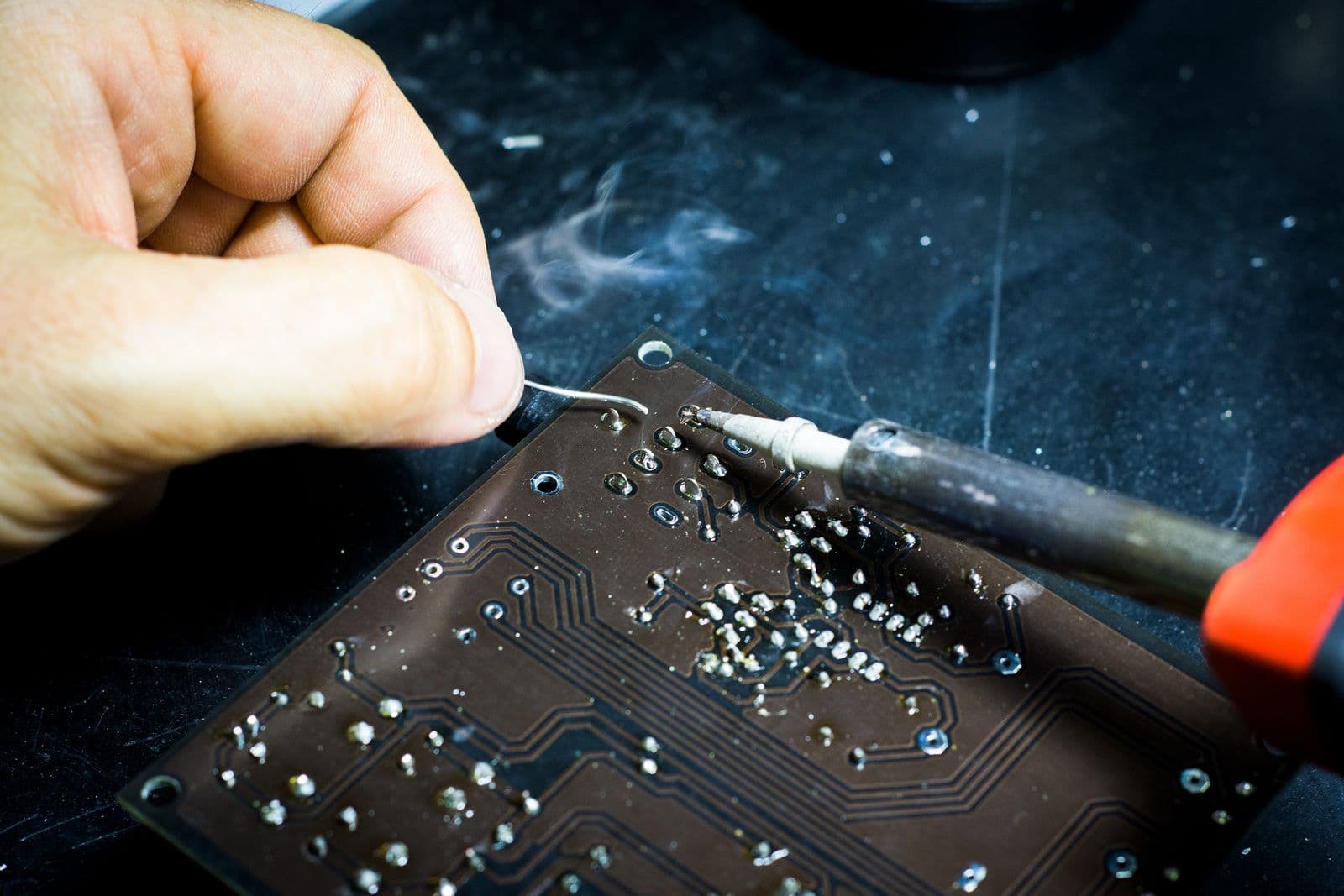
One decent soldering iron fixes the headphone lead, the guitar cable, the drone, and the mystery gadget with the flat battery wire, and the difference between decent and frustrating is temperature control. The two below cover home repair and the electronics bench.
1. Best Cordless: Dremel VersaTip 2000
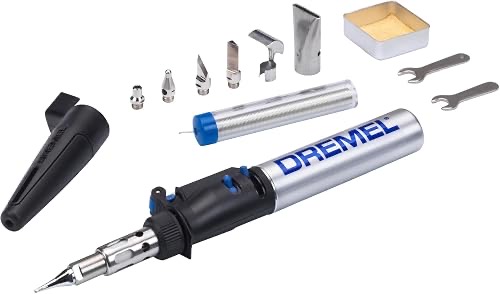
Dremel's gas-powered VersaTip solders anywhere the job is, no cord, no wait, with tips that swap it into a heat gun and hot knife. Its 539 owners average 4.4 stars, and car, boat and shed repairs fill the reviews.
At around $77 it's the household fix-it iron. Butane refills come from any hardware or tobacconist shelf, and fine circuit-board work prefers the station below.
What We Like:
- Cordless anywhere use
- Heat-gun and knife tips
- Refills everywhere
What We Don't Like:
- Coarse for circuit boards
2. Best Station: Horusdy 2-in-1 Hot Air Station
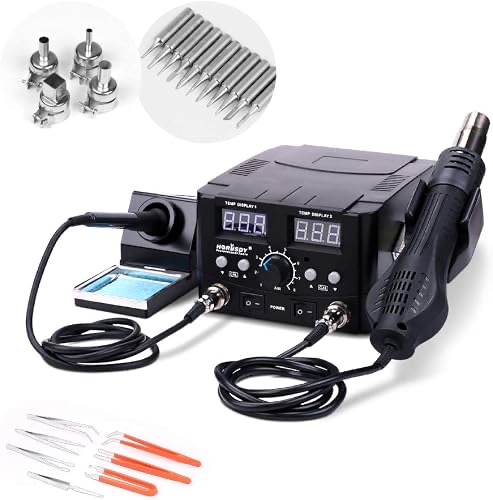
The Horusdy pairs a temperature-controlled iron with a hot-air gun, which is the combination modern electronics repair actually needs, boards are full of surface-mount parts that irons can't touch. Its 245 owners average 4.3 at around $97.
It's a bench tool with a bench footprint, and the learning curve of hot-air work is part of the hobby.
What We Like:
- Iron and hot air both
- Digital temperature
- Surface-mount capable
What We Don't Like:
- Bench-sized commitment
Other options worth a look
- Hakko FX-888 — the electronics-bench gold standard at specialist suppliers around $180, when the hobby stops being occasional.
- USB-C smart irons — the Pinecil-style pocket irons beloved of makers, sold through electronics specialists rather than the big marketplaces.
How to pick a soldering iron
Temperature control is the whole upgrade. Fixed-heat cheap irons cook boards and cold-joint wires. Anything adjustable in the 300-400°C band, like both picks, makes beginners look competent.
Tips are consumables with a technique attached. A tinned, wiped tip transfers heat; a black oxidised one doesn't. Brass wool and occasional fresh tips cost little and fix most beginner misery.
Buy leaded practice solder with flux core. 60/40 flux-core solder flows forgivingly and teaches joints fast. The lead-free stuff in starter kits runs hotter and crankier, which beginners blame on themselves.
RELATED: The Best Impact Drivers and The Best Tape Measures
FAQs
What temperature should I solder at?
Around 350°C covers most wire and through-hole work with leaded solder; lead-free wants 370-390°C. Hotter is not faster, it's just burnt flux.
Can I fix jewellery with these?
No, jewellery is brazing territory with torches and silver solder. Electronics irons top out far below it, which stops a lot of ruined rings.