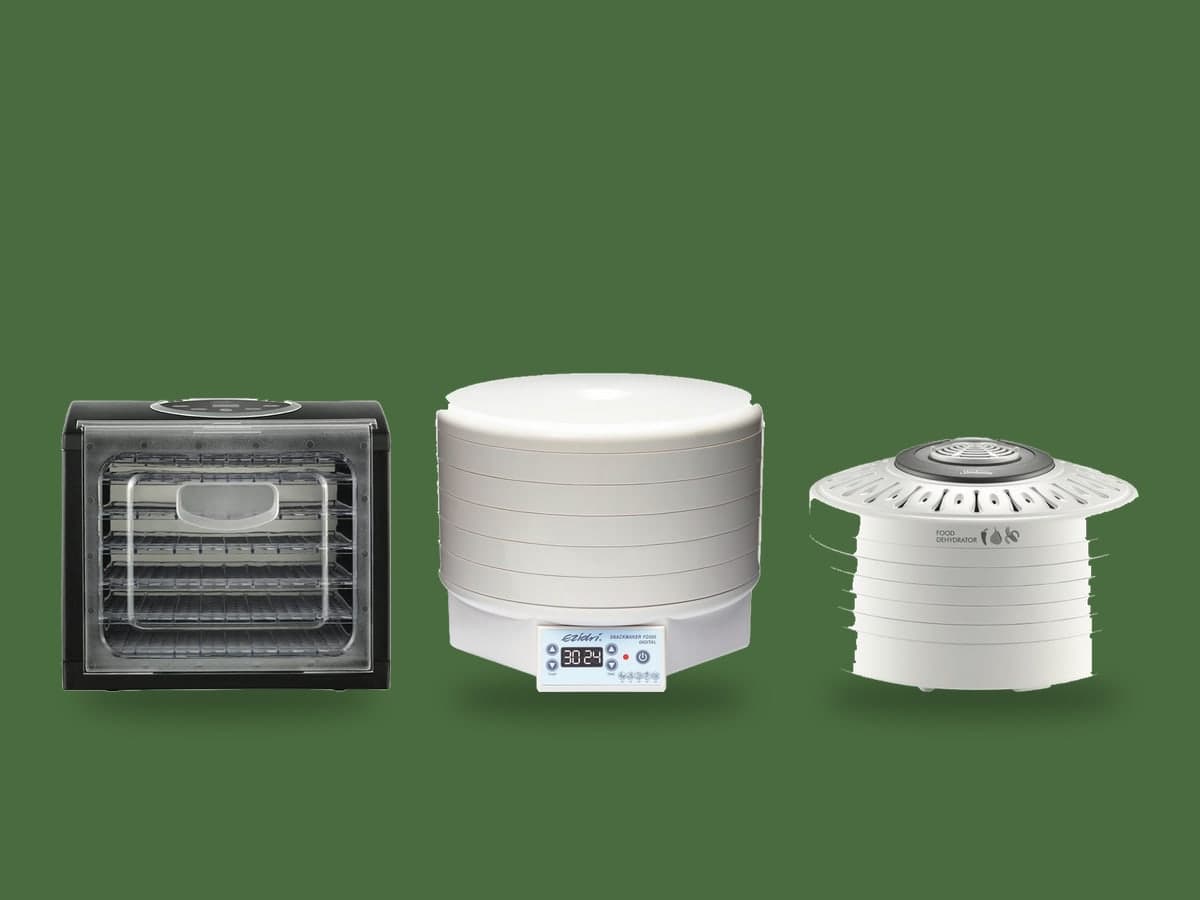
A dehydrator is a low fan-forced oven that runs for half a day. It pushes warm air over sliced food until the water is gone, which is how you get mango strips that keep for months, beef jerky that costs a third of the servo price, and herbs from a garden glut that survive the winter.
Two shapes are sold here. A stackable dehydrator is a base unit with round trays that sit on top of each other, and you add or remove trays to suit the load. A shelved one is a box with racks and a door, which dries more evenly because the air moves sideways past every shelf rather than up through the middle. Both work; the box costs more and takes more bench.
1. Best overall: Sunbeam Food Lab Electronic Dehydrator
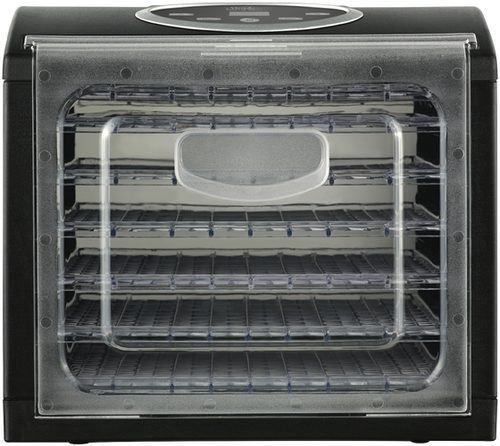
500 watts, electronic control and an Australian design, at around $250. Owners give it 4.6 at The Good Guys from 111 reviews. It ships with a fine mesh tray, which is the accessory that stops herbs and small pieces falling through.
At 440mm wide and 340mm deep it takes real bench space, and at 330mm tall it will not slide under an overhead cupboard. That is the trade for the capacity. The warranty is one year, shorter than the EZIDRI's two.
What We Like:
- Australian designed
- 500W with electronic control
- Fine mesh tray included
What We Don't Like:
- One-year warranty
2. Best temperature control: EZIDRI Snackmaker FD500
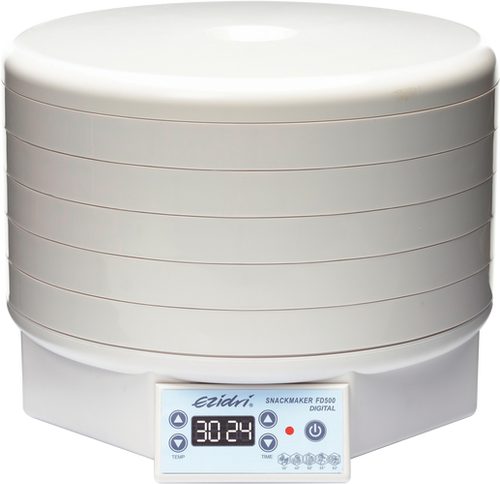
Digital control from 30 to 60 degrees, a timer that shuts the unit off at the end, and a two-year warranty. That temperature range is the difference between the three. Herbs want the low thirties to keep their colour and oils, jerky wants the top of the range for food safety, and a single-setting dehydrator cannot do both properly.
It is a stackable design in food-grade BPA-free ABS, around $229, and owners also give it 4.6, from 49 reviews. Stacked trays dry less evenly than shelves, so the bottom layer finishes before the top and the stack needs rotating partway through.
What We Like:
- 30 to 60 degrees, set digitally
- Timer with auto shut-off
- Two-year warranty
What We Don't Like:
- Stacked trays need rotating mid-run
3. Best value: Sunbeam Food Dehydrator DT5600
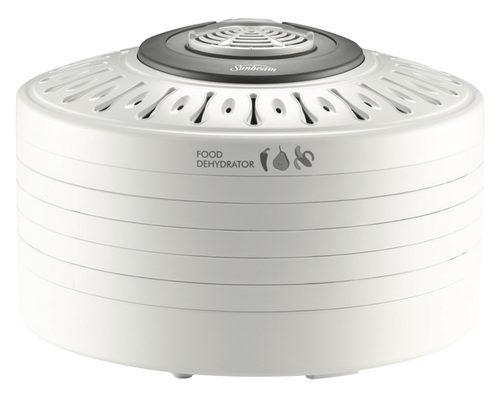
Five racks behind a transparent door with an internal light, three heat settings and a fruit roll tray for leathers, at around $159. Being able to see the trays without opening the door matters more than it sounds, because every look lets the warm air out and adds to the run.
370 watts against the Food Lab's 500, so it takes longer over a full load, and three fixed settings give less control than the EZIDRI's dial. Owner reviews sit at 4.2 from 85 people. It is the shortest of the three at 190mm, which is the one that fits under a cupboard.
What We Like:
- Five racks and a see-through door
- Fruit roll tray included
- 190mm tall, fits under a cupboard
What We Don't Like:
- Three fixed heat settings, no thermostat
How to choose a food dehydrator
| Layout | Power | Temperature control | Warranty | Rating | Price | |
|---|---|---|---|---|---|---|
| Sunbeam DT5600 | 5 racks, door | 370W | 3 settings | 1 year | 4.2 (85) | $140–170 |
| EZIDRI Snackmaker FD500 | Stacked trays | 500W | 30–60°C digital | 2 years | 4.6 (49) | $210–240 |
| Sunbeam Food Lab DT6000 | Trays | 500W | Electronic | 1 year | 4.6 (111) | $230–260 |
Specifications, ratings and prices come from The Good Guys product listings.
A settable temperature is the feature worth paying for. Herbs, fruit and meat want different heat, and jerky in particular needs to be held high enough for long enough. A dehydrator with three preset settings guesses at all three.
Work out where it will live before you buy. These run for eight to twelve hours, which means a bench spot for a whole day, and they are loud enough that a kitchen with a fan running all night is noticeable. Height matters if the spot is under an overhead cupboard.
Count the trays you will actually fill. A stackable unit is only cheaper than a box if you run it half empty. A tray of apple slices shrinks to a quarter of its volume, so a big batch of anything ends up wanting four or five trays at once.
Running cost is small. At 500 watts for ten hours a full run uses about 5kWh, which is roughly $1.60 at 32c. Even weekly, it costs less than the jerky.